Get Full Government Meeting Transcripts, Videos, & Alerts Forever!
Get email alerts on the Peace Development Finance topic
No spam. Unsubscribe anytime.
UN Secretary-General António Guterres links development shortfall to rising conflict, urges debt relief and finance reform
Summary
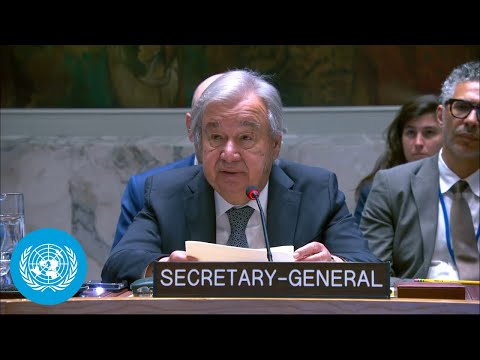
United Nations Secretary-General António Guterres told member states that sustained investment in development is the best prevention against conflict and called for urgent debt relief and reform of the global financial architecture to close an estimated $4 trillion annual financing gap for developing countries.
United Nations Secretary-General António Guterres told member states that sustainable development is the first line of defense against conflict and urged urgent debt relief and reform of the global financial architecture to close what he called a $4,000,000,000,000 annual shortfall in financing for developing countries.
Guterres said poverty, inequality and weak institutions feed instability and conflict, noting that "the flames of conflict are too often lit and fed by persistent poverty and growing inequalities." He cited several figures to underline the scope of the problem: that 40% of the roughly 700,000,000 people living in extreme poverty live in conflict-affected or fragile settings; that conflicts are displacing "more than 120,000,000 people"; and that nine of the 10 countries with the lowest human development indicators are currently in a state of conflict.
"Prevention is the best cure for instability and conflict," Guterres said, adding that the United Nations is working across its development, peace and human-rights pillars — from country teams to peacekeepers and political missions — to support countries in preventing and recovering from conflict. He cited the "new agenda for peace" and the "Pact for the Future," which member states adopted last September, as frameworks guiding that work.
Guterres warned that progress toward the Sustainable Development Goals is slowing, saying that, 10 years after their adoption, "two thirds of the targets are lagging." He called for "renewed domestic and global commitments" to mobilize public and private finance for priorities including food security, education, health care, social protection, green technology and resilient infrastructure.
On financing, Guterres urged reforms to make finance flow to countries in greatest need: "We need to provide urgent debt relief for countries drowning in unsustainable debt service. And we must reform the global financial architecture to reflect today's realities and the urgent needs of developing countries," he said. He pointed to an upcoming meeting: the fourth Conference on Financing for Development starting next week, which he described as "an important moment for the world to fix and strengthen this essential engine."
Guterres framed development as a practical prevention strategy: "Peace is not built in conference rooms. Peace is built in classrooms, in clinics, in communities. Peace is built when people have hope, opportunity, and a genuine stake in their future." He urged member states to recommit to multilateral solidarity so that the "dividends of peace, prosperity, and security" are shared by all.
The speech outlined policy priorities and broad goals rather than specific, binding proposals. There were no formal votes or decisions recorded in the transcript excerpt of this session; Guterres called on member states and global financial institutions to act ahead of the financing conference.
Looking ahead, Guterres pointed to the upcoming financing conference and to ongoing UN policy work as the primary venues for translating the appeals in his address into concrete measures.