Get Full Government Meeting Transcripts, Videos, & Alerts Forever!
Get email alerts on the Fleet Replacement topic
No spam. Unsubscribe anytime.
Colleyville staff, Enterprise present plan to replace 27 city vehicles; consent item planned
Summary
Enterprise Fleet Management presented lifecycle, resale and safety analysis to Colleyville City Council during a June 17 work session and recommended replacing about 27 vehicles in the coming fiscal year; two vehicles from FY24 remain undelivered and staff said it will bring a consent item if council is comfortable.
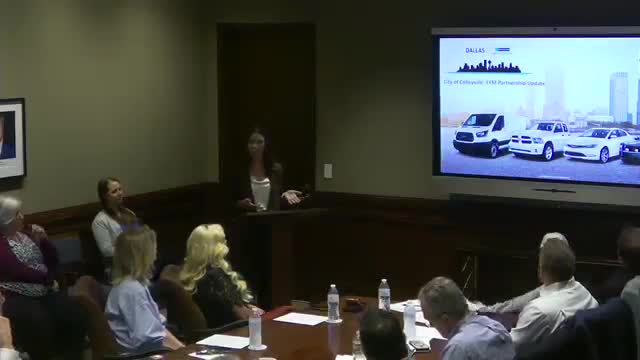
Colleyville City Council heard a presentation on June 17 from Enterprise Fleet Management that recommended replacing about 27 city vehicles in the coming fiscal year and described the market, resale and safety factors behind the proposal.
Enterprise account manager Anita told council members the company analyzes depreciation, maintenance and fuel economy to determine optimal replacement timing. “We purchased a lot of vehicles and sell a lot of vehicles as well,” Anita said, explaining the firm’s approach to balancing resale value against later maintenance and fuel costs.
The presentation said a typical half‑ton truck currently costs roughly $42,500 new and can resell after four years and about 100,000 miles for roughly $20,000; holding similar vehicles longer reduces resale value markedly and increases maintenance risk. Enterprise also advised that heavy‑duty equipment (for example dump trucks) is often retained longer — six to eight years — while light trucks in frequently used fleet roles often make financial sense to replace sooner. The company highlighted safety and technology gains in newer vehicles, noting that models predating about 2018 may lack standard safety features such as backup cameras.
Enterprise and city staff walked through recent delivery issues. Staff said two vehicles ordered in fiscal year 2024 — a Tahoe and an F‑550/dump truck — remain undelivered but are expected before the fiscal year closes. For fiscal year 2025 most vehicles ordered have been delivered; one cargo van purchase was shifted to fiscal year 2026 because of procurement or aftermarket constraints.
On market conditions, Enterprise noted tariff and supply‑chain uncertainty. Anita summarized industry estimates that tariffs could add roughly 9% to purchase prices and said used‑vehicle prices can rise if supply tightens. “We put some conservative numbers and then obviously, we’re making sure that the vehicles that we’re purchasing are either built within The US or within a cost plea, good financial position,” Anita said. The presentation said resale markets spiked during the 2020 supply‑chain disruptions and have since moderated but remain sensitive to production changes.
City staff said the request is intended to position Colleyville to place orders when manufacturer order windows open later in the summer. If council is comfortable with Enterprise’s recommendations, staff will place a consent item on a forthcoming council meeting agenda to authorize quotes and aftermarket specifications and proceed with ordering.
Next steps and context: staff will prepare a consent agenda item if council signals its approval; Enterprise recommended being ready ahead of the main budget cycle to secure favorable ordering windows and pricing. The presentation emphasized that recommended replacement counts and makes are flexible and that actual manufacturers may change depending on production location and tariff exposure.
Votes at the June 17 work session were not taken; staff described this as a nonbinding briefing and planned to return with a formal consent item for council consideration.