Get Full Government Meeting Transcripts, Videos, & Alerts Forever!
Get email alerts on the Digital Access Privacy topic
No spam. Unsubscribe anytime.
Committee advances AB 1303 to clarify California Lifeline eligibility, protect subscriber data from immigration access
Summary
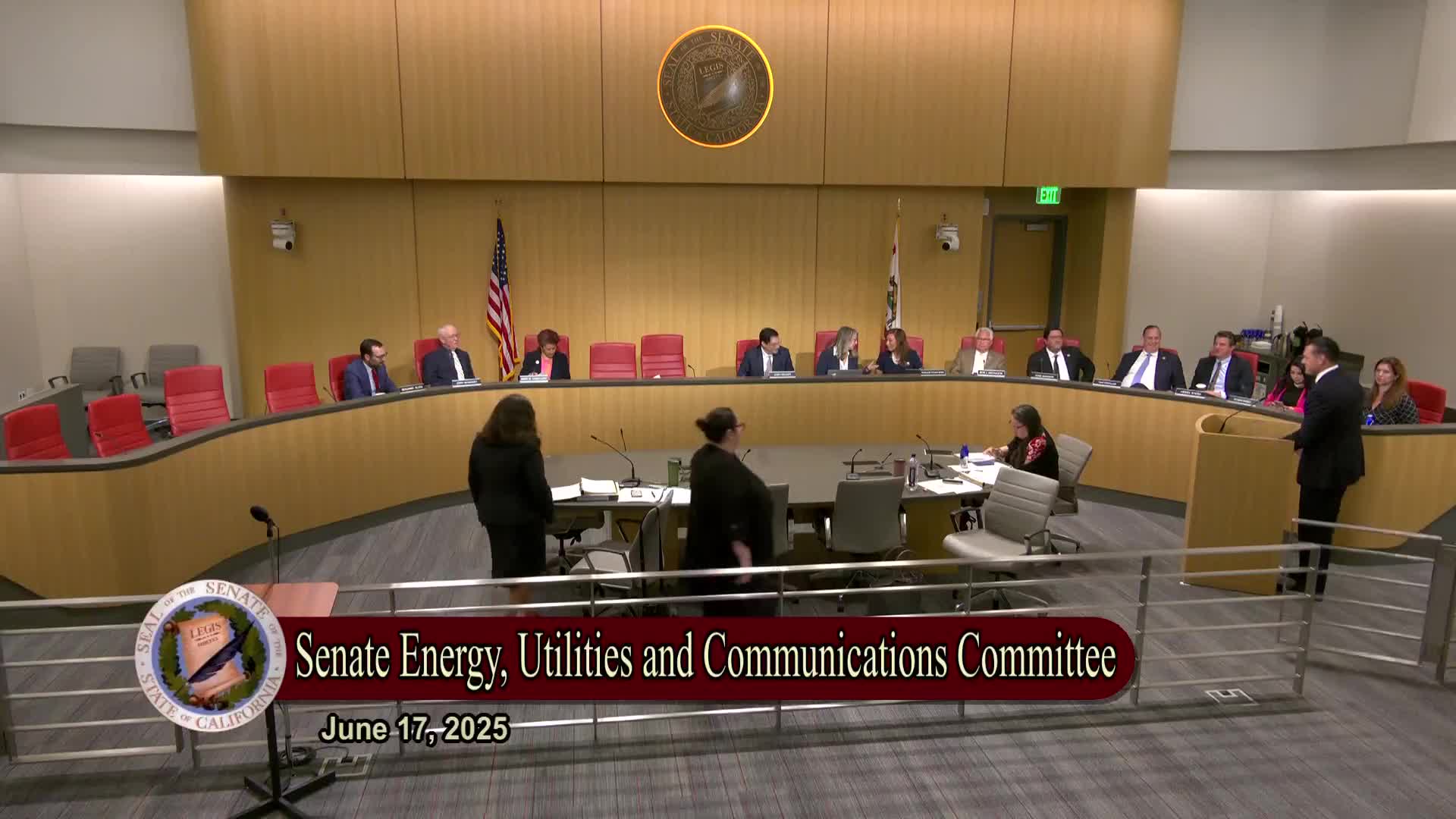
AB 1303, a Latino caucus priority authored by Assemblymember Valencia, passed as amended to the Senate Judiciary Committee. The bill clarifies that a Social Security number is not required to enroll in California Lifeline and adds protections against sharing subscriber data with federal immigration authorities without a court order.
Assemblymember Valencia presented AB 1303, saying the bill seeks to increase participation in the California Lifeline program by clarifying that a Social Security number is not required to qualify and by protecting subscriber data from disclosure to federal immigration authorities without a court‑issued warrant or subpoena. "AB 13 0 3 is centered on fairness, security, and accessibility," Valencia said, adding that the measure is a Latino caucus priority.
The bill would make explicit that Social Security numbers are not required to enroll in the state Lifeline program (while preserving access to the federal subsidy for applicants who supply Social Security numbers and meet federal requirements). Valencia said the CPUC issued a 2014 decision saying Social Security numbers are not needed to verify Lifeline applicants but had not implemented that decision, effectively deterring eligible people. Adria Tinnin, director of Race Equity and Legislative Policy at Tern, testified in support, and other supporting organizations included the Communication Workers of America District 9 and the Electronic Frontier Foundation.
The bill also prohibits the CPUC and program administrators from sharing subscriber personal information with federal immigration enforcement agencies unless presented with a judicial warrant or subpoena, language the author and witnesses said is intended to reduce fear among eligible populations (including undocumented people, survivors of domestic violence, victims of identity theft, and people experiencing homelessness) and thereby increase enrollment.
Committee members asked about the likelihood that removing a Social Security number requirement would increase participation and about fraud prevention. Witnesses said the CPUC previously evaluated verification mechanisms and found it could verify eligibility without requiring Social Security numbers via the third‑party administrator that handles enrollments and can detect duplicative applications. The committee also noted the CPUC's proposed decision that accounted for increased Lifeline enrollment and a reduced surcharge.
Senator Wahab asked about potential loss of federal funds; the committee record notes an analysis that removing SSN requirements could cost about $100 million in federal funding and that the CPUC had already budgeted for the change in a proposed decision that lowered the Lifeline surcharge from $1.11 to $0.90. The author committed to work further on privacy protections, including possible language addressing third‑party data brokers.
The committee approved AB 1303 as amended and sent it to the Senate Judiciary Committee. The roll call recorded the vote 11–1, with Senator Strickland recorded as opposed; the committee left the roll open during the hearing and later confirmed the final tally.
Votes at a glance: AB 1303 — Motion by Senator Archuleta to pass as amended to the Senate Judiciary Committee; outcome: passed as amended, 11–1.
The bill will proceed to the Judiciary Committee. Supporters described it as a measure to expand access to essential communication services and to protect vulnerable subscribers' privacy.