Get Full Government Meeting Transcripts, Videos, & Alerts Forever!
Get email alerts on the Energy Supply topic
No spam. Unsubscribe anytime.
Denton municipal electric asks council to allow study of buying or building dispatchable generation; council seeks public input
Summary
Denton Municipal Electric asked council Tuesday to allow staff to explore acquiring or building dispatchable generation to fill a projected shortfall in dispatchable capacity; council members asked for an integrated resource plan and public engagement before any commitment.
Denton Municipal Electric (DME) on Tuesday asked the City Council for direction to research acquiring or building a dispatchable electric generation facility to shore up the city’s long‑term generation capacity.
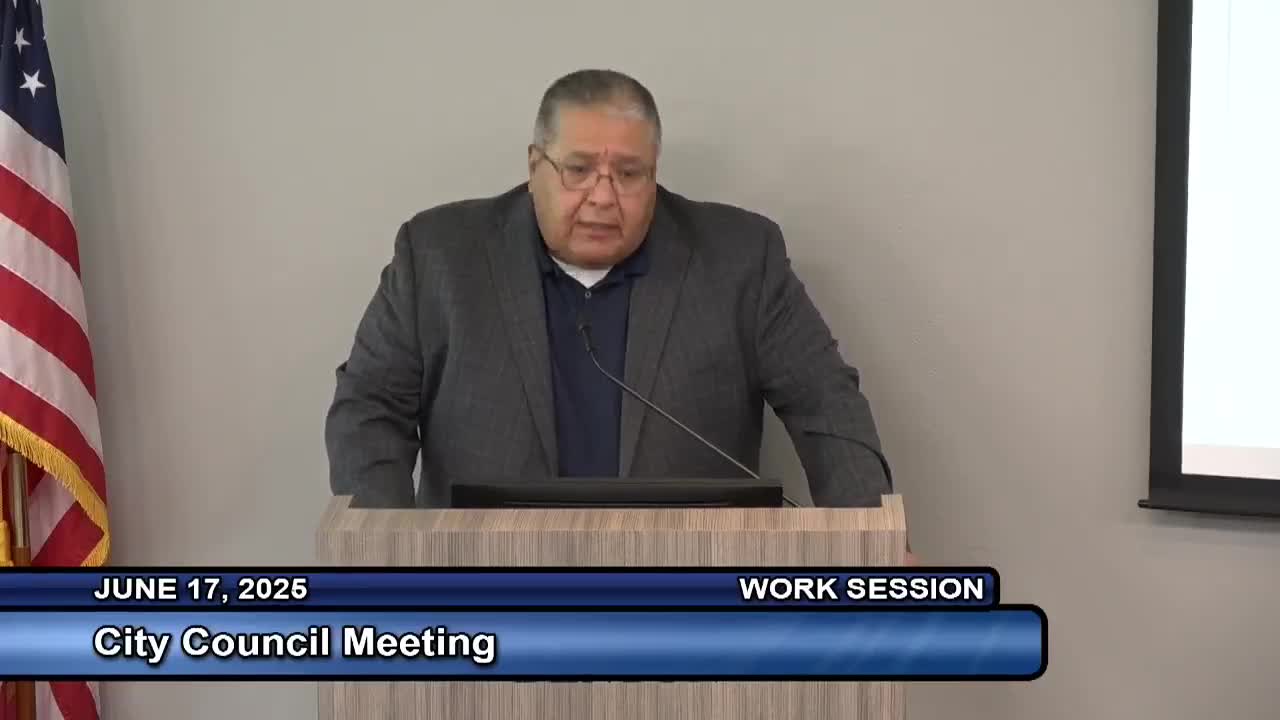
Tony Fuentes, general manager for the municipal utility, said DME is short of dispatchable capacity and faces increasing peak demand. “Based on peak load, what we have today is 408 megawatts of peak load and 225 megawatts of dispatchable power,” Fuentes said. He told council staff estimates show the city could be roughly 183 MW short in the near term and as much as several hundred megawatts short over the next decade if native load and growth materialize as expected.
Fuentes said DME’s operating experience — including Winter Storm Uri and the extreme prices in summer 2023 — shows that on certain scarcity days dispatchable thermal generation produced crucial margin and revenue. He told council sales and market dynamics have shifted and that a purchase or build of dispatchable generation should be studied as one component of a diversified strategy that also includes storage, demand response and renewables.
The staff presentation identified options ranging from acquiring an existing natural‑gas or coal/lignite plant and retrofitting it, to pursuing a new quick‑start gas facility or battery storage installations. Fuentes and DME staff warned that batteries today are relatively expensive for the multi‑hour emergency window the city needs and have limited economic life compared with thermal plants; he estimated a 2‑hour battery system can cost roughly as much as a 300‑MW thermal project but last only about 10 years, whereas a gas plant can last 30–50 years.
Fuentes also described the changing regulatory and federal funding environment, noting the new Texas Energy Fund incentives and recent federal policy shifts affecting carbon capture funding and EPA emission standards. He said those changes could alter the economics of coal retirement and repowering projects that had previously been uneconomic.
Council members pressed for more detail before deciding. Several members said they support exploring options but asked for a clearer analytical basis (an integrated resource plan, IRP) and for explicit public engagement before the council takes any action that would lock the city into a new fossil‑fuel facility. One council member said an IRP — a longer study that evaluates demand, resource mixes, storage and distributed resources — should be completed first; another asked for community meetings so the public could weigh trade‑offs between rates, reliability and emissions.
Public commenters made the split in the meeting explicit. Supporters of new dispatchable generation framed the issue as reliability for hospitals, dialysis centers and other critical customers; opponents warned of greater greenhouse‑gas emissions, financial risk from debt and stranded assets, and urged the council to prioritize batteries, community solar, efficiency and other distributed solutions. Ed Soph, a local sustainability advocate, said the Denton Energy Center’s emissions are a growing problem and urged a climate‑risk study before any second plant is considered: “A climate impact and risk management study must be done before considering a second deck,” he said.
Council consensus on direction: several members said they were comfortable directing staff to further study options — including a 300‑MW to 600‑MW range — but asked staff to run an IRP and to engage the public before returning with firm procurement or acquisition recommendations. Mayor Gerard Hudspeth summarized council sentiment as a request for more analysis and community engagement: the council will not approve a purchase or construction at this meeting; it authorized staff to investigate potential targets and return with a detailed evaluation and public input plan.
Next steps: DME will prepare further studies (an IRP and a market/value analysis) and a public engagement plan. Staff estimated the study and public process could take 18–24 months. If council later chooses to proceed with acquisition or build, any purchase or contract would return for a formal council approval and would be presented with financing and environmental analyses.