Get Full Government Meeting Transcripts, Videos, & Alerts Forever!
Get email alerts on the School Budget topic
No spam. Unsubscribe anytime.
House Bill 2 changes complicate pay strategy; board adopts FY26 proposed budget amid open questions about sustainability
Summary
District leaders briefed trustees on House Bill 2 allotments affecting teacher and support-staff pay, elevated TRS ActiveCare rates and health-insurance pressures; trustees adopted the proposed fiscal 2025–26 budget but voiced concern about strings, coverage gaps and future funding uncertainty.
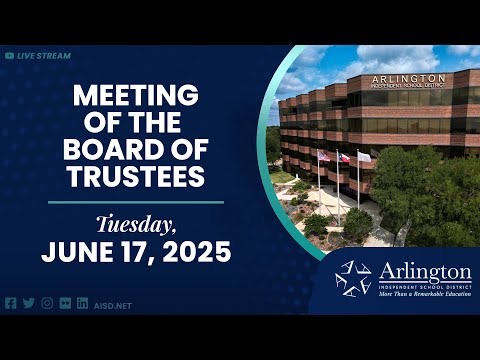
Arlington ISD staff and board members on June 17 discussed the Legislature’s recent changes to school funding and adopted the district’s proposed fiscal 2025–26 budget while warning that new allotments and program strings create uncertainty for long-term compensation planning.
Holly Stambaugh, presenting the legislative update on compensation and health care, summarized the major elements of House Bill 2: a modest increase in the basic allotment, an additional teacher retention allotment that provides eligible classroom teachers with $2,500 (for teachers with three to four years’ experience) or $5,000 (for teachers with five or more years), and a separate $45-per-ADA allotment for support staff. Stambaugh said the teacher allotment will be added to base pay for eligible classroom teachers and will require the district to create a separate, teacher-specific pay scale for those employees. She said roughly 4,700 employees coded as classroom teachers are on the teacher pay scale; about 10% of those are early-career (0–2 years) and are not eligible for the higher retention amounts. The support-staff allotment covers other employee groups — auxiliary, clerical, counselors, diagnosticians and librarians — who are not eligible for the teacher retention allotment.
“While the allotments provide material resources for classroom teachers, they do not fully cover other employee groups and do not restore district purchasing power to pre-2019 levels,” Stambaugh told the board. She also warned trustees that TRS ActiveCare premium rates increased (the district’s most used plan shows projected monthly premium increases of about $49–$51 for employee-only coverage under a 10% rate rise), and that moving the district’s market position for employer contributions would require additional local dollars.
Trustees expressed frustration that the state’s funding structure ties aid to specific PEIMS codes and made parity difficult to achieve. Board members noted that positions historically treated like teachers — librarians, instructional coaches, AVID coordinators and some interventionists — may be excluded from the teacher retention allotment and could be moved off the teacher pay scale, creating potential recruitment and equity issues.
After the legislative briefing, the board opened a public hearing on the 2025–26 budget and tax rate, then adopted the proposed budget for the general fund, debt service, capital projects and child nutrition funds. Finance staff presented assumptions the board used to adopt the budget: preliminary property values (certified values awaited July 25), a projected 2.5% enrollment decline for next year, provisional tax-rate compression calculations and a conservative approach that budgets full costs for known vacant positions until compensation decisions are finalized. The proposed budget shows increased revenue tied to HB2 allotments but also incorporates decreased enrollment and placeholders for vacant positions; staff said subsequent amendments will reflect final compensation choices and certified values.
Trustees voted unanimously to approve the proposed FY26 budget. Several trustees warned that if the Legislature does not continue funding these targeted allotments in future biennia, the district would face difficult tradeoffs and might need to consider staffing reductions, program reductions or alternative local revenue measures. Superintendent Doctor Smith and staff said they will return with compensation options and a final budget amended after TEA-certified values and detailed compensation decisions are available.
No public speakers registered for the budget hearing. The adopted proposed budget will be revised as staff incorporate certified property values and final compensation decisions.