Get Full Government Meeting Transcripts, Videos, & Alerts Forever!
Get email alerts on the Assessment Data topic
No spam. Unsubscribe anytime.
Kennett Consolidated SD reviews 10 years of assessment data; public commenters criticize PSSA testing
Summary
At a June 16 special Curriculum Committee meeting, district staff presented a decade-long review of assessment results and curricular programs. Committee members and public commenters questioned reliance on the PSSA and asked for broader, comparative metrics.
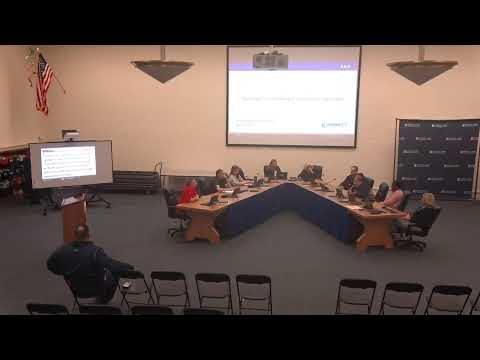
Dr. Kimberly Rizzo Saunders, district staff, presented a 10-year review of student assessment results and curricular materials at a special Kennett Consolidated School District Curriculum Committee meeting on June 16.
Saunders told the committee the presentation tracks major adopted programs and assessment results, and cautioned against inferring causation from program changes alone: "I want you to be careful to not, see causation here because there's a lot of other things that happened at the same time as this, including the shift in our demographics." She summarized past elementary reading programs (Storytown; Fountas and Pinnell; Lexia) and said the district moved in 2023 to Benchmark Advance and Benchmark Phonics, which the presenter said “better aligns with the science of reading.” On math, Saunders described a shift from Connected Math Project and Math in Focus toward i-Ready math.
The presentation covered state assessments (PSSA) and Keystone exams and noted a multi-year data gap during the COVID-19 period. Saunders and committee members discussed limits of PSSA scores as a sole measure and raised alternatives such as NWEA MAP and NAEP. Saunders described NWEA MAP as adaptive and “extremely valid,” and said state and national comparisons require careful handling because data are not always apples-to-apples.
Public commenters and committee members pressed on how much of observed declines could be tied to COVID or to instructional choices. Resident Linda Carillo asked for help interpreting grade-level bars on the slides. Michael Finnegan, a Kennett Township resident, recommended more data and comparative context, asking whether the district’s trends differed from county or national trends: "I always like more data." Ethan Kramer, a resident, called the PSSA disruptive and harmful to students and educators: "I think the PSSA is one of the really problematic and large mistakes that we've ever engaged in," and added that testing places stress on households and schools.
Committee members and staff discussed which additional measures the committee would like to see. Suggestions included adding graduation rates, suspension and attendance data, and county- and state-level comparisons; Saunders said state data would be easier to obtain than national comparisons. The committee also debated how much weight to place on the PSSA versus common assessments or adaptive measures.
The meeting record includes requests that the fall reporting expand the district’s comparative data and that the strategic plan incorporate baseline metrics that will be used to measure future changes.
Ending: Committee members requested follow-up reports in the fall that compare district trends to state and county data and provide additional indicators (graduation, attendance, suspensions). Saunders said more detailed data will be provided and that the district is preparing a strategic plan with baseline measures.