Get Full Government Meeting Transcripts, Videos, & Alerts Forever!
Get email alerts on the Municipal Finance topic
No spam. Unsubscribe anytime.
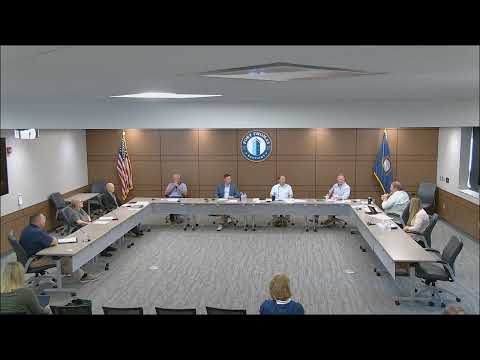
Fort Thomas finance committee weighs twice‑yearly budget review amid internal control, staffing concerns
Summary
At a brief Finance Committee meeting, members discussed holding formal budget amendment reviews twice a year, the discovery that the city—s internal financial statements were materially misstated, questions about auditor independence, and whether to hire an internal finance director or rely on external accounting support.
Fort Thomas Finance Committee members discussed whether to review budget amendments twice a year, concerns that the city—s internal financial statements had been materially misstated and the related question of auditor independence, and staffing needs for accounting oversight.
Committee members opened the discussion by proposing a more regular cadence for budget amendments. "I think looking at them twice a year would be could be advantageous if we can get to that point certainly," Finance committee member 1 said. He followed by asking whether the city should create "a dedicated line for budget amendments on an annual basis" that could "roll over to the next fiscal year" if unused.
A second committee member framed the twice‑yearly review as a control exercise rather than a budgeting fix, saying it would help the city "just to kind of keep on track through the year," and called the review "a good exercise, just to go through that for the first 6 months and then just see where you're at and give you a little better perspective when you're going into the next fiscal year." That speaker also noted the difficulty of predicting amendment needs, citing unplanned events such as a landslide that can force unexpected spending.
The meeting turned to the committee—s recent finding about the city—s financial reporting. "This statement says the city's internal financial statements have been materially misstated," Finance committee member 3 read aloud from meeting materials, adding that the city had been "relying on its auditor correct and adjust a significant and material portion of its audited financial statements," and that reliance "does not demonstrate appropriate internal control over financial reporting" and could raise concerns about auditor independence. Member 3 said he had long been worried future administrations would have to "clean up the mess from the first" and said the committee—s priority should be to "protect the city at all costs."
Committee members and a staff member also discussed staffing and whether to hire an internal finance director or continue to use outside accounting firms. A staff member cautioned that bringing on a strong internal person (or two) would not necessarily "offset the cost" of outside review and emphasized the value of an independent review: "you're not going to have an outside accounting firm," the staff member said in the discussion about roles and capacity. Member 3 said the next finance director should be able to train department heads to break down and account for costs.
The meeting concluded with a procedural motion: a motion to adjourn was made, seconded and the meeting was ended.
No formal votes on policy actions, budgetline creation, hiring decisions or auditor appointments were recorded in the transcript; the discussion produced direction to continue examining options and staffing needs rather than a formal decision.