Get Full Government Meeting Transcripts, Videos, & Alerts Forever!
Get email alerts on the County Budget Public Hearing topic
No spam. Unsubscribe anytime.
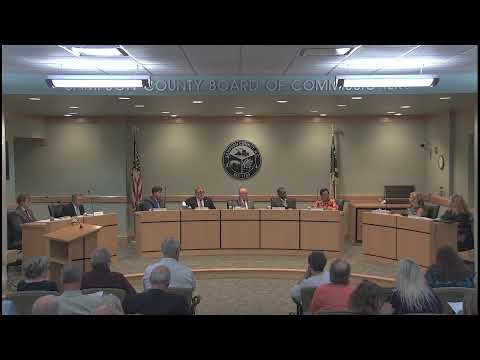
Sampson County commissioners hear public pleas over museum funding, animal-shelter care and taxes
Summary
At a special Sampson County Board of Commissioners public hearing on the proposed budget, speakers urged restoration of museum funding, opposed proposed cuts at the animal shelter and debated potential tax increases and employee pay priorities. Commissioners said no final decisions would be made and recessed the meeting for further consideration.
The Sampson County Board of Commissioners opened a public hearing on the county budget and heard more than a dozen speakers pressed on three main issues: funding for the Sampson County History Museum, operations and policies at the county animal shelter, and whether property taxes or targeted cuts should cover unmet needs.
Museum supporters urged the board to restore funding proposed for reduction. Joel Rose, director of the Sampson County History Museum, said the museum faces a proposed cut to $20,000 from its prior level and that utility costs alone exceed $20,000; he said the reduction would jeopardize operations and could eliminate one or both part‑time positions. Rose said the museum comprises 11 buildings, draws hundreds of visitors annually and is the county’s only year‑round tourist destination. Kaye Rayner, president of the museum board, repeated pleas for restoration closer to last year’s $60,000 appropriation and thanked the board for past support and responses to written comments.
Speakers representing the museum recounted contributions of volunteers and donors and asked the commissioners to consider partnerships and grant opportunities to reduce county obligations while keeping the museum open. David King and others from the museum spoke to the facility’s history and collections and said the museum has received attention from external groups that visited its exhibits.
Multiple speakers also urged continued support for the county animal shelter. One speaker described the reproductive rate of unsterilized cats and urged continued spay/neuter services and education. The speaker proposed revenue ideas including a $25 citation for animals without required rabies vaccinations, a $5 pet license fee and higher fines for obvious neglect; these suggestions were offered as ways to raise shelter revenue and reduce intake.
Commissioner Crumpler addressed earlier remarks he made about euthanasia policy. In a prepared statement he said his prior comments were “poorly chosen,” apologized to shelter staff and the rescue community, and explicitly said the board has not adopted, proposed or considered a policy to mandate euthanasia after a three‑day hold. He said his earlier questions to staff were intended to understand costs and not to reflect a policy proposal. Anna Ellis, identified in comments as the animal‑shelter director, told the board the shelter will not adopt a 72‑hour euthanasia policy and thanked Crumpler for reaching out.
Speakers also weighed in on taxes and employee pay. Resident speakers described anxiety about recurring tax increases, noting fixed incomes and rising costs; one urged the board to avoid repeated property‑tax hikes. Other commenters suggested directing cost‑of‑living adjustments and bonus payments toward lower‑paid county employees rather than higher paid managers and directors to maximize benefit for frontline staff.
Interim County Manager Hudson told the board he had prepared a document of recommendations based on statistical analysis to identify potential savings; commissioners emphasized the manager provided options and that the elected board would make the human decisions about which services to fund. Several commissioners said they had wrestled with the budget, acknowledged difficult tradeoffs and pledged to consider written and spoken public comments before reconvening. The board recessed the meeting to a later date for further consideration.
Procedural actions taken during the session included unanimous approval of the meeting agenda, a motion and second to open the public hearing on the budget, and the closing of that hearing. Commissioners opened and closed a second, separate public hearing on economic development with no speakers signed up. No final budget decision or new ordinance was adopted during the meeting.