Get Full Government Meeting Transcripts, Videos, & Alerts Forever!
Get email alerts on the Housing Sro topic
No spam. Unsubscribe anytime.
Planning commission recommends ordinance to allow single‑room occupancy and rooming houses with caps and conditions
Summary
The commission recommended a new zoning section to permit single‑room occupancy (SRO) and rooming‑house uses in specified districts with limits on bedrooms and occupants, parking formulas and occupancy rules. The measure is staff‑initiated and was supported after public comments from housing advocates and a property owner.
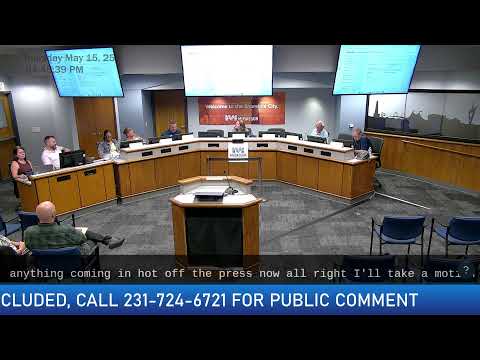
The Muskegon City Planning Commission on May 15 recommended that the City Commission adopt a new zoning section to regulate single‑room occupancy (SRO) and rooming‑house uses (case 2025‑20). The staff‑initiated ordinance would create rules for rooming houses and SROs, specify where they are permitted, and set numerical caps and design standards intended to distinguish temporary shelters from stable rented rooms.
Staff presented the draft provisions to the commission, describing two categories: boarding/rooming houses (smaller, owner‑occupied properties renting bedrooms) and single‑room occupancy buildings (more rooms with shared kitchens, baths and laundry). Key provisions in the draft include: owner‑occupied boarding houses allowed in neighborhood residential, form‑based urban residential and RM‑1 districts with limits such as up to two people per bedroom, minimum bedroom sizes (100 square feet for single occupancy, 200 square feet for two), and an allowance of up to six people for homes at least 2,000 square feet (up to eight people for houses up to 2,500 square feet); SROs allowed as special uses in RM‑1 districts with a maximum of 20 bedrooms and a cap of 25 people per building; requirement that at least 90% of SRO units be occupied by the same tenant for a continuous period of at least 90 days to reduce transiency; and a parking standard of one space per three bedrooms.
Commissioners asked clarifying questions about common areas, bathrooms that are ensuite to a bedroom, parking impacts and the rezoning process required for converting a single‑family lot to RM‑1 (which would require a rezoning and special‑use permit and could be treated as a spot zone). Staff said the manager of an SRO may or may not live on site and that common areas should be provided for shared use even if some bedrooms include private bathrooms.
Two members of the public spoke in favor. Jake Eckholm, who identified himself as a division director and as a citizen, urged the commission to add SROs to the housing spectrum, saying they “are a common part of the housing spectrum” and that their absence has contributed to homelessness. He added: "I think it's a necessary part of the housing spectrum that we're lacking right now despite being very progressive and at the forefront, with housing with zoning reform." Devin Washburn, a property owner who said he recently purchased a former church, spoke in support and said the change would create options for large or oddly shaped buildings that are not suitable for duplexes or standard multifamily conversions.
After public comment the commission voted to recommend the ordinance language and forwarded the proposal to the City Commission for final action. The motion passed by roll‑call vote with all commissioners voting yes.
Staff said approvals would require a rezoning to RM‑1 in many cases and a special‑use permit; the ordinance as drafted contemplates public notice to neighbors within 300 feet and two separate hearings for rezoning and special use.