Get Full Government Meeting Transcripts, Videos, & Alerts Forever!
Get email alerts on the Opioid Settlement Grant And Treatment Services topic
No spam. Unsubscribe anytime.
Sacred Heart reports opioid-settlement grant progress and plans new Berrien Center facility
Summary
Tricia Johnson of Sacred Heart Serenity Hills told the Berrien County board the program filled grant-funded positions, expanded hospital peer coverage and purchased a van that provided 320 rides; the agency said its new facility is fully funded and expected to open in January 2026.
Tricia Johnson, division leader at Sacred Heart Serenity Hills, told the Berrien County board that the substance-use treatment provider used county opioid-settlement funds to hire key staff, expand hospital outreach and buy a client transport vehicle while preparing to open a new facility in Berrien Center.
Johnson said the county-funded grant covered a full-time outpatient therapist position and two peer recovery coach positions. She acknowledged initial delays in hiring but said those positions are now filled: “We did, however, we we have changed a bit. We have had our HR folks come in for 2, job fairs locally. We also are providing a bonus, $6,000 bonus for folks coming in, and I think we have increased our outreach. But the good news is we have hired the positions that we intended to hire with the opioid settlement dollars.”
Johnson described operational gains tied to the hires. “We have a peer recovery coach in the hospital now in the emergency department 40 hours a week instead of 20,” she said, and added that the expanded hospital coverage has doubled the program’s ability to connect people to treatment. She also reported the program purchased an SUV for client transport with grant funds: “We purchased the van with the grant funds last July… In the 8 month reporting period, 320 rides were provided for clients.” Johnson said those rides included transportation to and from treatment and non-emergent hospital trips.
The presentation listed collaborations with local partners. Johnson said Sacred Heart is working with Corewell Health in St. Joseph (which recently allowed peer work on its behavioral health unit), Riverwood, Carol’s Hope and other local providers. She said discussions are underway about jail-based services and that the agency’s medical director, Dr. Janice Romanek, has expertise in correctional programs that could be tapped as those partnerships develop.
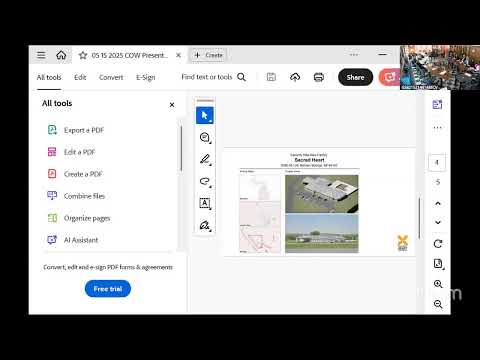
Johnson also described the organization’s plan to replace its leased space with a newly built facility near Elmwood and Redbud in Berrien Center. She said site preparation and excavation were under way and that the project is awaiting a final building permit. The agency gave an anticipated finish date of January 2026. Johnson said the new campus will continue to operate the same-sized programs: 12 detox beds, 28 residential beds and an outpatient program, and will continue to run a peer recovery home in Benton Harbor. On funding, she said the building is “fully funded by grant and donation” and that grant support for the opioid-related positions is part of a larger award reported in the application materials.
Commissioners asked about program metrics, sustainability and referrals. A board member on the opioid oversight committee asked for side-by-side comparisons across reporting periods so the committee can track sustained impact; Johnson said she expects later quarterly reports to show growth as staffing and partnerships mature. She also confirmed that insurance (including Medicaid) can cover services when clients are medically appropriate and that some clients are court-ordered to treatment.
Johnson framed staffing as a countywide challenge and said Sacred Heart attracts staff committed to this work, noting several long-tenured employees and staff in recovery. She described the residential facility as unsecured (not locked) and said leaving treatment can carry legal consequences for court-ordered clients.
The board did not take formal action on the presentation. Johnson left contact materials and supporting documents with the clerk; board members said they will continue oversight through the opioid-settlement oversight process and requested clearer metrics in future reports.