Get Full Government Meeting Transcripts, Videos, & Alerts Forever!
Get email alerts on the Community Services topic
No spam. Unsubscribe anytime.
Rhinebeck autism support committee asks businesses to 'step up' with multi‑level pledge, training and hiring supports
Summary
Joe Fallon, chair of the Village of Rhinebeck Autism Support Community Committee, told trustees the group will relaunch a business outreach program asking shops and organizations to adopt multi‑level commitments — from physical accommodations to employee training and hiring policies — to make the village more accessible to people on the autism s
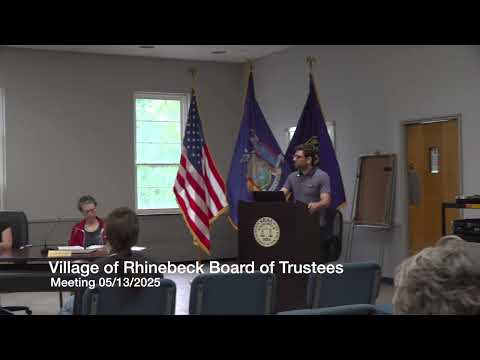
Joe Fallon, chair of the Village of Rhinebeck Autism Support Community Committee, asked the Village of Rhinebeck Board of Trustees on May 13 to support a renewed outreach to businesses and organizations to make the village more accommodating for people on the autism spectrum.
Fallon reviewed the committee’s prior effort, launched in 2018–19, that asked businesses to adopt one simple accommodation such as picture menus; he said roughly 58% of businesses had signed on then. The committee now plans a broader pledge and a multi‑tier recognition program. Fallon described a circular sticker system with three “thirds” of recognition: one for signing a pledge, another for staff training (delivered by partners at the Anderson Center), and a third for implementing hiring policies and workplace accommodations. Businesses that fulfill multiple tiers would receive additional recognition.
The relaunch includes assignment of a committee liaison to each participating business to provide hands‑on support. Fallon said the committee has the chamber of commerce’s backing and some seed funding from past Thompson Trust grants and the Chamber’s Taste of Rhinebeck events. He emphasized the effort is not a fundraising solicitation to businesses: “This is not a fundraising thing,” he said; the program will offer recognition and support rather than require monetary contributions.
Trustees and members of the public praised the initiative and raised practical questions: whether sticker language might be misread as fundraising, how commitments would be documented, and whether businesses would receive training and policy templates. Fallon said materials and brochures were ready for distribution and that the committee would provide liaison support and standardized training through the Anderson Center. Fallon also highlighted local labor‑market benefits, noting employers could tap a workforce of people on the spectrum who are “very dedicated to doing jobs that can be performed in a lot of our businesses.”
Fallon asked the board to note the relaunch; he said the committee will begin business outreach in the coming months and that early responses from a few owners included interest in completing all three tiers as soon as possible.