Get Full Government Meeting Transcripts, Videos, & Alerts Forever!
Get email alerts on the Accessible Transportation topic
No spam. Unsubscribe anytime.
Conference committee discusses one-year study of wheelchair-accessible ride-hailing services
Summary
The Minnesota Senate Transportation Conference Committee on May 15 discussed AM 837, a proposal to fund a one-year study on making TNC services such as Lyft and Uber wheelchair accessible, citing small pilot sites and the goal of producing a legislative proposal next year.
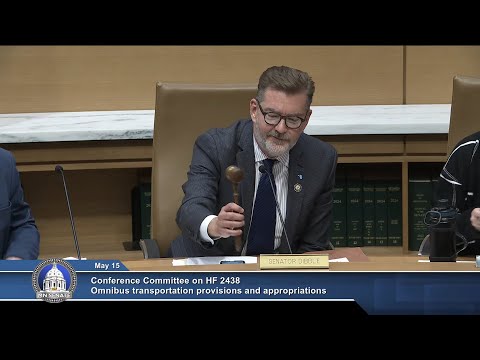
The Transportation Conference Committee at the Minnesota Legislature discussed a one-year study to explore making ride-hailing services accessible to people who use wheelchairs during its May 15 meeting in the Minnesota Senate Building.
Committee Chair Dibble introduced an amendment identified as AM 837 that would pause policy action for a year while staff and stakeholders gather best practices and innovations from other communities. "Since we went to all the trouble of creating an amendment, the 8 37 that we sent out, I thought I would just touch base on that a little bit," Chair Dibble said.
Senator Carlson, who described the idea as his initiative, said the assignment was to examine wheelchair-accessible vehicle supply and funding. "This has been an interesting assignment to look at, the wheelchair accessible vehicle supply, and what we could do about it, and how we could fund it," Senator Carlson said. He described small test sites in Eagan, Burnsville and Mendota Heights that use electric vehicles with drive-on ramps and said those pilots could inform a broader metro-area solution.
Senator Carlson and other committee members framed the study as an effort to expand options rather than to replace existing paratransit services. "I don't think this study really, has that kind of aspiration. It's really to deliver TNC type services, to people with mobility impairments in ways that they just don't have today," he said, adding that ride-hailing could provide an occasional option when other services are not available.
Members noted the study could relieve some demand on Metro Mobility and other services if workable models are found, but no formal action, vote or funding decision was recorded during the meeting. Chair Dibble said the intent was to "go away for a year, really look at, some of the best practices and some of the innovations" and return with a legislative proposal.
The committee recessed without taking a formal vote on AM 837. The chairs indicated more discussion and possible legislative language could follow after the planned review period.