Stockton council raises medical-cannabis business tax to $50 per $1,000; licensing, enforcement and zoning left for later
Loading...
Summary
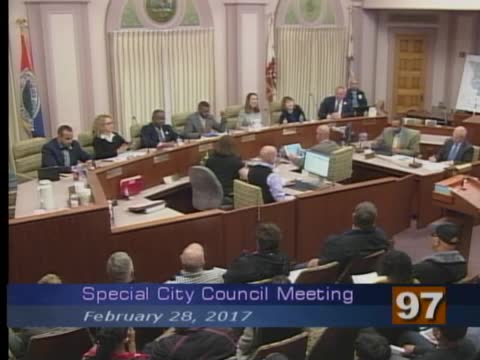
The Stockton City Council on Feb. 28 voted to set the business license tax rate for medical cannabis businesses at $50 per $1,000 in gross receipts, the top of the range voters approved; council members left in place current limits on dispensaries and directed staff to return with analysis on enforcement, zoning for manufacturing and testing, and permit procedures.
The Stockton City Council on Feb. 28 voted to set the business license tax rate for medical cannabis businesses at $50 per $1,000 in gross receipts, the top of the range approved by voters. The 5–2 vote followed hours of public comment on enforcement of illegal dispensaries, equity in licensing, and how the city should regulate cultivation, manufacturing and testing facilities.
The tax change stems from Measure Q, which amended local law to raise the allowable business license rate for medical cannabis businesses to a range of $35–$50 per $1,000; city staff recommended and council adopted the $50 rate. Matt Paulin, the city’s chief financial officer, told the council that “our recommendation is to set the tax rate at the maximum of $50 per thousand dollars in gross receipts.” The staff presentation estimated that doubling the current rate and adding two additional permitted dispensaries could generate about $1 million in annual general-fund revenue under the city’s models.
Why it matters: the council’s decision immediately increases the tax burden on legal, permitted dispensaries and all medical-cannabis businesses operating inside Stockton. Several speakers and council members said the city must pair any tax increase with stepped-up enforcement against unpermitted operators to avoid rewarding illegal businesses that undercut permitted stores.
Council and public discussion focused on three linked issues: (1) fairness and enforcement—several permitted operators said illegal dispensaries in Stockton are undercutting compliant businesses and urged the city to close those locations; (2) licensing and process—members of the public and some councilmembers pressed for either a short application window or a more structured competitive selection so well‑prepared operators can be considered fairly; and (3) economic development—several speakers asked the city to create zoning and permitting paths for manufacturing, testing and distribution facilities that could create jobs beyond retail.
Bobby Bivens, representing the NAACP California State Conference Cannabis Task Force, spoke in support of the higher tax but asked that any oversight body include “equity” and “ethnic diversity,” saying a portion of proceeds should fund education and compliance support. Adam Pressler Smith, regional manager for Stockton Patient Clinic, urged restraint on the tax increase, saying it threatens existing legal businesses and their roughly 30 full‑time employees and that the city should first enforce rules against illegal stores. Pressler Smith said the city already had several unpermitted locations and warned that raising taxes while illegal operators remain open “rewards the bad.”
Council members repeatedly returned to enforcement: multiple members and staff said the city works on a complaint basis and has closed several illegal sites but that the problem re‑emerges quickly. The city manager and planning staff told the council they coordinate with police and code enforcement and that remedies range from letters and follow‑up to filing cases and seeking penalties and enforcement costs from operators found to be in violation.
On licensing and capacity the council declined to expand dispensing capacity tonight. Measure P allows up to four dispensaries and up to four cultivation sites under the voter‑approved language; staff had proposed an amendment to raise the dispensary cap from four to six to clarify the permitting process for applicants. Council discussion produced no final action to increase the cap, and staff said the ordinance change proposed to limit how many conditional use permit (CUP) applications planning staff process was not adopted; after public deliberation the city attorney advised the council that certain urgency changes would require a four‑fifths vote the body did not achieve. The council therefore left the cap and the existing ordinance structure in place and agreed to return with clearer procedural guidance.
Councilmembers asked staff to return with several specific follow‑ups: an analysis of zoning and code changes needed to allow manufacturing, testing and distribution uses that could bring jobs; clarity on exclusionary rules in the city code (for example, how prior convictions are treated for operator permits); and a plan to improve outreach and communication with potential applicants. David Quang, community development director, said the city has received roughly 60 inquiries since Measure P passed, and that two dispensary applications and one cultivation application were already in process with the planning department.
What happened now: A resolution to set the business license tax at $50 per $1,000 passed 5–2 and is effective as a general‑fund revenue policy. The council did not adopt an amendment to increase the number of dispensary operator permits or to change the CUP/application sequencing tonight; staff will continue to accept and screen applications under existing code but will return with recommendations and clearer public guidance. The council also directed staff to continue enforcement actions against illegal dispensaries and to provide a more detailed plan for permitting manufacturing and testing uses.
The council meeting record shows frequent public concern about communication and equity in the permitting process; councilmembers asked staff to improve outreach and to present a recommended timeline or procedure for accepting and evaluating applications if the council chooses to change the selection method. The city manager and city attorney said any changes to the ordinance or any urgency measures would be brought back to the council for formal action.
Votes at a glance: The council voted 5–2 to set the business license tax for medical cannabis businesses at $50 per $1,000 in gross receipts (staff recommendation). The council did not adopt changes tonight to increase the dispensary cap or to alter the application sequencing; status quo remains.
Looking ahead: Staff will report back on zoning for manufacturing/testing/distribution, enforcement capacity and costs, a clearer public application process, and the code language governing operator‑permit exclusions. Those topics were repeatedly requested by council members and members of the public during the hearing.