Get Full Government Meeting Transcripts, Videos, & Alerts Forever!
Get email alerts on the Corrections Accountability And Safety topic
No spam. Unsubscribe anytime.
Lawmakers, families and advocates press for oversight, body cameras and release tools after two prison killings
Summary
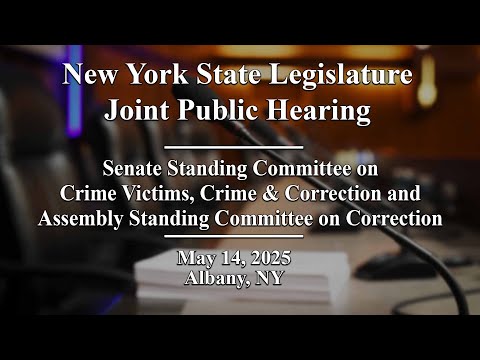
Senator Julius Salazar opened a joint hearing of the New York State Senate and Assembly committees on corrections on May 14 in Albany, calling attention to two recent in‑custody killings and a broader pattern of deaths and alleged abuse in state custody.
Senator Julius Salazar opened a joint hearing of the New York State Senate and Assembly committees on corrections on May 14 in Albany, calling attention to two recent in‑custody killings and a broader pattern of deaths and alleged abuse in state custody. "The truth is I wish we did not have to be here to talk about how our state collectively has failed to protect many New Yorkers who find themselves in state custody," Salazar said, naming Robert Brooks and Messiah Nantwe among people who died.
The hearing brought testimony from New York State Department of Corrections and Community Supervision (DOCS) Commissioner Daniel Martisell III, family members of people who died in custody, representatives of oversight and legal organizations, and union and advocacy groups. The panelists framed the problems as a mix of alleged staff misconduct, understaffing after an illegal job action in February, limits in internal discipline systems and gaps in independent oversight.
Why this matters: Two publicized deaths — the December killing of Robert Brooks at Marcy Correctional Facility and the March death of Messiah Nantwe at Mid‑State — were shown in body‑camera and cell‑camera footage and prompted criminal referrals, public outrage and legislation proposals. Families and advocates told lawmakers the deaths reflect a longstanding pattern; advocates said DOCS investigations and disciplinary processes have not produced timely accountability and called for independent review, better public reporting and changes that would reduce the state prison population.
Most important facts
- Commissioner Martisell said he had immediately referred both homicide cases to the New York State Police and the attorney general, launched internal investigations and begun termination proceedings. "The senseless murders of Robert Brooks and Messiah Nantwee at the hand of hands of staff members is inexcusable," Martisell told the committees.
- DOCS described steps it is taking: expanded body‑worn camera rules and a compliance matrix; a contract to deploy cameras statewide (Commissioner cited a $14,900,000 deployment contract and earlier budgeted funding of roughly $18,400,000 for body‑worn cameras and $400,000,000 for fixed cameras); expanded Office of Special Investigations (OSI) staffing (commissioner referred to nearly $8,000,000 in the budget for OSI growth); and hiring of outside law firms and public‑health partners for a "culture" review and safety gap analysis.
- Family members testified that their relatives were denied adequate care and protection. "I truly believe my son dies so that others may live," Robert Ricks, the father of Robert Brooks, told the committees, urging swift legislative action.
- Outside groups and monitors urged stronger independent oversight: the Correctional Association of New York, the Legal Aid Society, Prisoners' Legal Services and others asked for expanded authority and access for independent oversight bodies, faster and clearer reporting on in‑custody deaths, and automatic outside referrals of serious use‑of‑force allegations.
Discussion and direction
Lawmakers pressed DOCS on whether it had sufficient authority to terminate staff. Martisell said his options are limited by collective bargaining and arbitration outcomes and that additional discretion for management had been discussed. He described DOCS policy changes and an internal performance matrix for camera compliance, and said OSI is hiring investigators with prosecutorial backgrounds.
Panelists and family members pushed for several actions:
- independent, empowered oversight: advocates recommended strengthening the State Commission of Correction (SCOC) with expanded staffing, authority to inspect and a public complaint process; multiple witnesses asked the legislature to pass bills to expand SCOC authority and require unannounced visits;
- transparency and evidence preservation: legal advocates asked for fixed cameras in housing areas, automatic retention and audit of footage, public dashboards of investigations and disclosed outcomes, and immediate sharing of footage with independent investigators;
- disciplinary accountability reforms: witnesses urged limiting any internal processes that routinely defer to arbitration results, automatic suspension for serious misconduct pending investigation and clearer rules for disciplining employees who destroy or fail to preserve footage;
- population and release reforms: advocates urged passage of the Earned Time Act and Second Look Act to expand incentives for programming and create judicial review for long sentences; reentry providers warned that some early‑release mechanisms (Correction Law 73) were being used in ways that prevent access to Medicaid and community services;
- program and visiting restoration: providers and family advocates described wide variation in the resumption of education, parenting and reentry programming since the strike and asked for an immediate plan to restore seven‑day visiting schedules at maximum facilities.
What DOCS said it would do
Martisell described an immediate list of actions already underway: criminal referrals in the two homicide cases; expanded OSI capacity and a quality‑assurance team; codified body‑worn camera policy and a statewide deployment funded in the FY26 budget; a public‑facing data dashboard in development; a contracted independent law firm to assess culture and operations; and drug‑interdiction measures that include body scanners and canine teams.
Outstanding issues and evidence gaps
Witnesses repeatedly identified slow or opaque investigations by OSI, inconsistent retention or production of video, and a disciplinary system that — they say — too often ends with limited consequences for staff. Family members described repeated, documented attempts to obtain medical care for incarcerated relatives and reported harassment and inadequate responses from facility staff.
Quotes
"The truth is I wish we did not have to be here to talk about how our state collectively has failed to protect many New Yorkers who find themselves in state custody," Senator Julius Salazar said in his opening remarks.
"The senseless murders of Robert Brooks and Messiah Nantwee at the hand of hands of staff members is inexcusable," DOCS Commissioner Daniel Martisell III said in his testimony.
"I truly believe my son dies so that others may live," Robert Ricks, father of Robert Brooks, told the committees in emotional testimony calling for law changes.
Ending
Lawmakers and advocates left the hearing with common short‑term demands — faster, more transparent investigations; preserved and audited video; immediate restoration of programs and visits where safe and feasible — and longer‑term legislative proposals, including SCOC reform, earned‑time and second‑look statutes and parole changes. Several witnesses told the committees they expect follow‑up hearings, statutory proposals and oversight requests to be presented to the Legislature before the session ends.
The hearing record and multiple witnesses make clear that unresolved questions about internal discipline, video preservation and the authority of oversight bodies remain priorities for future legislative action.