Get Full Government Meeting Transcripts, Videos, & Alerts Forever!
Get email alerts on the School Safety topic
No spam. Unsubscribe anytime.
Michigan House approves bipartisan school safety and mental‑health package
Summary
The Michigan House passed a multi‑bill school safety and mental‑health package that tightens tip‑line notifications, updates emergency plans and sets new training requirements for school staff and resource officers.
LANSING — The Michigan House of Representatives on Wednesday approved a package of bills aimed at tightening school safety procedures and strengthening student mental‑health supports, voting on several measures that lawmakers described as the remaining recommendations of a bipartisan post‑Oxford task force.
Proponents said the bills close gaps in how tips from the statewide “Okay to Say” system are handled, require periodic updates to school emergency response plans, and expand training for school resource officers and other school personnel. The package passed in multiple separate roll‑call votes for individual bills.
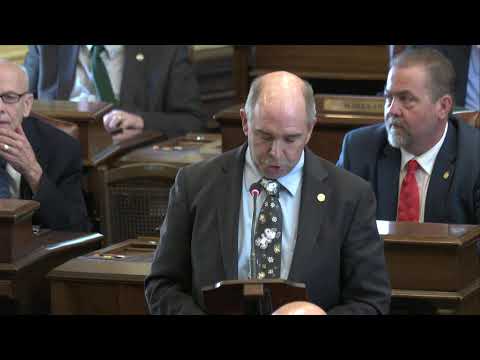
Supporters framed the measures as commonsense steps to ensure tips submitted by students about suicide, bullying, assault, drug use or potential threats are routed and acted on quickly. Representative Regas, who opened debate in favor of the package, said the reforms aim to “close the loop” so tips are not lost in backlogs. Representative Steele said one bill would print the Okay to Say tipline on student ID cards to make the resource more accessible.
Key provisions described on the House floor included: - A requirement that Michigan State Police notify affected schools and local law enforcement about credible tips submitted through the Okay to Say system within 24 hours, and that MSP make a direct call to a school’s main office and the designated tip line, according to debate on the floor. - A mandate that schools review and update emergency response plans at least every three years. - Standardized safety training for school resource officers, educators and other staff, and expanded requirements for drills and coordination with local first responders. - A provision to print the Okay to Say tipline on student identification cards to make it immediately accessible to students.
Votes at a glance (bills enacted by the House during the session): - House Bill 4222 — passed 80‑26 (final passage recorded May 14). Immediate effect requested and ordered. - House Bill 4225 — passed 99‑7 (final passage recorded May 14). Immediate effect requested and ordered. - House Bill 4226 — passed 81‑25 (final passage recorded May 14). Immediate effect requested and ordered. - House Bill 4229 — passed 101‑5 (final passage recorded May 14). Immediate effect requested and ordered. - House Bill 4223 — passed 85‑21 (final passage recorded May 14). Immediate effect requested and ordered. - House Bill 4258 — passed 101‑5 (final passage recorded May 14). Immediate effect requested and ordered. - House Bill 4259 — passed 100‑6 (final passage recorded May 14). Immediate effect requested and ordered.
Debate on the floor drew several lawmakers who described the package as the continuation of a bipartisan effort created after the 2021 Oxford High School shooting. Representative Harris, who spoke in favor of the package, noted work by a bipartisan task force that recommended a statewide structure for school safety and mental‑health coordination; Harris said several recommendations had already become law and that these bills complete remaining tasks the task force identified. Representative Smaltz emphasized the need for regular plan reviews and updated training because threats and technology evolve.
Several supporters also pointed to data about the Okay to Say system: Representative Steele said the system received 601 tips in its first year (2014) and had already received 4,253 tips in the early months of 2025, a figure she used to underline increased student use of the service.
Several bills in the package were considered individually on third reading, with recorded roll‑call votes on each measure. Where lawmakers requested immediate effect, the House ordered it by standing vote following passage.
What the bills do not do: On the floor, supporters repeatedly distinguished passage of these bills from broader local decisions about school operations; the measures change state reporting, training and planning requirements and the handling of tip information but do not prescribe local curricula or school‑level personnel hiring beyond training standards described on the House floor.
Next steps: Each passed bill will proceed through the legislative process toward the Senate (or to the governor if companion Senate action or concurrence is completed). Several speakers urged swift enactment so schools and first responders can implement changes before the next school year.