Get Full Government Meeting Transcripts, Videos, & Alerts Forever!
Get email alerts on the Plain Language Accessibility topic
No spam. Unsubscribe anytime.
DMAS forum urges plain-language communications to improve access for Medicaid enrollees and people with disabilities
Summary
At a virtual Department of Medical Assistance Services forum, agency staff and disability-sector partners reviewed plain-language standards, offered examples of rewritten materials, and flagged resource and staffing barriers while outlining next steps for trainings, tool updates and an agency policy.
The Department of Medical Assistance Services hosted a virtual Language and Disability Access Forum to discuss plain-language standards and practices for public communications and materials used by Medicaid and disability service programs.
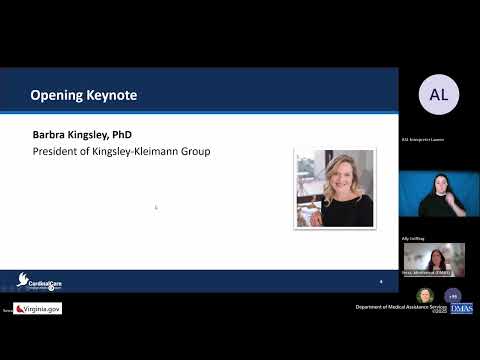
The forum’s organizers and panelists said plain language improves access to benefits and services for people with disabilities, people with limited English proficiency and others who may need simple, direct information to complete forms or understand rights. "Plain language means communicating in a way that people can understand the first time they read or hear it," said Barbara Kingsley, chair of the Center for Plain Language and president of Kingsley Claimen Group.
Why it matters: Forum presenters and attendees described how dense legal or technical text can act as a barrier to enrollment, benefit continuity and self-advocacy. Moncera Serra, civil rights coordinator at DMAS, said the agency holds the forums twice yearly to share guidance and gather feedback from stakeholders so programs can make documents and processes easier to use. "We thought it would be helpful for our programs to meet on a regular basis with stakeholders," Serra said.
Examples and practical changes: Panelists described documents their agencies had rewritten and the concrete changes they made. Katie Morris, a manager in DMAS’s Division of High‑Need Supports, said she revised the HCBS (home- and community‑based services) rights disclosure by increasing font size, adding purposeful images, grouping related rights into short bullets and reorganizing content so the most important information appears first. Anita Paige, communications and information manager at the Virginia Board for People with Disabilities, said her agency rewrote a front‑and‑back infographic summarizing a 2024 board assessment: she tightened the title, used an inverted‑pyramid structure, and wrote specifically for people with disabilities and family members.
Panelists and trainers recommended specific plain‑language techniques: use active voice, keep sentences and paragraphs short, define acronyms at first use, target content to a primary audience, aim for roughly a sixth‑to‑eighth‑grade reading level where appropriate, use clean readable fonts (size 12 or larger) and ensure documents are available in accessible file formats rather than image‑only scans. The session also recommended using built‑in tools (Microsoft Word readability scores) and third‑party tools such as Hemingway Editor and Grammarly to check readability.
Challenges and limits: Panelists acknowledged limits—time, staff capacity and the technical or statutory language DMAS and other agencies must convey. "We work a lot in regulatory language… and it is difficult when the information coming from the federal government isn't always easy to read and understand," Morris said. Agencies described practical workarounds: prioritize frequently accessed or evergreen documents for remediation, include a plain‑language definition or glossary for unavoidable technical terms, and use stakeholder or provider reviewers when people with lived experience are not available for testing.
Testing and training: Speakers emphasized user testing with members of the target audience as the best way to confirm clarity. Where budgets or schedules make that difficult, agencies reported using partner organizations, providers or board members with lived experience for review. Several agencies plan staff training: DMAS reported agencywide lunch‑and‑learn sessions; the Virginia Board for People with Disabilities is preparing an internal language and disability access policy that would require staff training if adopted; and the Virginia Department of Behavioral Health and Developmental Services said it is finalizing an accessible‑language style guide and producing short animated videos to explain system topics.
Next steps and resources: Panelists listed near‑term actions including a DMAS revamp of its HCBS toolkit, the Virginia Board’s pending policy and DBHDS’s website refresh and video rollout in partnership with The Arc. Moncera Serra said the session recording and materials will be posted on the DMAS website and reminded attendees that ASL interpretation was provided during the forum. For questions DMAS gave the email civilrightscoordinator@dmas.virginia.gov. Serra also noted the forum series began in February 2019 and that DMAS currently holds forums twice a year.
The forum closed with an invitation to continue trainings and to prioritize gradual, sustained remediation of the highest‑impact documents rather than attempting to update all materials at once.