Get Full Government Meeting Transcripts, Videos, & Alerts Forever!
Get email alerts on the School Transportation topic
No spam. Unsubscribe anytime.
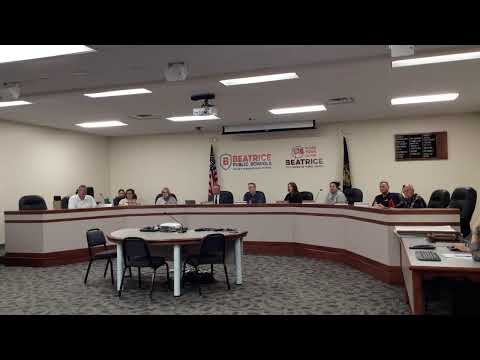
Beatrice Board approves First Student contract and new pay-to-ride bus fees amid rising transportation costs
Summary
The Beatrice Public Schools Board approved a new five-year contract with First Student for in-town bus routes and a new pay-to-ride fee schedule after hearing staff explain rising vendor costs, statutory obligations and projected revenues.
The Beatrice Public Schools Board of Education voted to approve a contract and addendum with First Student and to adopt a new pay-to-ride fee schedule for the 2025–26 school year after an extended discussion on costs and options.
Dr. Nielsen, superintendent, told the board that the district is in the final year of its contract with Midstates (now First Student) and that rising costs require rethinking how the district funds its transportation service. “State statute section 79‑6,11 states public schools are required to provide transportation or reimburse parents for transportation costs for students who live 4 miles or more from school,” Dr. Nielsen said during the discussion, noting that the district has voluntarily provided more extensive in-town service.
The administration presented financial details showing the prior contract cost for the district’s 13 regular routes at about $63,000 per month ($630,000 annually). The proposed five-year First Student contract would start at about $73,238 per month, with a five‑year total near $992,684 for those 13 routes, reflecting an initial 10% increase in year one and additional increases in subsequent years. Dr. Nielsen said that the contract includes bus replacements (two buses next year and two in year three) and that vehicle, driver and insurance costs contributed to the increase.
To offset part of the higher vendor price, the board approved a new fee schedule for families who choose district bus service. Using 2024–25 ridership figures, the administration said the proposed fees would generate roughly $99,000 annually—covering about one‑seventh to one‑eighth of the route cost. The proposed rates (yearly and monthly equivalents described by staff) include: - Students eligible for free or reduced-price meals: $160 per year ($16/month); $8/month for each additional student. - One-way students eligible for free or reduced-price meals: $120 per year ($12/month); $8/month for each additional student. - All other (full-pay) students: $320 per year ($32/month); $16/month for each additional student. - One-way full-pay students: $250 per year ($25/month); $15/month for each additional student.
Dr. Nielsen and other staff emphasized the district will continue to offer monthly payment plans and that families qualifying for free/reduced meals would be charged a lower rate than full-pay families. Administration noted the district had been waiving fees for free/reduced families and could stop doing so if necessary.
Board members pressed staff on alternatives—including condensing stops to create hubs and thereby reduce the number of routes—and on vendor negotiations. Dr. Nielsen said the district solicited other bids; one out‑of‑area company provided a comparable bid, and First Student’s longer contract term offered modest savings. He added that a single‑year contract was possible but would likely carry a larger first‑year increase (staff said vendors indicated it could be ~20%).
The board approved two separate motions: one to accept the First Student contract and addendum and a second to adopt the pay‑to‑ride fee schedule. Both motions passed with the board’s recorded “motion passes” vote (individual roll-call votes were not read into the public transcript).
The administration said registration for paid transportation will open in May so families can decide before the school year begins. Staff also promised additional communications to current riders. The board heard concerns about walk distances if the district consolidates stops—staff said hubs would typically require 3–5 blocks of walking today and, if consolidated more aggressively, could approach 9–10 blocks in some scenarios. Staff said they would avoid routing that required students to cross major intersections without safeguards.
The board’s vote is procedural approval to proceed with the contract and fee schedule; staff said future adjustments are possible if routes change or if cost pressures differ from current projections.