Get Full Government Meeting Transcripts, Videos, & Alerts Forever!
Get email alerts on the Neighborhood Councils topic
No spam. Unsubscribe anytime.
City Council certifies first two neighborhood councils, debates start-up funding
Summary
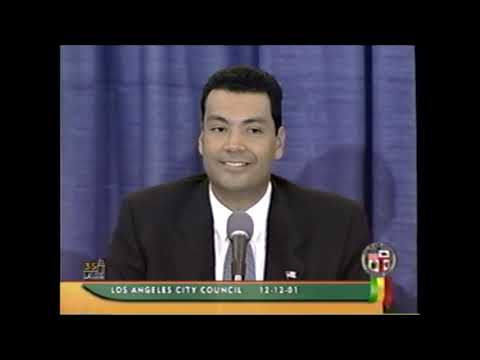
The Los Angeles City Council certified the Wilmington and Coastal San Pedro Neighborhood Councils during a special meeting in Wilmington on Dec. 12, 2001.
The Los Angeles City Council certified the city’s first two neighborhood councils — the Wilmington Neighborhood Council and the Coastal San Pedro Neighborhood Council — during a special meeting in Wilmington on Dec. 12, 2001.
Council President Alex Padilla and Councilmember Janice Hahn presented certificates to Tony O’Donnell and other steering-committee members of the Wilmington Neighborhood Council and to leaders of the Coastal San Pedro council. Mayor James Hahn joined council members for the ceremony and declared Dec. 12, 2001, “Wilmington Day in the City of Los Angeles.”
The certifications followed public remarks from steering-committee members and from representatives of the Palos Verdes Peninsula Land Conservancy and volunteer groups who helped organize the councils. Tony O’Donnell, identified as chair of the Wilmington steering committee, thanked Councilwoman Hahn, the Department of Neighborhood Empowerment and other city staff for support. Doug Epperhart, chair of the Coastal San Pedro steering committee, said more than 200 people participated in that effort over 18 months.
Separately, councilmembers debated a proposed transfer of $350,000 to the Department of Neighborhood Empowerment to help neighborhood councils with basic start-up costs such as copying and outreach. Councilmember Hahn said many early councils had used personal funds to organize and that the transfer was intended to cover basic formation expenses. The city attorney advised the council that the office was still reviewing whether the transfer could be spent to reimburse groups that had already incurred formation expenses; the clerk and city attorney recommended returning with clarifications. Councilmembers continued that item to a later date for legal and administrative clarification.
Councilmembers emphasized access and equity concerns during the discussion: some members asked how the funds would be distributed so lower-capacity neighborhoods could receive help, whether reimbursements would go to individuals or to council accounts, and whether administrative costs of processing reimbursements would outweigh the benefit. Councilmember Cindy Miscikowski noted prior budget earmarks for outreach and asked staff to clarify how the intended funds relate to the unappropriated balance.
Council members and neighborhood leaders also discussed next steps: the Department of Neighborhood Empowerment would return with legal guidance and an implementation plan addressing eligibility, documentation and access for lower-capacity neighborhoods. In the interim, council offices said they would continue to provide basic in-kind assistance such as copying and meeting space.
The certification of Wilmington and Coastal San Pedro marks the first formal neighborhood councils certified under the charter changes the council adopted; members described the certifications as a step toward bringing city government closer to neighborhoods.
Credits: Council President Alex Padilla presided; Janice Hahn introduced the Wilmington and Coastal San Pedro certifications. Tony O’Donnell (Wilmington Neighborhood Council chair) and Doug Epperhart (Coastal San Pedro chair) spoke during the presentations.
Ending: The council continued the separate funding-transfer item for additional legal review and administrative details; neighborhood leaders were scheduled to receive further guidance from the Department of Neighborhood Empowerment.