Get Full Government Meeting Transcripts, Videos, & Alerts Forever!
Get email alerts on the Parks Budget topic
No spam. Unsubscribe anytime.
Houston parks face cuts in proposed FY26 budget; mowing cycles to lengthen, some pools stay closed
Summary
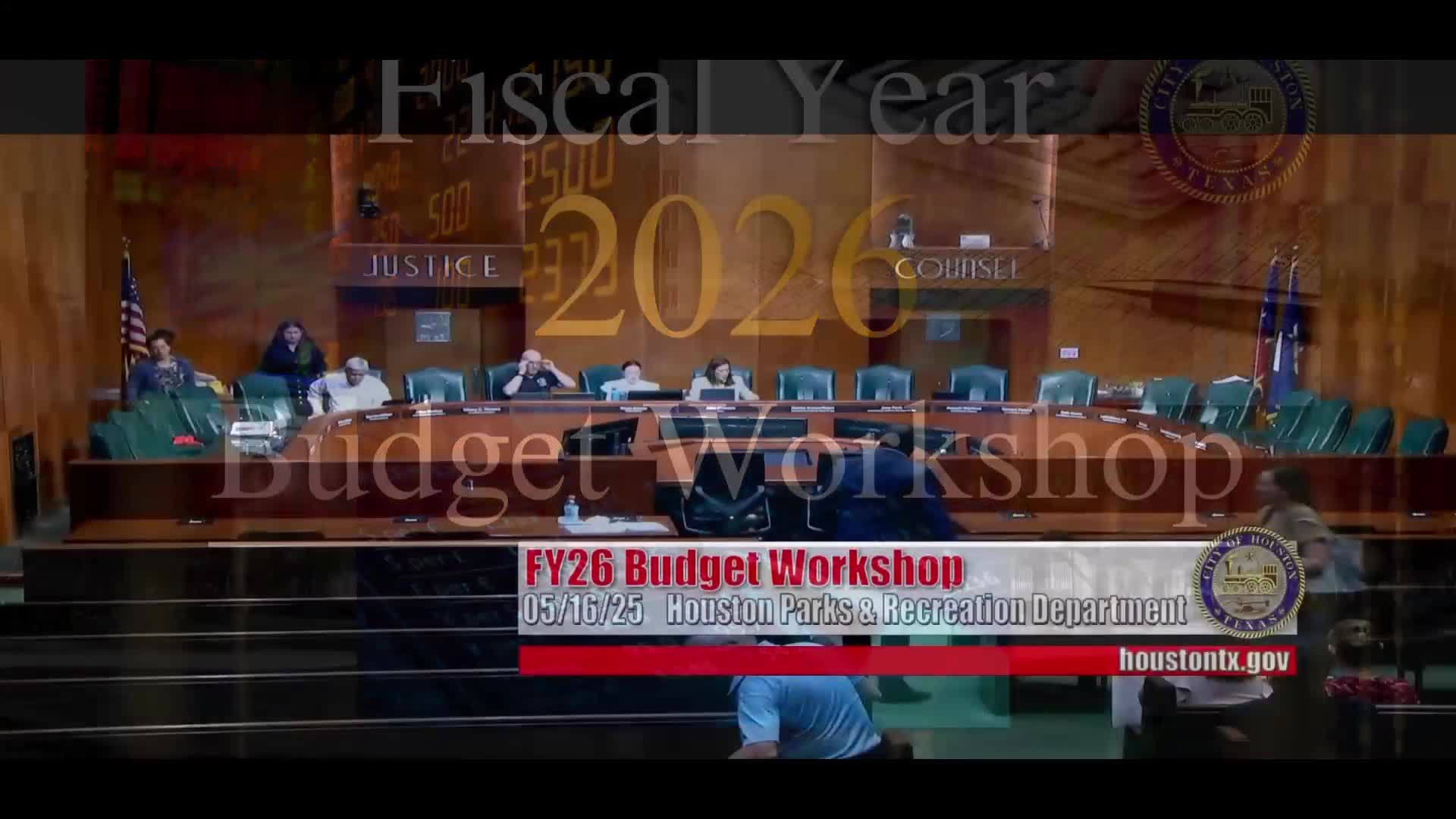
Houston Parks and Recreation Department Director Kenneth Allen told the Budget and Fiscal Affairs Committee on May 16 that his department’s proposed fiscal 2026 budget would force reductions in maintenance and renovation work across the city’s park system, lengthen mowing cycles and reduce ranger coverage.
Houston Parks and Recreation Department Director Kenneth Allen told the Budget and Fiscal Affairs Committee on May 16 that his department’s proposed fiscal 2026 budget would force reductions in maintenance and renovation work across the city’s park system, lengthen mowing cycles and reduce ranger coverage.
“We are falling behind other cities in their investment in parks,” Allen said, adding that parks are “the heartbeat of the community.” The presentation laid out inventory, program and revenue details and described actions managers plan to use to close a budget gap.
The department told council members it maintains roughly 383 parks, 38 swimming pools, 60 community centers and more than 40,000 acres of developed parkland and related property across Houston. Allen said general fund expenditures for the department are roughly $87.7 million and that total proposed department expenditures are about $107.4 million for FY26. Cheryl Johnson, senior deputy director for parks finance, said total proposed revenues across funds are about $19.6 million, roughly 2% below FY25 estimates.
Why this matters: Committee members and public commenters said the proposed cuts will affect basic maintenance and public safety that shape how neighborhoods look and feel. Council members repeatedly pressed the department for how the changes will affect mowing, aquatic operations and community-center programming.
What the budget would change - Mowing and grounds maintenance: The department said average mowing cycles for parks, libraries and multiservice centers would move to about a 24-day cycle in off-peak times and longer during peak season; esplanades would move to a roughly 45-day cycle. Allen and staff cautioned that seasonal demand means actual intervals will vary and staffing shortages could make peak-season service less frequent.
- Staff reductions and restructuring: Allen said retirement incentives and other separations left the department with dozens of vacancies. He told the committee that 71 of 180 eligible employees were offered a voluntary payout option and that about 40 positions accepted by April 20, producing roughly $3.8 million in savings attributed to the incentive. The department is proposing an internal restructuring that would raise the average span of control from four direct reports to six and combine some supervisory responsibilities.
- Patrols and safety: The department said daily patrols by park rangers will be reduced and gate-closing procedures may be modified. Allen said the department will seek increased coordination with Harris County and Houston Police Department and invest in incident-mapping software to direct ranger resources more precisely.
- Capital and renovation work: Park development and renovation funding would drop substantially; the department said a 74% reduction in certain renovation funding equals about $5 million and that the total program-level reduction across parks is roughly 4% compared with the prior year.
- Pools and aquatics: Prentiss (Prentice) Collins, who presented aquatics operations, said the department projects opening 31 pools for summer operations, with six pools closed for maintenance or operational repairs (Agnes Moffitt, Emancipation, Tidwell, Cloverland and Townwood were named specifically; inspectors were to review Emancipation the week following the presentation). Collins said recruitment has improved and the department will hire younger lifeguards this year, including 15-year-olds who must pass standard lifeguard certification and be supervised by experienced guards and a pool supervisor.
- Volunteer and partnership reliance: Allen said the department will expand its park adoption campaign. The department reported more than 540 adoption groups responsible for more than 1,400 adopted acres; staff estimated that adoption work represents over $5 million in avoided personnel expense. The department said it will deepen partnerships with the Houston Parks Board, conservancies, management districts, civic associations and other groups to fill service gaps.
Program highlights and metrics - Adaptive sports and recreation: The department said programming for people with disabilities is expected to serve more than 5,000 participants in FY26 and remains a priority despite facility constraints.
- Lake Houston Wilderness Park: The department called the 5,000-acre Lake Houston Wilderness Park a “regional keystone,” projecting about 85,000 visitors in FY26.
- Urban forestry: Staff said the department planted about 31,000 trees in FY25 and plans to plant about 27,000 in FY26; the department described revised planting strategies to avoid utility conflicts.
- Zoo contract: The presentation noted a $12.5 million payment tied to the Houston zoo contract included in department expenditures.
Questions from council members and public comment Council members asked for per-acre maintenance costs, more detail on which pools would open, options to transfer management of some projects to third parties (examples included partnerships with TIRZ and management districts), and clarification about where authority for right-of-way mowing sits (Public Works, not Parks). A public speaker, Jack Balinski, urged the committee to find additional resources to protect neighborhood parks and said volunteer-led and private investments had improved high-profile parks but neighborhood sites remain vulnerable.
What the department will do next Allen said the department will launch a public adoption and outreach campaign and pursue partnerships to mitigate service gaps. Staff also said they would continue to work with the Houston Parks Board and other partners on targeted projects (for example, the Let’s Play Houston initiative) and to provide written responses to council questions through SharePoint.
No formal committee votes or budget decisions were recorded at the workshop. Committee members said they would submit additional questions in writing.