Get Full Government Meeting Transcripts, Videos, & Alerts Forever!
Get email alerts on the Utilities topic
No spam. Unsubscribe anytime.
Brigham City officials present utility-rate plan, say power-purchase surcharge will be removed for FY26
Summary
Council staff detailed the mayor's proposed fiscal 2026 utility rates at a work session, including a plan to set the power‑purchase adjustment charge (PPAC) to zero, continued reliance on a 120‑day rate stabilization reserve, and a proposed $9.50 monthly recycling ("blue can") fee that staff warned could further reduce participation.
Brigham City officials outlined proposed changes to municipal utility rates Wednesday evening, telling the City Council the power‑purchase adjustment charge would be set to zero for fiscal year 2026 under the mayor's budget and that other rate and fee changes are included in the draft budget.
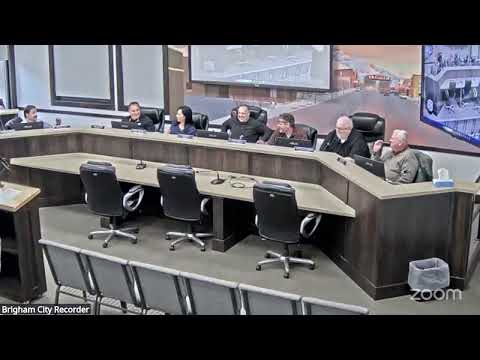
At a 5 p.m. work session held before the regular council meeting, a city staff presenter and city administrators walked council members through the electric rate study carried out in 2022 and the mayor's proposed FY26 rates, comparing Brigham City's proposed residential bill for a 1,000‑kilowatt‑hour month with Rocky Mountain Power's recent rate schedule.
The staff presenter said the PPAC — a pass‑through component designed to track wholesale power costs — has been reduced from as high as 4.5¢/kWh in prior years to 1.25¢/kWh in the current budget and is proposed to be 0¢/kWh in fiscal 2026. The presenter said that move is possible because the electric rate stabilization fund currently meets the council‑approved target (a 120‑day reserve): "The PPAC is off," the presenter said.
City staff emphasized the difference between municipal utilities and investor‑owned utilities, noting municipal revenue is reinvested locally. The city compared a thousand‑kilowatt‑hour residential example and said Brigham City customers would pay roughly the same or slightly less than Rocky Mountain Power customers under the mayor's proposal.
Why it matters: staff said keeping the PPAC at zero depends on reserve balances and wholesale power market conditions; the presenter warned the city would reintroduce a PPAC and notify the council if wholesale costs or the stabilization balance deteriorate.
Key details and supporting information
- Rate plan history: Staff said the council previously commissioned a four‑year rate plan from consultant Dave Berg in 2022 that laid out multi‑year adjustments. The FY26 figures presented are the final year of that earlier multi‑year plan.
- Rate stabilization fund: City documents cited a rate stabilization fund target equal to 120 days of operating cash for the electric department. Staff said the fund stood at about $6.6 million in March, above the target level identified in the adopted policy.
- Customer (base) charge: Staff and council members discussed the city’s separate customer service fee (the fixed monthly charge). Staff noted that the customer service fee is recorded on a separate general ledger revenue line and is not included in the 12% transfer calculation to the general fund. Council briefly discussed whether labeling that line as an "electric" or "power" customer charge on bills would reduce questions from customers.
- Rate tiers and usage buckets: The presenter said the first residential tier (the baseline bucket) is historically based on an average usage figure (about 0–400 kWh for the city's statistical model). Staff said an upcoming rate study will revisit tier thresholds and whether alternative structures—such as demand‑based or different tiers for EV owners—are appropriate as load patterns change.
- Portfolio and procurement: Staff showed Brigham City's current power portfolio mix (including Colorado River Storage Project allocations, UAMPS purchases, and forward contracts) and noted the city has reduced exposure to market purchases by signing more forward contracts. Staff warned that an expiring contract with favorable pricing will need replacement in the future and that the city is actively seeking options.
- Blue can (recycling) program: City staff reported continuously falling participation in the outsourced recycling program and rising tipping fees and contamination costs at the recycler. The mayor's budget proposes raising the monthly fee for curbside recycling to $9.50 (a 23% increase). Staff warned that if the fee rise is adopted, participation could fall further and that the third‑party contractor may seek longer‑term guarantees that could transfer financial risk to the city. Staff also noted that current policy locks customers into the service for one year unless the council changes that policy.
- Next steps: Staff said another rate study is budgeted in the mayor's proposal and will provide updated recommendations this winter or next spring; council members asked staff to supply clear, simple bill explanations for customers at the start of the fiscal year.
Quotes from the meeting
"The PPAC is off," the staff presenter said, noting the policy condition that the PPAC not be charged when the rate stabilization fund is above target.
"It's really just statistical analysis of expenses, revenues and what folks are actually using," Councilmember (unnamed in the transcript) summarized about how tiers were set and why they may change as load grows.
Context and outlook
Staff repeatedly cautioned that the proposed zero PPAC depends on maintaining the rate stabilization fund above the policy threshold and on wholesale markets remaining favorable. Council members pressed staff about public outreach and bill labeling; staff agreed to prepare simplified explanations for publication.
Ending note
The council did not take a formal vote on rate changes in the work session; the mayor's proposed budget and any associated rate ordinances or fee changes will return to council during the formal budget process later in the spring.