Get Full Government Meeting Transcripts, Videos, & Alerts Forever!
Get email alerts on the Land Use Subdivision topic
No spam. Unsubscribe anytime.
Reno County planning staff outlines major draft text amendments to lot-split, setback and lot-dimension rules
Summary
Planning staff presented proposed changes to Reno County's subdivision and zoning regulations, including removing a 7-acre maximum for agricultural lot splits, new minimum frontage and setback standards, and related clarifications. Commissioners asked staff to return with a clean draft for review next month.
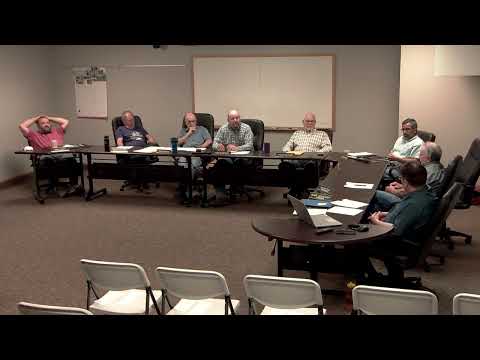
Planning staff outlined a wide-ranging package of proposed text amendments to Reno County's subdivision and zoning regulations at the May 15 Planning Commission meeting, focusing on agricultural lot-split rules, minimum lot dimensions, and uniform setback standards.
The county planner said the main change would be to remove the current 7-acre maximum for agricultural lot splits. "So what we're proposing here is to eliminate that 7 acre maximum," the planner said, describing a structure under which landowners could create one lot split of any size so long as the resulting building site met a 3-acre minimum and other public-works requirements.
Why it matters: Commissioners were presented examples the planner said illustrate how the 7-acre limit and the county's current width-to-depth ratio can produce illegal or awkward parcel configurations, long narrow ("flag") lots and unbuildable back parcels. Staff said the proposed approach keeps a one-time split limitation (a property owner may only create a single lot split without rezoning or platting) while allowing more flexibility in how that split is sized, with conditions intended to preserve agricultural character and public-safety protections.
Key proposals described by staff
- Eliminate the 7-acre maximum for agricultural lot splits and instead allow one split of any acreage provided the new building site meets a minimum of 3 acres; additional development would require rezoning and platting.
- Require any split to comply with all public-works divisions, including sanitation (septic/well), road/entrance permits and other environmental or engineering requirements; staff emphasized that a 3-acre split that is mostly pond or otherwise unable to meet sanitation standards would not produce an approved building permit.
- Replace the existing width-to-depth ratio requirement with minimum continuous road-frontage widths. Proposed minimums are: agricultural (AG) 200 feet, R-1 150 feet, R-2 100 feet, R-3 100 feet; proposed depth standards (for example AG 200 feet) were shown in staff tables presented at the meeting.
- Standardize setbacks across districts, with staff proposing 20 feet from road rights-of-way and 10 feet on other property lines for most non-agricultural principal buildings; in some residential districts the side-yard requirement would increase from 8 to 10 feet to improve consistency.
- Retain agricultural exemptions for farm structures where state statute exempts bona fide agricultural uses, but apply the revised setbacks and minimums for non-agricultural buildings or residential building sites within AG zoning.
- Clarify homestead lot-split rules (used when an existing home is separated from farm ground) and recordkeeping: staff proposed keeping the one-time-split requirement and a notarized, on-file agreement notifying owners that further division requires rezoning/platting.
Discussion highlights and concerns
Staff opened with case examples from county parcel mapping to show how historical deed combinations and post-2016 splits have led to irregular parcels; one example involved a triangular parcel that, under current mapping, produced multiple parcels that would be illegal under the 7-acre rule but were deemed legal nonconforming because they existed as separate deeds before the county's 2016 subdivision regulations.
Commissioners asked practical and policy questions: why keep the one-time split limit; whether the changes would convert legal nonconforming parcels into conforming ones; how the rules would address very long, narrow lots; whether agricultural setbacks should be larger than residential setbacks given farm operations and burn practices; and whether agricultural building heights should be capped for neighboring residential protection. Staff responded that removing the ratio and adopting road-frontage minimums would increase flexibility while sanitation and entrance-permit checks would remain gatekeepers for buildability.
On enforcement and interdepartmental coordination, the commission discussed recurring problems with deeds recorded at the Register of Deeds without planning review. Commissioners and staff said the Register of Deeds office currently records legal documents if they meet its standards, and it does not check planning compliance; several commissioners said better interdepartmental outreach or notices to buyers would reduce unintentional illegal land divisions.
Next steps and staff direction
Commissioners asked staff to prepare a clean draft reflecting the night's direction and the edits discussed (for example: add a definition or footnote clarifying that lot "width" refers to continuous road frontage; include a requirement that frontage be continuous; add conditional-use language for commercial uses in residential districts). Staff said they would return next month with a revised draft and that they would mark the changes for review.
Direct quotes from the record
"It will just be considered a legal nonconforming parcel of ground," staff said when explaining how an 11.79-acre split remained sellable because earlier deeds predated the 2016 parcel map.
"If you got a 40, you want to make it to 2 twenties, great. That's your 1 split that you're allowed," staff said to illustrate the proposal that would remove the 7-acre cap while keeping the one-time split limitation.
"That 3 acres can't be 85% pond...then you're not gonna get a permit," a commissioner (speaking during discussion of sanitation and buildability) said, echoing staff's point that sanitation standards remain a limit on developable building sites.
What the staff packet shows (clarifying details)
- Proposed minimum building-site size for a lot-split building site in AG: 3 acres (minimum).
- Proposed minimum continuous road frontage (examples from staff chart): AG 200 ft, R-1 150 ft, R-2 100 ft, R-3 100 ft (staff presented a full table across zoning districts).
- Proposed setbacks: 20 ft from road right-of-way; 10 ft on other property lines for principal residential buildings (staff noted some residential districts would see a 2-foot increase in side-yard minimums for uniformity).
- Homestead lot-split retains a 7-acre maximum in the existing ordinance language as a special case but staff said the one-time-split principle still applies; the homestead split allows creation of a building site served via an easement when depth ratios otherwise prevent a split.
Community impact and constraints
Staff and several commissioners framed the proposal as seeking a balance between flexibility for rural landowners and protections for agricultural land and neighboring properties. Commissioners emphasized that sanitation (septic/well), road/entrance safety and existing state exemptions for farm structures constrain what local regulations can achieve.
Where this goes next
Staff will prepare a redlined, clean draft of the proposed text amendments incorporating the edits discussed and return it to the Planning Commission next month for further review and possible recommendation to the Board of County Commissioners. No formal vote on the draft amendments was taken at this meeting.
Ending note
Commissioners consistently asked staff to mark proposed changes clearly and to add clarifying language (for example, specifying that "width" in tables means continuous road frontage). The commission also discussed outreach measures to reduce inadvertent illegal splits, including improved education for buyers and contractors and exploring whether the Register of Deeds could add an advisory notice for documents affecting zoned areas.