Get Full Government Meeting Transcripts, Videos, & Alerts Forever!
Get email alerts on the Public Safety Cameras topic
No spam. Unsubscribe anytime.
Grayson County sheriff presents proposal for Flock license-plate readers; officials ask for phased cost options and grants
Summary
Sheriff Norman Chaffins and a Flock representative described a plan for fixed license-plate–reader cameras across major roads, estimated recurring costs, and next steps for proposals and grant research.
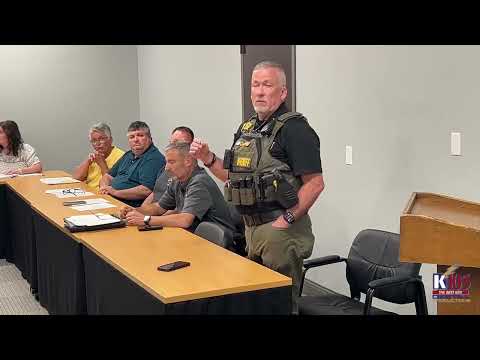
Grayson County Sheriff Norman Chaffins presented a proposal for installing Flock license-plate–reader (LPR) cameras at a fiscal court meeting, saying the cameras would let deputies track vehicles connected to crimes and provide “a huge tool for law enforcement to be able to track that vehicle.”
Chaffins told the court he had spoken with Elizabethtown Police Chief Jeremy Thompson, who told him, “this has been a game changer for law enforcement in Hardin County.” Chaffins said the system detects plate numbers, not people: “It doesn't tell us who's in the car, but it tells us who that vehicle belongs to.”
Spencer, a Flock representative on speaker phone, provided cost figures and deployment options. He said the company proposed 10-, 15- and 20‑camera packages to cover major county roads and highway approaches. Spencer described a recurring annual package cost of about $46,050 that would include hardware, software, maintenance and upgrades, and said Flock had agreed to waive an installation fee of roughly $15,000 for the county. He also said individual LPR units cost about $3,000 each and that “long‑range” cameras run about $5,000 per unit.
Magistrates asked for clarification about first‑year and ongoing costs. Spencer said the $46,050 figure represented the ongoing annual service and support cost for the deployment described and that purchase costs would vary by package; he committed to deliver a formalized proposal and contract showing initial purchase and recurring costs for 10, 15 and 20 camera deployments.
Officials discussed interoperability and training. Chaffins said the county's cameras would link with the city’s system and regional networks: “our cameras will link... with their cameras as well.” Spencer confirmed jurisdictions could choose what to share and that the system provides real‑time alerts from NCIC and Amber Alerts. Dispatch access was described as handled through the county’s 911 service; court discussion named a Cherokee 911 account that would receive automated alerts to ensure coverage 24/7.
Court members asked whether Flock uses facial recognition; Chaffins and Spencer both said the system is plate‑reader focused. Spencer said the system supports “custom hot lists” and that alerts can be shared regionally when a vehicle crosses jurisdictional lines. He also said he would search for potential grant funding and pass along any leads; the sheriff and a magistrate said they would also seek grant help locally.
The fiscal court did not take formal action on the Flock proposal. Court members requested that Flock provide formal proposals for smaller (10‑camera), medium (15‑camera) and larger (20‑camera) deployments, cost breakdowns that separate one‑time purchase and recurring fees, and information about training and any partner agreements required for installations on state rights‑of‑way.
Surveying the discussion, court members suggested starting with a smaller pilot and returning with written proposals and estimated grant opportunities before voting on procurement or recurring budget commitments.