Get Full Government Meeting Transcripts, Videos, & Alerts Forever!
Get email alerts on the State Policy topic
No spam. Unsubscribe anytime.
Board legislative liaison warns of funding cuts and DEI restrictions in Columbus and urges vigilance
Summary
Legislative liaison Matt Wyatt told the Talawanda board the state budget (House Bill 96) and Senate Bill 113 could reduce state funding and ban DEI programs in schools, potentially affecting Talawanda’s budget and programs.
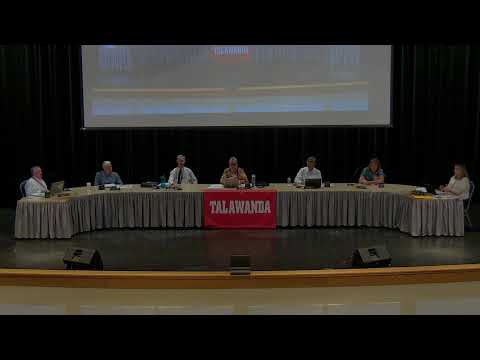
At the May 15 meeting the district’s legislative liaison, Mister Wyatt, warned the Talawanda City School District Board of Education about two pieces of state legislation he said would affect school funding and programming.
Wyatt told the board the House budget bill (House Bill 96) as passed by the Ohio House ‘‘does not fully implement the final two years’’ of the 2021 bipartisan Fair School Funding Plan and that the House version ‘‘shortchanged K‑12 schools’’ by an estimated $2.7 billion over two years. He said one provision would limit the amount of reserve cash districts may retain above a stated percentage (he referenced a 30% threshold), requiring excess funds to be turned over to county authorities, which he described as damaging to districts that do long‑range planning.
Wyatt also described Senate Bill 113 as proposing a ban on diversity, equity and inclusion (DEI) offices and programs in K‑12 schools, including closing existing DEI offices and banning third‑party contracts intended to promote admissions or hiring based on race, ethnicity, religion, sexual orientation or gender identity. Wyatt said the district had been affected at the federal level when the superintendent felt compelled to sign a letter related to DEI and federal funding; he described that as a difficult choice for many districts.
Why this matters: The legislative proposals discussed would change funding flows and the legal environment for equity programming nationwide and in Ohio. The treasurer later told the board the proposals — if enacted in the forms discussed — could materially alter Talawanda’s five‑year forecast and increase the likelihood of levies.
Direct quotes and context: "The house version of the budget bill does not fully implement the final two years of the bipartisan fair school funding plan," Wyatt said. He described the proposed reserve cap as a reaction to local property tax reassessments and predicted it could force districts to seek levies more frequently.
The liaison urged board members and community stakeholders to follow developments in Columbus and Washington and to remain engaged with legislators about the district’s needs.
Authorities referenced by Wyatt in his report included the 2021 Fair School Funding Plan (repeatedly referenced in discussion) and the bills by number (House Bill 96, Senate Bill 113). Board discussion following the report focused on financial implications and on how district advocacy might respond if the state reduces aid or imposes new restrictions.
Ending: The board recorded the legislative update and proceeded to discuss its five‑year forecast in light of the uncertainties Wyatt described.