Get Full Government Meeting Transcripts, Videos, & Alerts Forever!
Get email alerts on the Housing Homelessness topic
No spam. Unsubscribe anytime.
Proposed Homekey Plus project at 1875 Fremont draws sharp split from residents, businesses and council
Summary
Developers and county officials presented a proposal to convert the Sand Dollar Inn at 1875 Fremont Boulevard into 43 units of permanent supportive housing under California’s Homekey Plus program. Council members and the public pressed for more time, details and vetting; supervisors and county staff said they had not committed full funding.
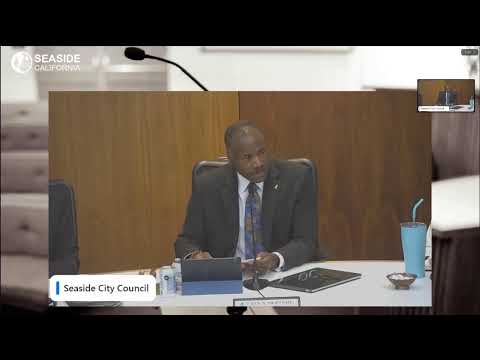
Developers seeking to apply for California Homekey Plus funds for a proposed permanent supportive housing project at 1875 Fremont Boulevard faced intense public scrutiny and detailed questioning at the Seaside City Council meeting on May 15. The presentation did not produce a council vote; instead the meeting centered on whether the city should agree to be the applicant so the developer could submit a Homekey Plus application to the state by the funding deadline.
What was proposed
Representatives from Innovacis LLC (Anabasis/Anavisus in presentation) described plans to convert a motel at 1875 Fremont Boulevard into roughly 43 units of permanent supportive housing with on‑site services and 24‑hour staffing. The presenters said the Homekey Plus model provides state capital plus operating subsidies and is designed to stabilize people experiencing homelessness by offering individually controlled housing plus wraparound services, including behavioral health and case management. The developer emphasized a focus on veterans and the use of HUD‑VASH and Housing Choice vouchers alongside service partners.
County involvement and funding questions
County administrative leadership attended and said the county had not made a formal commitment to provide the behavioral‑health funding the Homekey Plus application expects as part of the operational backstop. County Administrative Officer Sonia de la Rosa told council the county had not yet voted as a full Board of Supervisors to fund the required support dollars and that the county’s homeless director had not completed vetting. Supervisor Askew said that the county’s 4H committee had reviewed the project and asked staff to explore it, but she could not guarantee full board approval by the state application deadline.
Council and staff concerns
Multiple council members said they had received scant written information in advance and were concerned about short notice, limited vetting, potential liability and whether Seaside — as the applicant — would accept joint responsibility if the co‑applicant (developer) defaulted. City Attorney explained prior litigation in Salinas, where the city became liable when a co‑applicant defaulted, and said Homekey standard agreements can make the applicant jointly and severally liable for grant funds. The city manager and city attorney both told council they needed more time to analyze legal, financial and operational risks.
Public feedback split
Public commenters who are service providers, housing advocates and some residents urged Seaside to apply, saying Homekey converts underutilized motels into professionally managed housing, brings state funds, and reduces emergency service calls. Supporters pointed to national and regional studies showing reductions in police and hospital usage when people move from the street into supported housing.
Opponents — including many North Fremont business owners and neighboring hoteliers — urged caution or rejection. Concerns raised in public comment included alleged increases in loitering and police calls near similar sites, lost TOT revenue for hotels, lack of prior notification to nearby businesses, and skepticism after high‑profile failures of some Homekey projects elsewhere. Several speakers said the scale of the project and its location in a commercial corridor made the plan inappropriate. A number of business owners said they did not receive direct outreach before the proposal was publicized.
Developer response and transparency
Developers said they had preliminary outreach to county staff and were asking the council only to permit the city to be listed as applicant so the team could seek state funding; they stressed that an award would not be automatic, and the city and public would retain multiple review and approval steps later in the process. Developers argued Homekey funding can be the fastest route to convert a motel for supportive housing in communities that do not win federal tax credits.
Next steps
Council did not vote on any action that evening. Several council members asked staff to develop a framework for evaluating and vetting similar proposals, including risk allocation and public‑outreach standards before the city accepts co‑applicant roles on major housing‑related grants. County staff said the Board of Supervisors’ budget committee will consider related items in coming weeks; county staff signaled they would not be able to guarantee a full board funding commitment before the Homekey application deadline. Several council members and staff recommended more time for a full legal, fiscal and operational analysis prior to agreeing to be the applicant.
Ending
The meeting underscored local divisions over siting supportive housing in commercial corridors. Service providers and housing advocates pushed for action; business owners and some residents demanded fuller notice, vetting and risk protections for the city. The city and county will continue conversations; the council did not authorize a final application or take a vote that night.