Get Full Government Meeting Transcripts, Videos, & Alerts Forever!
Get email alerts on the Planning Grant topic
No spam. Unsubscribe anytime.
Hooper City awarded $100,000 planning grant to update design standards; council debates process and local control
Summary
Council members discussed a Technical Planning Assistance (TPA) grant that will provide approximately $90,000 in consultant funds if the city puts up $10,000; debate focused on whether planning commission should have been notified earlier and on preserving local priorities in updates tied to the West Weaver Corridor.
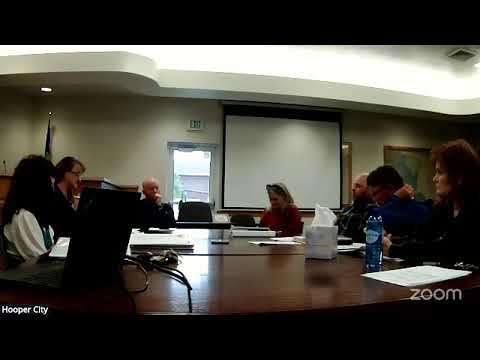
Hooper City Council members discussed a technical planning assistance grant at a May 15 work meeting after staff confirmed the city was awarded funding that would pay roughly $90,000 toward planning and require a $10,000 local commitment.
Staff described the grant’s scope as transportation planning and updates to design standards, including street, residential and commercial standards; review of the zoning ordinance and future land‑use map; public engagement; and a transportation master plan. The grant timeline described by staff anticipates work starting after July 1, 2025, with a tentative completion date of Jan. 31, 2027.
Several council members and staff debated process questions: some members said the planning commission should have been notified earlier because updates to the general plan traditionally begin with that commission; others noted that the grant application and award were an opportunity to obtain consultant resources the city could not otherwise afford. Staff said the grant submittal was a routine application step and that the planning commission and public would be involved during the scope and consultant selection stages.
Council members also raised concerns about language in the grant materials, including a population‑growth projection (the grant text cited large percentage increases) that one council member said did not reflect their local observations. Multiple speakers emphasized that the city would remain “in the driver’s seat” and would not be forced to adopt changes that it did not want; staff said the city council would select any consultant and the planning commission and community stakeholders would be engaged during the project.
Staff said the grant could help produce an impact fee study and reduce consultant costs by coordinating work (for example, the transportation and impact‑fee work overlap). The grant explicitly references preparing for the West Weaver Corridor project and encouraged prioritizing alternate routes for bikes, pedestrians and equestrians as well as updating commercial design standards.