Get Full Government Meeting Transcripts, Videos, & Alerts Forever!
Get email alerts on the Housing Affordable topic
No spam. Unsubscribe anytime.
Glocester council backs state bill H5957 on low- and moderate-income housing
Summary
The Glocester Town Council adopted Resolution 2025-06 supporting Rhode Island House Bill 5957, urging an amendment to the Low and Moderate Income Housing Act to allow local inclusionary zoning and recommending a six‑unit minimum for applicability.
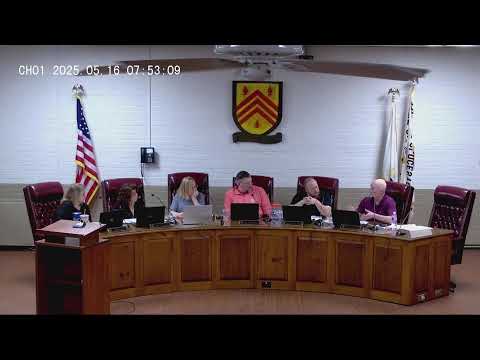
The Glocester Town Council passed Resolution 2025-06 in support of Rhode Island House Bill 5957, which proposes amendments to the Low and Moderate Income Housing Act, during a May meeting.
The resolution says H 5957 recognizes that a “one‑size‑fits‑all” approach to affordable housing construction does not work for diverse Rhode Island municipalities and would expand the meaning of “consistent with local needs.” It adds that low‑ or moderate‑income housing can qualify if a town adopts an inclusionary zoning ordinance that allows at least 50% of units in a development to be low‑ or moderate‑income units. The resolution also recommends any state amendment include a minimum project size “not less than six units.”
Walt read the proposed resolution aloud to the council before members moved, seconded and approved it by voice vote. The document names the town’s council officers and authorizes the town clerk to forward the resolution to the town’s state legislators and to other cities and towns for their support. The resolution states it takes effect upon passage.
Council members did not record a roll‑call vote in the transcript; the motion passed by a voice vote of “Aye.” No recorded dissent appears in the meeting record.
Why it matters: H 5957, as described in the town’s resolution, would give municipalities additional tools to meet affordable housing needs by allowing local design and zoning approaches (including an inclusionary zoning option). Glocester’s resolution signals municipal support for that flexibility and asks the General Assembly to include a six‑unit minimum threshold in the bill.
The town clerk was authorized to distribute the resolution to state lawmakers and other municipalities; the council did not set any follow‑up local ordinance or mandate tied to the resolution in this session.