Get Full Government Meeting Transcripts, Videos, & Alerts Forever!
Get email alerts on the Audit Realid topic
No spam. Unsubscribe anytime.
Office of the Auditor General audit finds no material findings in MDOS branch operations; audit highlights four reportable items including customer feedback and
Summary
MDOS officials told the House Appropriations Subcommittee that an Office of the Auditor General audit of branch operations found no material findings but included four reportable issues; MDOS described steps to collect customer feedback, improve testing oversight and resolve a perceived conflict between Real ID requirements and state privacy law.
The House Appropriations Subcommittee on General Government heard testimony on an Office of the Auditor General audit of the Michigan Department of State's branch operations division and MDOS's planned responses.
Brian Bryson, MDOS director of information security and the agency's liaison to the Office of the Auditor General, told the committee the OAG reviewed branch operations from Oct. 1, 2022, through May 31, 2024, including interviews, surveys and records from MDOS's customer and automotive record system (CARS). "This 14-month audit of the largest division in MDOS yielded no material findings," Bryson said. He also reported that branch operations processed an estimated 11,800,000 branch office transactions and collected about $1,300,000,000 between Oct. 1, 2022, and May 31, 2024.
Bryson described four reportable findings the OAG raised and MDOS's responses: 1) better collection and analysis of customer-service information; 2) Real ID and enhanced driver license (EDL) scanning and retention practices that the OAG interpreted as inconsistent with federal guidance; 3) oversight of testing at branches; and 4) training-record reporting limitations in the state's training system.
On customer feedback, MDOS said it is seeking approval of a contract with Qualtrics to deliver survey invitations by text or email after branch visits. Jackie Vinton, MDOS chief operating officer, told the committee that the initial vendor quote was higher than the agency wanted and that negotiations were ongoing: "The initial cost that was quoted ... I believe was around $576,000 for the first year and around that every year going forward, which we did feel was a lot for taxpayers," Vinton said.
On Real ID and document retention, Bryson told the subcommittee that the OAG's interpretation of retention requirements conflicted with the Michigan Social Security Number Privacy Act. "The practical implementation of those particular scanning requirements will likely create more problems than they solve within MDOS," Bryson said. He noted MDOS performs real-time validation of Social Security numbers through the Social Security Administration verification interface and residency checks through the SAVE system and that federal audits, including the TSA's December 2024 assessment, had not previously found storage-of-SSN issues.
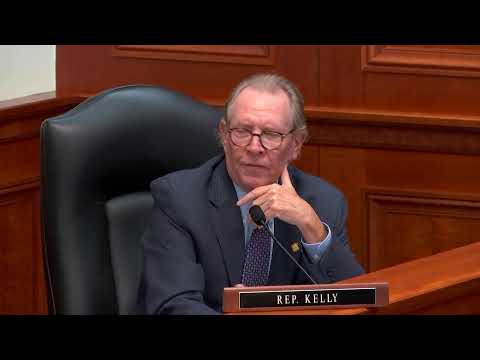
Representative Kelly asked whether the audit indicated improperly issued Real IDs or EDLs. Bryson said the audit did not find improperly issued credentials and that required electronic verifications are part of MDOS transactions. "The idea that somehow somebody got a Real ID without being a citizen or an enhanced ID without being a US citizen would be wrong," Bryson said.
On testing oversight, MDOS told the committee it will add test-area observations to district manager checklists, schedule testing-oversight training during branch training time and consider physical-space changes to better secure personal items during exams. MDOS also said it expects to launch "Know to Drive Online (K2DO)," which may permit some operator tests to be taken from home in the near future.
Representative Madock raised customer-service concerns based on online reviews and cited an average Google rating of about 3.2 across offices and repeated complaints about staff attitude. MDOS said branch managers review Google comments weekly and that the agency prefers a standardized customer-feedback tool rather than relying on publicly moderated reviews.
Committee members pressed MDOS on apparent inconsistencies in communications with the OAG and TSA about document retention; Bryson said a miscommunication occurred during the audit engagement about the definition of documentation that contains a Social Security number versus a Social Security number card. MDOS characterized the issue as an interpretation conflict between OAG expectations and state privacy law, and said it will follow TSA expectations regarding Real ID implementation while addressing statutory privacy limits.
The audit and MDOS's responses prompted follow-up questions from several representatives; the subcommittee scheduled additional oversight discussion with technology vendors and DTMB in upcoming meetings.