Get Full Government Meeting Transcripts, Videos, & Alerts Forever!
Get email alerts on the Veterinary Telehealth topic
No spam. Unsubscribe anytime.
Committee considers bills to allow veterinary telemedicine and expand how veterinarians establish VCPR
Summary
The House Committee on Regulatory Reform considered bipartisan bills to permit Michigan-licensed veterinarians to establish a veterinary‑client‑patient relationship through telemedicine, sponsors said.
The Michigan House Committee on Regulatory Reform heard testimony on a bipartisan bill package to allow veterinarians to establish a veterinary‑client‑patient relationship (VCPR) via telemedicine when appropriate, sponsors and witnesses said.
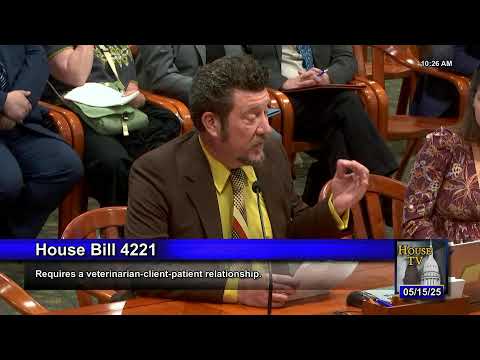
Representatives Raymond Aragona and Pawetsky introduced the bills (identified in testimony as House bills 42 20 and 42 21). Aragona told the committee the bills would codify telemedicine practices used during the COVID‑19 pandemic and give licensed veterinarians discretion to use remote consultations for many companion-animal needs.
Supporters — which included the Michigan Pet Alliance, Huron Valley Humane Society, the ASPCA and numerous practicing veterinarians — said telemedicine would expand timely access to care in rural and underserved areas, reduce stress for animals that react badly to clinic visits, and ease burdens on overcrowded shelters. Dr. Courtney White, vice president of veterinary medicine at Huron Valley Humane Society, said the organization serves more than 25,000 animals annually and described telemedicine as “a crucial tool” to stretch limited veterinary resources while prioritizing in‑person visits for hands‑on care.
Representative Aragona offered a personal example: his 14‑year‑old calico cat, Delilah, has chronic issues that repeatedly require short courses of antibiotics. Aragona said telemedicine would allow veterinarians to manage these episodic needs without the animal undergoing frequent, stressful clinic visits.
Opponents, led by the Michigan Veterinary Medical Association (MVMA), said they support telehealth in principle but oppose the bills as written because of animal‑welfare and regulatory concerns. MVMA President Dr. Matt Hines (testifying remotely) and MVMA CEO Bonhoeffer Ballard said that establishing a VCPR without a hands‑on exam risks missed diagnoses in some cases. Dr. Hines cited examples from the pandemic where animals prescribed medication remotely later developed complications — he said some animals were prescribed steroids without an in‑person exam and later presented in congestive heart failure. The MVMA also noted federal rules (FDA/USDA) about extra‑label drug use and said state law should align with federal requirements.
Bill text and proposed limits discussed during testimony included a 14‑day maximum prescription course for medications prescribed via telemedicine and an exclusion for controlled substances; witnesses also referenced compliance with federal regulations on extra‑label drug use. MVMA witnesses said those provisions did not address the core concern that some prescriptions require in‑person evaluation and that shelters and emergency clinicians rely on hands‑on exams for many decisions. MVMA offered that narrowly crafted guardrails and exemptions (for shelters and emergencies) would make telehealth safer while expanding access; the association said it is willing to negotiate draft language.
Supporters cited other states’ examples and said there were no major reports of harm when telemedicine was widely used during the pandemic. Jennifer Hobgood of the ASPCA noted that jurisdictions including California and Florida have adopted similar legislation and argued that the bills include substantial guardrails to protect animal welfare.
Committee members asked whether telemedicine can be used currently. Witnesses said telehealth may be used for follow‑up care when a VCPR already exists, but the bills would allow establishment of a VCPR remotely so that new patients could be triaged and treated by telemedicine where appropriate.
Ending
Members indicated interest in further negotiations to add safeguards; no committee vote on the telemedicine bills was recorded in the provided transcript.