Get Full Government Meeting Transcripts, Videos, & Alerts Forever!
Get email alerts on the Domestic Violence Strangulation Response topic
No spam. Unsubscribe anytime.
Local nurse urges law enforcement to treat 'choke' as potential strangulation; urges multidisciplinary response
Summary
Mary Slisschuk of Sawyer County Public Health and St. Croix Valley SART briefed the CJCC on strangulation detection, medical signs, and the need for coordinated response among patrol officers, medical providers, prosecutors and advocates.
Mary Slisschuk, a nurse with Sawyer County Public Health and St. Croix Valley SART, told the Sawyer County Criminal Justice Coordinating Council on May 14 that officers and first responders should treat reports of a partner "choking" a victim as a potential strangulation and as a serious, sometimes near‑lethal, assault.
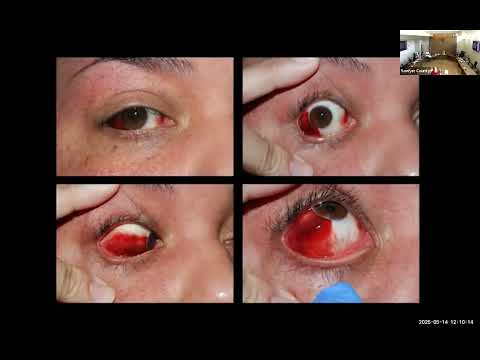
"If a victim is strangled one time, she's 750% more likely to be killed," said Casey Gwen, introduced in a training video played for the council. "Those words, he choked me, should be the biggest red flag for law enforcement officers." The video and Slisschuk emphasized that visible neck injury is often absent and that signs such as petechiae, altered mental state, or delayed bruising can indicate serious internal injury.
Slisschuk described the geographic reach of St. Croix Valley SART, which provides forensic nursing in parts of northwest Wisconsin, and said her team has handled adult and pediatric cases and provides expert testimony. She urged officers to conduct a focused strangulation assessment at the scene, to document and, when clinically indicated, ask providers to order imaging such as a CTA of the neck.
The training materials played to the council cited neurobiology of trauma and rapid timeframes for collapse and severe outcomes. The presenters advised officers to look beyond external marks: "What officers should understand is that you can be strangled even fatally and have no marks," a trainer said in the video. Slisschuk noted petechiae and other mouth/eye findings that may not be visible to patrol without a careful examination.
Slisschuk described local coordination efforts: the Sawyer County LCO Sexual Assault Response Team (SART) resumed meetings in April and now meets monthly. She said the SART learned from recent coordination that some hospitals in the region have reduced on‑site nurse coverage and are training additional staff; one hospital is training five people, she said. She urged a multidisciplinary approach—patrol, advocates, prosecutors, medical providers and probation officers—so that evidence, medical findings and victim support are shared.
Slisschuk offered resources and contact information to council members and said SART staff can provide expert testimony and help train local providers. She left assessment forms and symptom lists for delayed signs of strangulation for local agencies to use.
The presentation was delivered during the CJCC's agenda item on guest presentations and was followed by brief member acknowledgements and a transition to other agenda business.