
Oro Valley holds second stakeholder meeting on Trails Connect master plan; residents press for maintenance, access and coordinated funding
Get AI-powered insights, summaries, and transcripts
Sign Up Free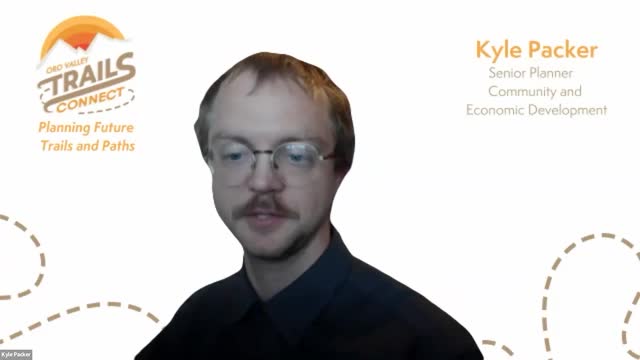
Summary
Town planners reviewed a draft vision and 10 guiding principles for the OV Trails Connect master plan and gathered public input on maintenance priorities, connectivity, funding options and rules for e-bikes. Staff said the town will fold feedback into a 90% draft that will go to the Parks & Recreation Advisory Board and Town Council.
Town of Oro Valley planners hosted the second stakeholder meeting for the OV Trails Connect master plan via Zoom to review a draft vision and 10 guiding principles and to collect additional community feedback.
The meeting centered on four themes—reinvesting in existing assets, enhancing connectivity, securing funding and growing a safe, accessible network—with participants repeatedly urging clearer maintenance priorities, more coordination with regional land managers and new or dedicated funding sources.
"The goal is to create a community led master plan for the town's paved path and unpaved trail network that serves all users," said Kyle Packer, senior planner and lead for the trails master plan, as he opened the session and summarized outreach to date. Packer and staff noted the project has already received substantial input: an online survey returned 735 responses (about 75% from people older than 55, staff said), more than 700 trail‑side comments and additional feedback from youth and resident working groups. The outreach summary is posted at OVtrailsconnect.com.
Why it matters: Participants framed maintenance and safe access as prerequisites for broader improvements. Several speakers said maintenance should prioritize badly deteriorated segments rather than cosmetic resurfacing, and asked the town to coordinate maintenance responsibilities with state and federal land managers and neighboring counties.
Discussion highlights
Maintenance and land‑manager limits: Multiple speakers described uneven maintenance and local examples where patching made conditions worse. "They came in and tried to patch those cracks... that just created a bump," said a resident who regularly uses the loop trail, describing prior repairs that produced raised patches. Planners said maintenance responsibilities vary by land manager and that the plan will document coordination needs with agencies including Arizona State Trust Land, the U.S. Forest Service, Catalina State Park and Pima and Pinal counties.
Unofficial trails and volunteer maintenance: Sonoran Desert Mountain Bicyclists (SDMB) president Nat Gordon urged recognition of historically used routes on state trust land and described SDMB's volunteer trail ambassador program, which documents trail conditions and unauthorized modifications for land managers. Gordon said volunteers can help with assessments and etiquette education if corridors become officially recognized.
Funding and dedicated revenue: Residents asked about a dedicated funding source for trail upkeep. "The town does not have a dedicated source," said Mr. Vela, the town's planning and zoning administrator, noting the survey did not identify a specific funding mechanism. As an example, Vela and speakers pointed to Marana's model of dedicating a portion of bed tax revenue for trails and open‑space maintenance and suggested pursuing state grant programs such as heritage or parks grants for larger projects.
Connectivity and easements: Several participants identified legacy gaps where trail corridors end at private subdivisions or homeowners associations. One resident asked whether land swaps or easement purchases could reopen connections; Vela said options include purchasing time‑limited easements from state trust land, land swaps and negotiating trail dedications during future development approvals.
Rules for e‑bikes and user conflicts: Participants debated motorized use on backcountry trails and the need to reconcile differing rules across jurisdictions. A resident asked whether ADA users could get exceptions to e‑bike restrictions; town staff said Arizona statutes and Pima County rules will be part of the broader policy review. Equestrian representatives warned about liability and safety risks if throttle‑controlled electric bikes operate on certain backcountry routes, while other commenters urged exceptions for pedal‑assist bikes to support users with mobility needs.
Signage, wayfinding and accessibility: Residents urged clearer trailhead signage, mile markers, QR‑code or digital wayfinding, and improved parking and access points near existing commercial areas. Speakers suggested distributing printed maps at local businesses and increasing outreach—guided walks, ambassador programs and educational materials—to encourage respectful trail use and increase participation among residents not yet using trails.
Next steps: Staff said the meeting is the second of three stakeholder sessions. Planners will incorporate comments into a 90% draft that will include specific goals, policies and actions; that draft is scheduled to go to the Parks & Recreation Advisory Board and then the Oro Valley Town Council (staff cited a Parks & Recreation Advisory Board meeting on May 20 and a Town Council meeting on June 18). The 90% draft review with stakeholders is expected in the fall. The online comment form at OVtrailsconnect.com remains open through May 19.
No formal decisions were taken at the meeting; staff described this session as outreach and direction‑gathering to shape later, more detailed plan materials.
Ending: Planners asked attendees to share the OVtrailsconnect.com link with neighbors and to submit any further comments through the form before it closes. The town will use public input to refine the trails plan and the forthcoming 90% draft that will spell out implementation steps, funding options and coordination with regional agencies.