Lifetime Citizen Portal Access — AI Briefings, Alerts & Unlimited Follows
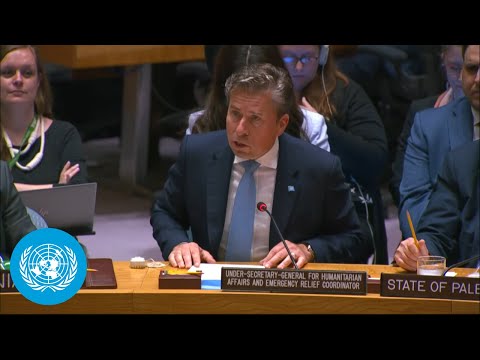
U.N. humanitarian official warns Gaza faces widespread famine risk, urges immediate access and end to blockade
Loading...
Summary
A United Nations humanitarian official told the Security Council that Gaza faces mass famine and that humanitarian access remains obstructed; the official criticized Israel's distribution modality, cited International Court of Justice provisional measures and U.N. resolutions, and urged the lifting of the blockade and protection of civilians.
A United Nations humanitarian official told the Security Council that the Gaza Strip faces widespread famine and that current restrictions on aid threaten hundreds of thousands of lives. "Every single 1 of the 2,100,000 Palestinians in the Gaza Strip face the risk of famine," the official said, and added that "1 in 5 face starvation despite the fact that you have funded the food that could save them."
The official said that more than 10 weeks of blocked goods left Gaza without food, medicine, water or tents and that hospitals and medics are overwhelmed. "The few hospitals that have somehow survived bombardment are overwhelmed," the speaker said, and described repeated attacks on medical facilities, citing the European Gaza hospital in Khan Yunis as having been struck again with additional civilian casualties.
The statement framed the crisis as the result of deliberate restrictions and described the Israeli-proposed distribution plan as insufficient and harmful. "The Israeli design distribution modality is not the answer," the official said, arguing it "practically excludes many, including people with disabilities, women, children, the elderly, the wounded" and that it makes aid "conditional on political and military aims." The speaker said the U.N. and partners have life-saving supplies staged at borders and had demonstrated delivery capacity during a ceasefire when tens of thousands of trucks reached civilians.
The official said the U.N. has tried to negotiate access repeatedly: "This council has adopted resolutions that demand all parties to the conflict comply with international humanitarian law and protection of civilians," and, "the UN has met 12 times and again this morning with the Israeli authorities to discuss this proposed modality." The statement cited the International Court of Justice (ICJ) process and provisional measures, saying the ICJ is "considering whether a genocide is taking place in Gaza" and noting that the court has indicated provisional measures that the speaker said have not been implemented. The official also invoked U.N. resolution 2417 (cited in the speech as "24 17") as addressing conflict-induced food insecurity.
Beyond Gaza, the speaker warned of escalating violence in the West Bank, describing increased demolitions, forcible displacement, settlement expansion and settler violence. "Appalling violence is also increasing in the West Bank where the situation is the worst in decades," the official said, and cited recent incidents of abducted children.
The speaker pressed the council for action and for member states to change policies the speaker said sustain the crisis: "This council must prevail. Demand this ends. Stop arming it. Insist on accountability. To the Israeli authorities, stop killing and injuring civilians. Lift this brutal blockade. Let humanitarians save lives. To Hamas and other armed Palestinian groups, release all hostages immediately and unconditionally. Stop putting civilians at risk during military operations," the official said.
The remarks combined first-hand descriptions of civilian harm, operational claims about the U.N.'s ability to deliver aid, and legal references to the ICJ and U.N. resolutions. The speaker repeatedly emphasized that humanitarian principles require independent needs assessments and neutral, impartial delivery and warned that current measures would set a dangerous precedent for how aid is controlled in conflict zones.
No formal decision or vote was recorded in the transcript segment of this briefing. The U.N. official described negotiations with Israeli authorities as ongoing and urged immediate implementation of the ICJ's provisional measures and restoration of large-scale humanitarian access.
The United Nations humanitarian official concluded by framing the issue as a test of international law and collective responsibility: "Will you act decisively to prevent genocide and to ensure respect for international humanitarian law? Or will you say instead that we did all we could?"