Get Full Government Meeting Transcripts, Videos, & Alerts Forever!
Get email alerts on the Ageism Care Data topic
No spam. Unsubscribe anytime.
Experts and member states urge action on ageism, care systems, gender gaps and data as UN deliberates next steps
Summary
UN officials, the independent expert and civil society speakers highlighted abuse, gendered poverty in older age, and gaps in care and social protection, while many countries described national programs; speakers urged data disaggregation and embedding ageing across development frameworks.
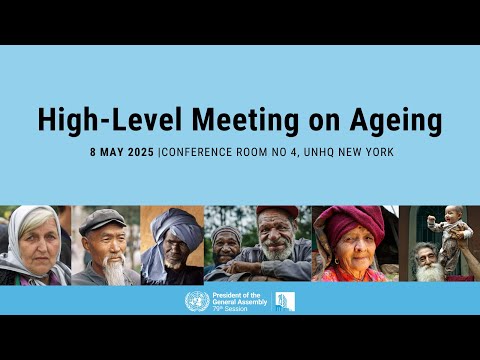
Senior UN officials, the independent expert on older persons'rights and civil society representatives used the UN high-level meeting to press for rights-based policies against ageism, expanded social protection and better data to guide decisions.
The Assistant Secretary-General for Human Rights told delegates the OEWG on Ageing had produced a "wealth of evidence" showing normative and protection gaps globally; she cited World Health Organization data that "1 in 6 people over the age of 60 experience some form of abuse annually" and warned underreporting likely makes that an underestimate. The independent expert on the enjoyment of all human rights by older persons said the OEWG's work provided a solid basis for next steps and described a dedicated convention as "the best protection" to address protection gaps.
Civil-society speakers including representatives of the International Network for the Prevention of Elder Abuse and the Global Alliance for the Rights of Older Persons said enshrining rights in law is necessary to change narratives that treat older people primarily as care recipients rather than rights-bearing citizens.
Speakers from the UN Department of Economic and Social Affairs (DESA) described system-level work: supporting implementation of the Madrid International Plan of Action on Ageing, coordinating the UN Decade of Healthy Ageing (2021-2030), and participating in statistical efforts (the Titchfield Group on age-disaggregated statistics) to improve data collection and reporting.
Many Member States presented national measures illustrating a range of policy responses. Examples given in national statements included:
- Saudi Arabia described modernization efforts and services including home and virtual health care, lifelong learning, and priority service lines for older persons following a recent visit by the independent expert.
- Morocco described a national strategy through 2030 to expand social protection and lifelong learning and to enable older persons to remain in employment if they wish.
- Kyrgyzstan said it was starting a state program for active aging covering 2025'030 focused on health, dignity and participation.
- Mongolia reported amendments to national law and an action plan for healthy aging for 2025'028.
- Cuba, Mexico, Portugal, Uruguay and others described national laws, pension programs, care networks, and long-term-care strategies.
Speakers repeatedly stressed that aging is not gender neutral: several delegations and experts highlighted that older women face higher rates of poverty because of lifetime inequalities in wages, education and informal work, and urged gender-responsive measures in pensions and social protection.
Delegates also called for embedding aging across development frameworks including the upcoming World Social Summit and financing-for-development discussions, strengthening intergenerational solidarity and improving disaggregated data to inform policy. Several speakers urged attention to long-term care workforce shortages and the need for community- and home-based solutions.
Ending: The meeting closed with strong cross-cutting demands for better data, rights-based law and policy, targeted social protection for older women, and international cooperation to finance and implement reforms. Member states and UN agencies offered national examples and technical support but acknowledged implementation and financing challenges ahead.