Lifetime Citizen Portal Access — AI Briefings, Alerts & Unlimited Follows
UN high-level meeting advances bid for a treaty on older persons’ rights; member states divided on process
Loading...
Summary
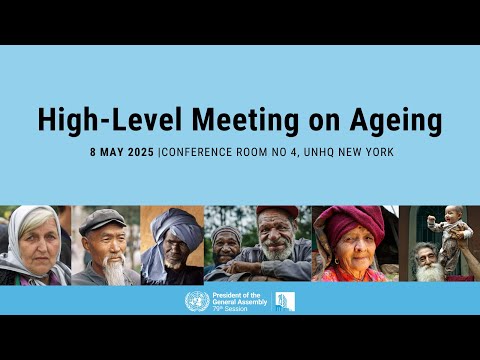
Delegates at a United Nations high-level meeting on aging affirmed momentum toward drafting a legally binding international instrument on the human rights of older persons, while some member states warned the process risks duplication, limited inclusivity and budget burdens if carried out only through the Human Rights Council.
Delegates at a United Nations high-level meeting on aging affirmed momentum toward drafting a legally binding international instrument on the human rights of older persons, while some member states warned the process risks duplication, limited inclusivity and budget burdens if carried out only through the Human Rights Council.
The meeting, convened under General Assembly guidance to review the recommendations in decision 14/1 of the Open-ended Working Group on Ageing, heard widespread praise for the Human Rights Council's March adoption of resolution 58/13, which establishes an open-ended intergovernmental working group to elaborate a draft legally binding instrument. "This is a bold, concrete step," said the Assistant Secretary-General for Human Rights, who highlighted broad cross-regional support for the council text.
The decision 14/1 produced in New York after 14 sessions of the OEWG on Ageing provided the factual basis for the next steps. Many delegations'including Argentina, Chile (speaking for the group of friends on older persons), the European Union, Portugal, Slovakia and a long list of cosponsors'told the meeting they supported beginning intergovernmental negotiations toward an international convention. Speakers emphasized the instrument should be inclusive, adaptable to national realities and grounded in human-rights standards; several urged that older persons, civil society and national human rights institutions take part meaningfully in drafting.
Supporters cited the widespread and recurring protection gaps reviewed by the OEWG and the need for binding standards. Delegations highlighted that the Human Rights Council text attracted broad sponsorship and said a treaty would address gaps such as age discrimination, access to health and social protection, autonomy and abuse in care settings.
However, a group of states raised procedural objections. The Representative of the Russian Federation said the council had "exceeded its mandate as a UN subsidiary body of the General Assembly" by launching a negotiating process in Geneva before New York members had reached a common view. China and the Islamic Republic of Iran urged caution to avoid duplication with existing human-rights instruments and to prevent additional budgetary burdens. Russia and others stressed that negotiating results at the Human Rights Council would ultimately need to be returned to the General Assembly for consideration by all 193 Member States.
Several delegations argued for a non-exclusive approach: that the new intergovernmental process in Geneva should consider all eleven options set out in decision 14/1 and coordinate with existing UN mechanisms and regional instruments. Delegations also urged that any new instrument provide flexibility to account for demographic, economic and cultural diversity and be accompanied by capacity-building and technical cooperation.
There were no formal votes at the United Nations General Assembly meeting itself. The meeting recorded and recapped earlier formal outcomes: the OEWG adopted decision 14/1 after 14 sessions, and the Human Rights Council adopted resolution 58/13 establishing an intergovernmental working group to draft a legally binding instrument. Member states differed on whether the council was the right venue to lead drafting and on whether the legal gaps identified require a new treaty or stronger implementation of existing treaties.
The meeting closed with calls to maintain political momentum in New York while ensuring an inclusive, transparent intergovernmental process in Geneva; several delegations asked that the draft product be referred back to the General Assembly for consideration.
Ending: Delegations agreed on the urgency of addressing gaps in protection for older persons but diverged on the process and forum for doing so. The debate over whether to prioritize a new treaty or to strengthen implementation of current instruments is likely to shape the upcoming intergovernmental negotiations in Geneva and the related work streams in New York and other UN bodies.