Get Full Government Meeting Transcripts, Videos, & Alerts Forever!
Get email alerts on the Mobile Library topic
No spam. Unsubscribe anytime.
Saint Paul reports rising use of mobile library 'Mobi'; managers cite access gains and operational constraints
Summary
Mobile library manager reported the service launched Aug. 3, 2024, has visited more than 20 stops across all seven wards and recorded 32,273 visitors and 31,073 items borrowed in about seven months; staff noted accessibility improvements and logistical challenges.
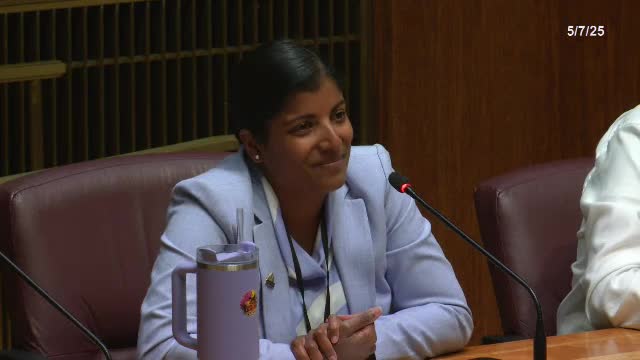
Savitri Santharan, mobile library manager for the Saint Paul Public Library, told the board that the city’s mobile library, fondly known as Mobi, launched Aug. 3, 2024, and has recorded strong citywide use.
"We've had 32,273 visitors," Santharan said, describing an average of about 4,000 visitors per month and 31,073 items borrowed (books, DVDs and mobile hotspots) over the roughly seven-month reporting period. Santharan said those figures represent a 132% increase in visitors and a 56% increase in items borrowed compared with the prior period.
Staff emphasized accessibility improvements, including a wheelchair lift that lets patrons enter the vehicle. Santharan said the team tailors inventory by stop — children’s materials for school visits, a broader mix for community stops — and runs a biweekly schedule that reaches slightly more than 20 regular stops and all seven city wards.
The mobile library visits five Saint Paul public schools and one public charter school as day stops and also serves evening neighborhood and senior residential stops. Santharan said the program coordinates with school partners and that some school sites have small libraries while others do not; teachers told staff they particularly value print books and the mobile library’s broader selection.
Operational challenges include adapting to a smaller vehicle (a 32-foot truck replacing a 39-foot predecessor), establishing an efficient two-desk workflow and boosting attendance at slower evening stops. Stops are evaluated after a two-year period to decide whether to continue the schedule.
Santharan named recent service partners and staff who support outreach: community specialist Tula Eppo, a digital navigator role funded by Comcast in 2024 (Ti Chang, who has since moved to Riverview Library), and community members who help register neighbors for library cards. Board members who attended recent parades and neighborhood events praised the mobile library’s outreach and recommended continued attention to partnerships and scheduling.
The board did not take formal action; members expressed support and interest in visiting mobile library stops in different wards.