Get Full Government Meeting Transcripts, Videos, & Alerts Forever!
Get email alerts on the Infrastructure topic
No spam. Unsubscribe anytime.
Lake Elmo council discusses MUSA expansion, potential land acquisition for south water treatment plant; closed session scheduled
Summary
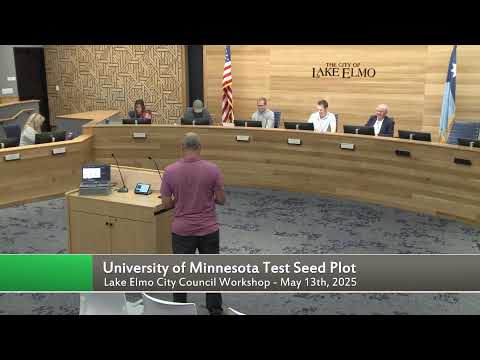
Council heard a site plan for a proposed south water treatment plant near Inwood and 10th Street, discussed a property owner’s request to expand the MUSA (metropolitan urban service area) to allow residential development, and agreed to a closed session to discuss a possible land purchase using settlement funds for the plant.
City staff presented a preliminary site layout and policy request on May 20 for a proposed south water treatment plant at the Inwood Avenue and 10th Street intersection and a related Metropolitan Urban Service Area (MUSA) expansion requested by the property owner.
Staff said the candidate treatment site totals about 8.2 acres and would require sewer to be extended to the parcel. The presentation noted wetlands on and near the site, watershed permitting work already coordinated with two watershed districts, the need for test wells and geotechnical work before purchase, and the long lead items needed for constructing a treatment plant and connecting distribution mains. The staff presenter said a comp‑plan amendment would be required to site a treatment plant there and that the property owner had asked the city to consider expanding the MUSA to include additional acreage to the south and west of the intersection.
The property owner’s concept plans showed a low‑density residential option (2.8 units per acre) that the owner said would yield about 144 units in the example layout; staff gave a net buildable estimate of about 51.4 acres for the broader parcel and said that, depending on the density chosen, the net yield could range from roughly 128 to 205 units. Staff also noted that the Metropolitan Council’s 2050 planning guidance requires the city to demonstrate a minimum overall density (3.5 units per acre at 2050) and that adding or removing acreage will affect those tables.
Property owner Paul Shrier said he and the owners are interested in connecting to sewer where available and described the difficulty of planning development when a sewer main “goes right by our property and not really ask to try to get connected to it.” He said soil test results limited septic feasibility. The city’s presenter said detailed due diligence would include a topographic survey, soil borings and a test well, and that those tasks would require additional city staff work and funding if the council wanted to pursue purchase.
Councilors were generally supportive of continuing discussions about the treatment plant site. Several council members said acquiring the parcel for a treatment facility would likely benefit the city, and one member urged caution about accelerating a MUSA expansion outside the comprehensive‑plan process while another noted the city needs land for the plant and that settlement dollars from past litigation would fund the acquisition. The council directed staff to pursue a closed session to discuss purchase negotiations and legal matters; staff set a closed session date of June 3 to meet with legal counsel regarding a potential purchase.
What happens next: staff will prepare an access/purchase discussion for closed session and return with additional due‑diligence results (test well, survey, soils) before the council votes on any purchase or MUSA amendment.
Clarifying details: staff said the proposed treatment facility site is about 8.2 acres; the owner’s example concept at low‑density (2.8 units/acre) showed roughly 144 units; staff estimated a net buildable area of 51.4 acres that could produce roughly 128–205 units depending on the chosen density and zoning. Staff said a comp‑plan amendment would be required to add MUSA acreage and that Met Council density accounting for 2050 will need to be met.