Get Full Government Meeting Transcripts, Videos, & Alerts Forever!
Get email alerts on the Tourism Economics topic
No spam. Unsubscribe anytime.
Tourism stays strong in Charlotte County; sports events generate notable room nights and spending
Summary
Consultants reported fiscal‑year 2024 tourism economic impact of $1.26 billion; sports and event tourism accounted for recurring room nights and short‑term boosts to local tax receipts.
Downes Saint‑Germain Research president Joseph Saint Germain reported to the county commissioners on May 13 that fiscal‑year 2024 visitors generated $1.26 billion in economic impact for Charlotte County — $859 million in direct visitor spending and more than 1.1 million visitors — representing year‑over‑year gains of roughly 8% and 4%, respectively.
Saint Germain said tourism supports about 12,800 jobs and roughly $390 million in wages locally. After estimated public‑service costs, visitors produced more than $35 million in net tax benefit to the county and an estimated per‑household saving of about $10.78 toward local services.
The nut graf: County tourism director Sean Daugherty and the consultant also briefed commissioners on sports tourism results: since FY 2021 Charlotte County has hosted 240 sporting events that collectively generated about $180 million in economic impact and many thousands of hotel room nights; organizers said several events have led to recurring training visits and collegiate off‑season use.
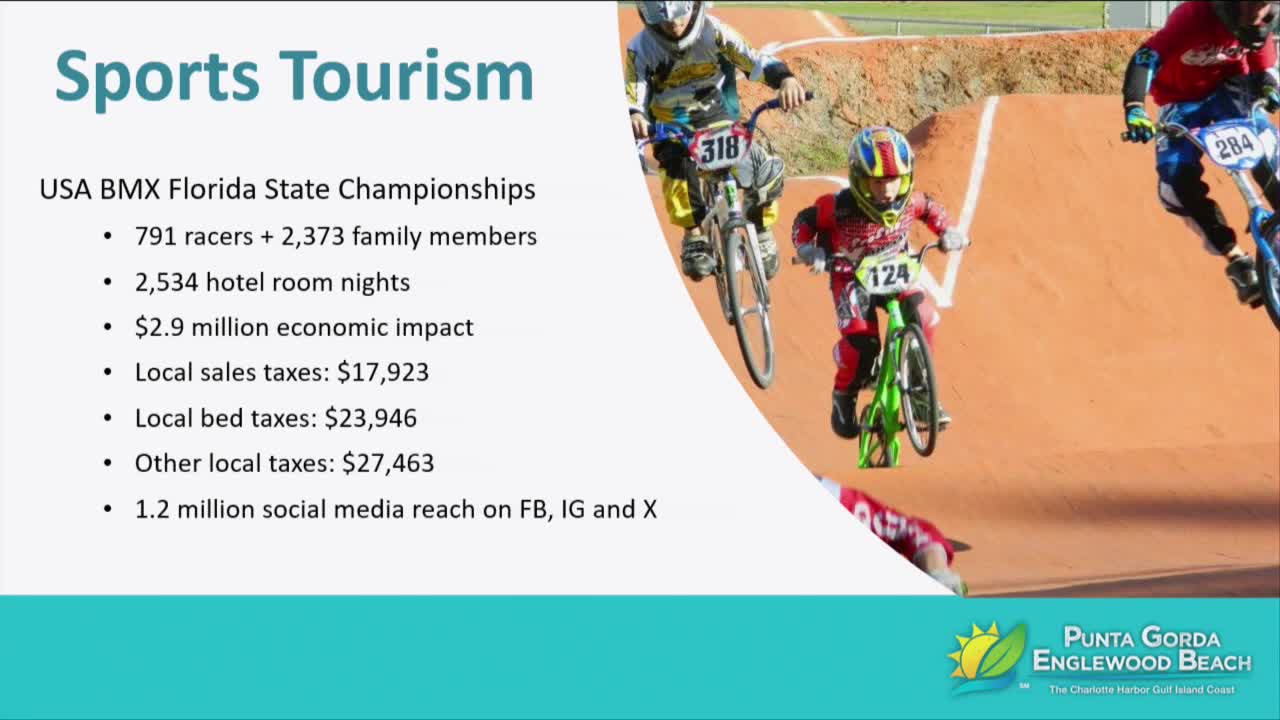
Saint Germain and Daugherty highlighted recent events with measurable impacts: the USA BMX Florida State Championships (record 791 racers, estimated $2.9 million economic impact and roughly 2,500 hotel room nights), a U.S. youth soccer championship (about 3,700 attendees, 915 room nights, est. $1.5 million impact), a regional swim meet that yielded recurring team training bookings, and several pickleball events at the PicklePlex. Daugherty said sports tourism is “recession‑resistant” and helps market the county year‑round by attracting families and non‑seasonal visitors.
Commissioners asked about the potential fiscal effect of reduced tourism marketing funding. Saint Germain cited a case study (a U.S. statewide example) in which significant tourism marketing cuts led to a roughly 30% reduction in measured tourism metrics over time and said recovery took many years; county staff and commissioners noted the risks of abrupt budget cuts to promotion.
Ending: Commissioners thanked staff for the data and suggested the county continue to prioritize sports and event sales efforts that generate room nights and off‑season visitation. Daugherty said staff will track season‑to‑date metrics and evaluate the impact of individual events as part of marketing and sales planning.