Get Full Government Meeting Transcripts, Videos, & Alerts Forever!
Get email alerts on the School Based Mental Health topic
No spam. Unsubscribe anytime.
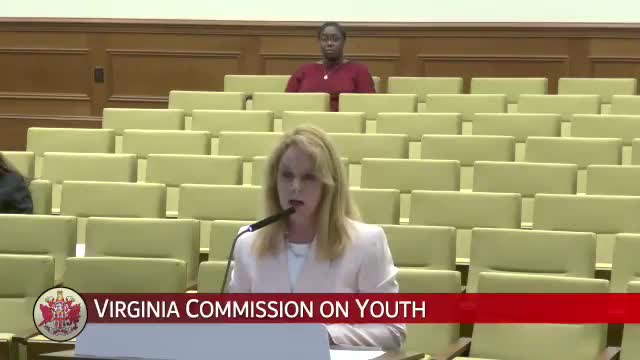
Commission on Youth hears Behavioral Health Commission study warning school mental-health services are at risk as pandemic funds expire
Summary
The Commission on Youth reviewed a Behavioral Health Commission study finding wide variation in school-based mental-health services across Virginia, heavy reliance on pandemic relief dollars that have mostly expired, and funding and staffing barriers to expanding higher-intensity care.
The Virginia Commission on Youth on an agenda item reviewed a Behavioral Health Commission study that found many school-based mental-health services created with pandemic relief funds are at risk as that one-time funding expires, leaving gaps—particularly for students who need higher-intensity care.
BHC staff told the commission the study, conducted in 2023, found substantial need: statewide survey data from 2022 showed about 40 percent of high school students reported symptoms of depression and 13 percent had considered suicide. The study estimated that roughly 77 percent of public school students receive Tier 1 (preventive) services at school, while more than half of students needing Tier 2 or Tier 3 services could not receive them on campus.
"About 120‑some million dollars which had been available specifically for school-based mental health services has now expired," a Behavioral Health Commission staff member said, describing the disappearance of flexible ESSER funding that divisions used for staff, contracts with providers and programs.
The study identified several drivers of limited school-based services: workforce shortages (nearly half of divisions reported difficulty filling school psychologist positions and 41 percent had trouble hiring counselors), uneven local funding, and a dramatic drop in Medicaid-funded therapeutic day treatment (TDT) payments—an 82 percent decline in TDT spending from FY2019 to FY2023, the report said. The BHC staff noted that DMAS (the state Medicaid agency) is redesigning school mental‑health services and intends to publish a plan in June.
The report described a September 2023 federal change that reversed the Medicaid “free care” rule, allowing school divisions to seek Medicaid reimbursement for health and behavioral services regardless of a student's Individualized Education Program status. The staff warned that while the change expands potential funding, many divisions lack the billing infrastructure or staff to draw down Medicaid dollars; the Department of Education currently has limited capacity to provide technical assistance.
"This change has the potential to expand the funding that divisions get from Medicaid, but it will require divisions to commit to additional administrative burdens and staff time for billing," the presenter said.
Commission members pressed for more recent data and for clarity about which divisions responded to surveys. Several members urged the commission to examine nonpublic settings — including private schools and homeschooling — and to assess parental roles in consent for student services. Committee members also recommended exploring whether Children's Services Act funds are being used for high‑need students and suggested inviting CSA or local FAPT representatives to brief the commission.
The Commission on Youth added the school‑based mental‑health review to its study plan for monitoring and signaled it will request additional presentations from the Department of Education, the Behavioral Health Commission and other stakeholders before its November meeting. Commissioners emphasized the need for a reliable, flexible funding mechanism at the state level to sustain services once ESSER funds are gone.
The meeting record shows a range of specific recommendations in the study: continuing or re‑funding pilot programs for school mental health, commissioning a review and redesign of TDT (which DMAS has begun), providing state funding or one‑time transition funds after ESSER expiration, and adding technical assistance and at least one FTE at DOE to help divisions bill Medicaid. Some of those recommendations were included in the 2024 budget language; others were not.
Commission members said they will follow up with the Department of Education when new survey data and DOE plans are available, and they expect additional presentations and staff work between now and November.