Get Full Government Meeting Transcripts, Videos, & Alerts Forever!
Get email alerts on the Energy Efficiency Programs topic
No spam. Unsubscribe anytime.
Maryland utilities report mixed 2024 EMPOWER results as commissioners press for clearer goals on demand and equity
Summary
Semiannual EMPOWER reports showed several utilities met or exceeded 2024 savings targets while underspending budgets; commissioners urged more explicit links between programs, grid constraints and customer affordability, and called for clearer metrics on demand reduction and low‑income access.
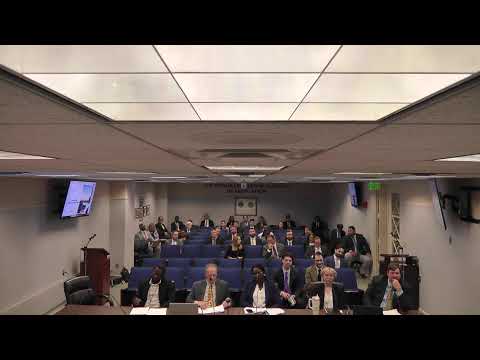
Maryland utilities told the Public Service Commission on Wednesday that their 2024 EMPOWER portfolios largely hit targets for electricity savings while spending well under budget, but commissioners pressed for clearer alignment between the programs and wider policy goals such as peak‑demand relief, distribution constraints and equitable benefits for low‑income customers.
The semiannual presentations covered results from Baltimore Gas & Electric (BGE), Pepco and Delmarva Power (PHI), the Exelon joint utilities, Potomac Edison, SMECO and Washington Gas. Utilities and other presenters reported that several residential and commercial programs exceeded energy savings goals while many administrators spent a smaller share of their approved incentive budgets than planned — a pattern regulators and advocates said complicates oversight and strategic planning.
Commissioners and advocates used the session to push utilities to show how EMPOWER spending produces outcomes beyond a numerical target — for example, avoiding costly distribution upgrades, shaving peak loads that drive capacity prices, and directing more of the surcharge dollars into direct customer incentives and low‑income assistance. Several commissioners said they wanted program plans and filings that explicitly tie EMPOWER measures to those operational goals.
BGE told the commission it achieved 115% of its 2024 goal and returned $152 million in incentives and bill credits to customers; the company said customers will see roughly $500 million in estimated lifetime savings from measures deployed in 2024. Presenters described success in midstream HVAC programs, the Quick Home Energy Checkup (about 70,000 participants in 2024), and stronger performance in C&I programs driven by direct‑install and marketing improvements. BGE staff also highlighted growth in device‑based load management and use of learnings to shape future proposals.
Pepco and Delmarva reported divergent outcomes inside PHI: Pepco finished slightly below the 2% statewide target at 1.77% while Delmarva exceeded it at 2.08%. PHI said a slow first half of the year depressed Pepco's annual total, but that incentives, targeted marketing and second‑half activity produced a confident rebound going into 2025.
Potomac Edison reported residential results that exceeded many targets and a C&I pipeline that it said positions the company well for the remainder of the three‑year cycle. SMECO said it exceeded its combined 2024 portfolio goal (109% of target) while using roughly 64% of its incentive budget; SMECO also described an active demand‑response program and new pilot work on water‑heater load management. Washington Gas reported strong therm savings and said its residential and commercial portfolios outperformed plan; the company also confirmed it concluded a gas heat‑pump pilot this year and decommissioned pre‑production units used only for testing.
Throughout the session commissioners repeatedly urged utilities to show concrete metrics linking EMPOWER activities to grid benefits such as feeder‑level constraints and capacity price reductions. Commissioner concerns focused on two related issues: first, that meeting a statutory percentage or greenhouse‑gas target is not a complete explanation of program value; and second, that EMPOWER funds are ratepayer dollars and should demonstrably deliver savings and relief to ratepayers — especially lower‑income households — rather than primarily covering administrative costs.
Advocates and state agencies echoed calls for clearer priorities. The Maryland Energy Administration said the shift in 2024 law toward greenhouse‑gas targets aligns with broader climate goals and favored directing more funds to direct customer incentives and underserved communities. The Office of People’s Counsel and other observers recommended an independent, short‑term assessment to validate utility budgeting and to develop a coordinated road map for market transformation (especially for heat pumps and heat‑pump water heaters).
The commission said it will use the upcoming work‑group process to examine several themes raised at the hearing: how to set and measure demand‑management objectives separate from total energy savings; how to improve reporting and comparability across utilities; and how to ensure EMPOWER investments accelerate electrification while advancing affordability and equity.
The utilities said they would continue to refine proposals and make additional data available to staff and stakeholders, and several companies signaled they will incorporate commissioners’ feedback in forthcoming pilot filings and the next cycle of program design. Commissioners asked staff to coordinate follow‑up discussions that include utility operational staff and interagency stakeholders to develop clearer, auditable measures that link EMPOWER budgets to grid and customer outcomes.