Get Full Government Meeting Transcripts, Videos, & Alerts Forever!
Get email alerts on the Water Supply Local Emergency topic
No spam. Unsubscribe anytime.
Harrisonburg council consents to local emergency after high turbidity limits water production
Summary
Following heavy rains that raised turbidity in the Dry River and North River intakes, Harrisonburg City Council on May 16 consented to a local emergency declaration to access resources and procurement flexibility while the water treatment plant’s output is constrained.
HARRISONBURG, Va. — The Harrisonburg City Council on May 16 voted to consent to a local emergency declaration after heavy rains raised turbidity in the city’s raw water intakes, limiting production at the Harrisonburg Water Treatment Plant and prompting mandatory water-conservation measures.
City Manager Andy Banks presented the resolution and asked council to consent to his declaration of a local emergency so the city could access additional resources and reduced procurement requirements if needed. Public Utilities Director Collins told the council heavy rains had caused high levels of suspended particles in water from the Dry River and the North River, and that the chemical treatment techniques usually used by the plant were “less than effective” for many batches received beginning the morning of May 14.
The resolution, which references provisions of the Virginia Code cited in the meeting text, says a complete plant shutdown occurred for about 24 hours and that production was only partially restored on May 15 after staff tried different treatment techniques. It states the city’s potable water storage was “greatly diminished” as of the morning of May 16 and that Rockingham County could no longer supply additional potable water to Harrisonburg customers.
City Manager Banks reiterated that “the water is safe to drink,” and asked residents to follow mandatory conservation guidelines so staff can fully restore treatment-plant output. The resolution notes that, if the situation worsens, customers could be required to boil water before consumption.
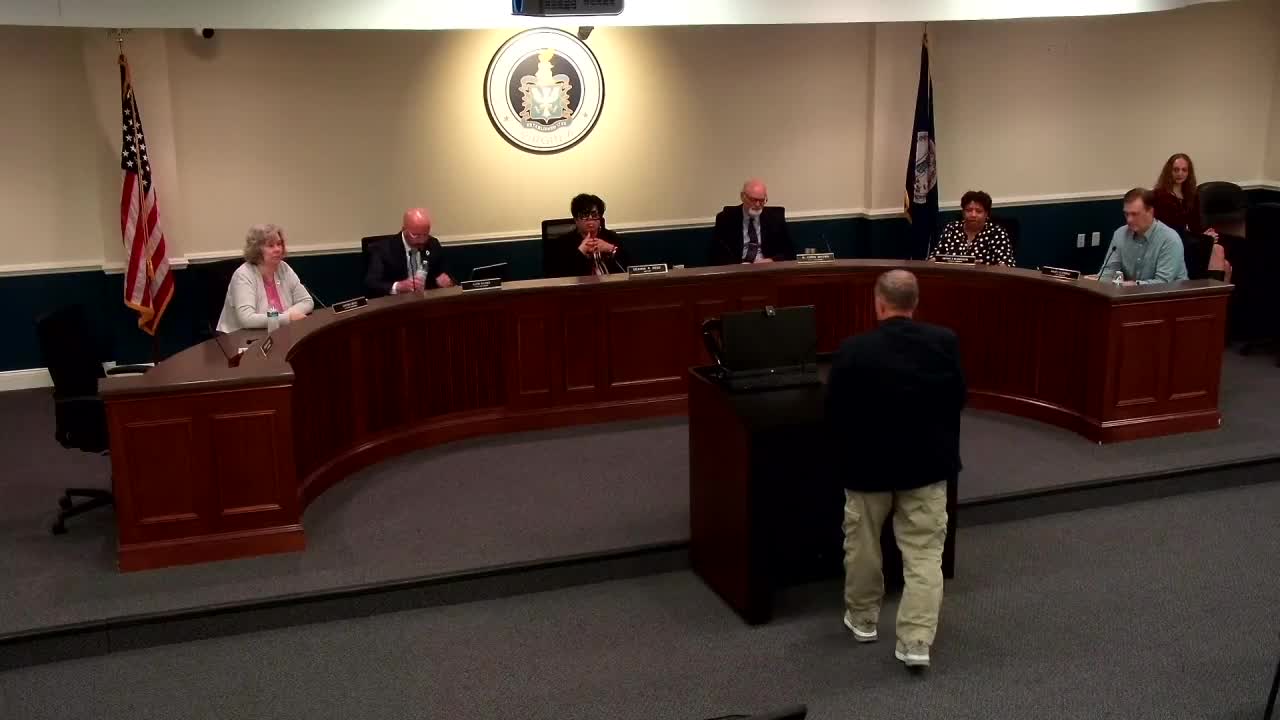
Councilors moved and seconded the motion to adopt the resolution as read by city staff. A roll-call vote recorded Council member Robinson, Vice Mayor Fleming, Council member Dent and Mayor Reid voting aye; Council member Al Saddoon was absent. The motion passed and the council’s consent activates the city manager’s May 16 declaration and the resolution’s provisions, which state the declaration remains in effect until ended by council and that the city manager and council will exercise powers and duties as prescribed by state law and local rules.
Councilors and staff praised utility employees for extended response efforts. City staff and the office of emergency management, led by the city’s fire chief (identified in the meeting as the coordinator of emergency management), were listed in the resolution as coordinating the response.
The council did not adopt additional new restrictions at the meeting; it consented to the manager’s local-emergency declaration primarily to allow access to extra resources and procurement flexibility while the plant’s treatment processes remain limited by high turbidity. Staff said additional heavy rain in the forecast could bring more high-turbidity water into the system and prolong reduced production.