Get Full Government Meeting Transcripts, Videos, & Alerts Forever!
Get email alerts on the Coastal Adaptation topic
No spam. Unsubscribe anytime.
Carmel-by-the-Sea holds public workshop on sea-level rise, coastal adaptation
Summary
City consultants summarized technical findings on erosion and sea-level rise, presented adaptation options ranging from dune restoration to seawall upgrades and managed retreat, and fielded public priorities including access and nature-based approaches. No formal policy or vote was taken.
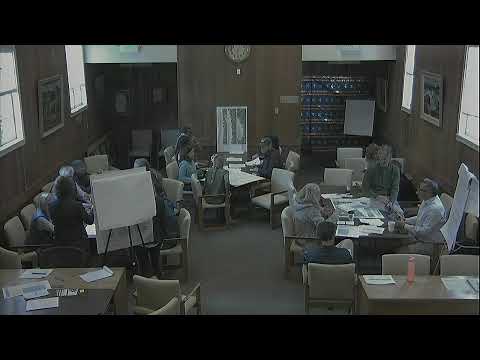
A public workshop in Carmel-by-the-Sea brought city staff, consultants and community members together to review technical findings about shoreline hazards and collect public input on adaptation options for Carmel Beach.
Council member Barron opened the session by recalling the city’s climate planning effort and stressing advance planning: "planning is the key to success," he said, noting earlier work on the Climate Action and Climate Adaptation plans and the city’s recent shoreline study. Anastasia Aziz of EMC Planning Group told attendees the project is funded by a California Coastal Commission grant and that proposed amendments to the city’s local coastal program would follow a technical-to-policy path: Planning Commission for recommendation, City Council for adoption and then Coastal Commission review.
Matt Jamieson, project scientist with Integral Consulting, summarized phase-one technical work on seasonal beach variability, dune and cliff erosion and modeled future coastal change. He cited the nearby Monterey tide gauge and said the local observed rate is "about 1.7 millimeters per year," while noting global averages are larger and uncertainty grows farther into the century. Jamieson described storm-driven sand transport, noting the 1997–98 El Niño redistributed roughly "300,000 cubic yards" of sand offshore in the southern pocket of the beach.
The consultants presented sea-level-rise scenarios based on Ocean Protection Council guidance, including an intermediate‑high scenario of about 4.6 feet by 2100. Jamieson said the analysis projects progressively narrower summer beaches with higher sea levels: under a roughly 5‑foot scenario, summer beach widths could shrink to "less than 10% of what they are now." He described likely consequences for stairways, sand ramps, public restrooms built into the bluff, Scenic Road, underlying wastewater mains and private properties seaward of the road.
Workshop participants worked in small groups and during report-outs emphasized beach access, scenic and recreational uses, and the importance of preserving natural seasonal sand dynamics. One facilitator reported the forthcoming socioeconomic analysis will include cell‑phone and economic data and that initial figures cited during the meeting indicated about "1,500,000" annual visits—she said that study is not yet complete and will be posted on the Public Works website when available. Facilitators and participants discussed local observations including closed or damaged access points (Twelfth Avenue staircase noted as closed for several years; Fourth Avenue and Eighth Avenue sand ramp and stairway vulnerabilities were repeatedly cited) and a reported kelp decline: one participant said Carmel Bay currently contains "6.3% of the baseline amount of kelp" historically present.
Participants discussed a broad menu of adaptation strategies. Nature‑based and assisted‑natural approaches noted as near‑term, lower‑intervention options included dune restoration, vegetation planting, driftwood berms and kelp restoration. Practical operational measures mentioned included winter “sacrificial” berms or directed sand management (moving locally available sand between compartments) and opportunistic reuse of compatible sediment.
Engineered approaches described by consultants ranged from raising or modifying existing seawalls and riprap, to shore‑platform augmentation, low‑profile rock structures, soil‑nail or shotcrete walls in places like the south end, and larger interventions such as beach nourishment or nearshore reefs. Jamieson cautioned that large-scale beach nourishment has technical and ecological constraints — including matching grain size and habitat impacts — and would require substantial study and regulatory review. He also said nearshore reef options are under broader study by California Department of Fish and Wildlife and would need detailed feasibility and environmental review.
Speakers repeatedly noted tradeoffs: cost, maintenance, visual and recreational impacts, and regulatory constraints tied to the Coastal Act and the city’s Local Coastal Program (adopted in 02/2004). Consultants framed “managed retreat” as a longer‑term option that would involve realignment of infrastructure and difficult policy choices about Scenic Road, parking and private yards.
No formal motions, votes or policy adoptions occurred at the workshop. Consultants and staff asked for continued public input through an online survey and worksheets; they said the project will move next into adaptation pathway development informed by a socioeconomic analysis, further technical and cost assessments, Planning Commission review and eventual City Council consideration before any Local Coastal Program amendment is forwarded to the California Coastal Commission.
The meeting ended with requests by participants that the city clarify its legal obligations to maintain public access and to protect private access where it exists, and with a call for clear cost estimates and examples of pragmatic, proven measures from other communities.