Get Full Government Meeting Transcripts, Videos, & Alerts Forever!
Get email alerts on the Municipal Court Budget topic
No spam. Unsubscribe anytime.
Municipal Court Director presents FY26 budget; warns of staffing losses, grant uncertainty and a recent disclosure review
Summary
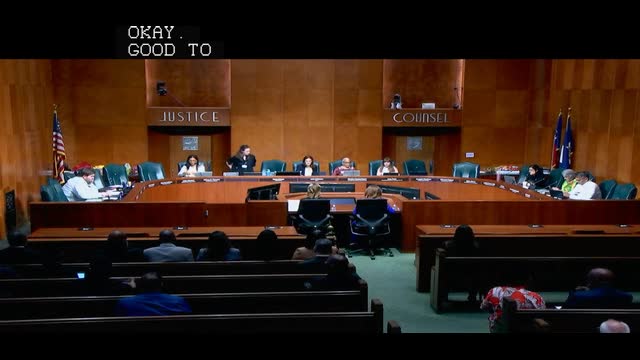
Director Georgina presented the City of Houston Municipal Court Department’s proposed fiscal year 2026 budget to the City Council Budget Committee, reporting $1.8 million in identified efficiency savings, a projected overall 14% decrease in municipal court expenditures compared with FY25, and staff reductions following a voluntary retirement program.
Director Georgina presented the City of Houston Municipal Court Department’s proposed fiscal year 2026 budget to the City Council Budget Committee, reporting $1.8 million in identified efficiency savings, a projected overall 14% decrease in municipal court expenditures compared with FY25, and staff reductions following a voluntary retirement program.
The budget matter is significant for court-run programs that serve low-income defendants and youths: the department warned that state grant funding that supports juvenile case managers is uncertain, and staff vacancies and retirements will require operational adjustments. Council members asked for follow-up details about building funding, courthouse operations and a recent release of citation records to federal immigration authorities.
“ We have identified areas where we could consolidate functions to avoid the need to fill vacancies and cut operational costs,” Director Georgina said, summarizing efficiency steps that include delaying hires, eliminating some vacancies, realigning IT costs and reducing operational expenses. She told the committee the savings will be realized in part “by delaying the filling of vacancies as well as the elimination of current vacancies, realignment of specific IT costs and the reduction of some operational costs.”
The department said 85 employees were eligible for a voluntary municipal employment retirement payout and 36 employees in noncritical positions accepted the option. The retirements, the director said, enabled an organizational redesign aligned with recommendations from an Ernst & Young efficiency study but also reduced institutional knowledge; the department described cross-training and internal transition work to keep dockets moving.
Budget and program details
The presentation described several numeric and program items: the departmental reorganization increases the average span of control from 8 to 10 and reduces the percentage of managers with fewer than four direct reports from 24% to 4%, the director said. The municipal court’s FY26 general fund expenditure budget is comprised of roughly 76% personnel costs and 24% nonpersonnel costs, the presentation stated.
On revenues and expenditures the committee heard separate measures: the presentation noted a 16% decrease in general fund expenditures for FY26 and a 14% overall decrease across municipal court funds compared with FY25; the budget slides also said the proposed FY26 general revenue fund shows a 12% increase and special funds a 7% increase (the department presented these as revenue projections tied to internal initiatives to improve case resolution rates).
Programs and possible impacts
Committee members pressed on the effect of reductions for specific programs. The municipal court’s truancy prevention and youth engagement program partners with Houston, Aldine and Spring Branch independent school districts and, the director said, “there are no changes to the program” despite a small slide-level reduction of 3% in that program’s expenditures that the director attributed to operational cost adjustments rather than staff cuts.
A state Criminal Justice Division grant of roughly $450,000 currently funds five juvenile case managers, the director said. The department reported recent notice that its position in the grant priority list is lower this year and the proposed award was reduced to about $150,000. The director said that creates pressure on staffing and that she is holding some vacancies while awaiting final grant determinations.
Council member concerns and follow-ups
Multiple council members asked how many of the lost positions would be refilled and whether core programs such as veterans court, Safe Harbor and homeless outreach would be affected; the director repeatedly said the department was using hiring freezes and internal reassignments to preserve those services and would request critical positions if needed.
Council member Kamen asked about FEMA funding for a new municipal courthouse and whether those dollars were secured; the director said the department is working with consultants on locating and designing new space and would follow up with specifics about external funding.
Efficiency and technology
Committee members discussed potential technology solutions, including artificial intelligence for scheduling and case management. The director said the department is not yet using AI: “No. We are not yet. I'm still trying to wrap my arms around AI,” and that any deployment would be evaluated for legal compliance because the courts must follow legal parameters.
Revenue-generating services and jury pay
The municipal court operates fee-based services such as passport application processing; passport agents are paid from the municipal court budget but passport fees and other court-collected revenues flow to the city’s general fund, the director said. When asked about juror pay, the director stated the current juror rate is “6 dollars a day.”
Data release to federal authorities
Several council members pressed the director about a recent disclosure of citation-related data to U.S. Immigration and Customs Enforcement (ICE). Council member Kamen asked who authorized the release; the director said, “I would say I authorized it based on, a legal opinion,” and added that she follows a standard process of requesting guidance from the city attorney’s office for atypical public-record requests. The director said she was not certain what further chain-of-approval followed after the legal review and offered to provide additional details via follow-up.
What was not decided
The committee received the presentation and questions but recorded no formal votes on the record. Multiple council members requested follow-up information on grant status, the number of positions being held or filled, and details of the building funding and the ICE-related disclosure.
The presentation concluded with the committee taking a brief recess; the municipal court director said she would provide additional details on staffing, grant outcomes and legal guidance on record releases as requested by council members.