Get Full Government Meeting Transcripts, Videos, & Alerts Forever!
Get email alerts on the Emergency Management topic
No spam. Unsubscribe anytime.
Councilor Novick seeks $3M boost for emergency management; bureau says more capacity needed for alerts, planning and CEI Hub work
Summary
Councilor Novick proposed adding approximately $3 million to the Portland Bureau of Emergency Management to create 24/7 watch capacity, incident management and planning staff; PBEM staff said additional planners and exercise capacity are needed, including for CEI Hub preparedness.
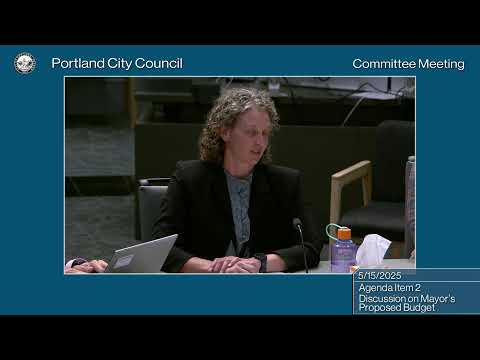
Councilor Novick proposed adding approximately $3 million to the Portland Bureau of Emergency Management (PBEM) during the Climate Resilience and Land Use Committee meeting on May 15 to expand core operational capacity. Novick said the additional funding would support 24/7 watch staffing, incident coordination, a citywide incident management system position, planning and training/exercise functions and space costs.
Why it matters: PBEM staff told the committee the bureau lacks dedicated 24/7 personnel to monitor emerging hazards, initiate responses and issue public alerts; they said existing processes rely on waking on‑call staff and that a permanent watch team would improve speed and coordination during emergencies.
What PBEM asked for: Jordan Wiley, PBEM operations staff, described the bureau's role as "the zoomed out 30,000‑foot view on an emergency," explaining that the bureau coordinates multi‑agency responses and provides a common operating picture for city leaders and partners. PBEM recommended an initial set of positions to stand up 24/7 watch capacity and to add planners and training personnel. Richard Narwal, PBEM's resilience lead, added that while no agency can prevent events such as a Cascadia earthquake, mitigation, planning and alerting (including systems such as ShakeAlert) can reduce casualties and coordinate multi‑jurisdictional responses.
Funding and offsets proposed: Novick proposed paying for the $3 million by cutting city council office discretionary budgets (roughly $300,000 per office across multiple offices, aggregated to the target). Novick said PBEM estimated roughly $8 million would be needed for a fully staffed bureau that meets national standards, and that the $3 million would create an initial, prioritized capacity.
CEI Hub planning: Committee members pressed for planners focused on the Critical Energy Infrastructure (CEI) Hub. PBEM staff said additional planning FTE would let the bureau assemble stakeholder engagement, address hazards and exercise plans; staff estimated one dedicated planner could make substantial progress on CEI Hub planning over one to two years, but that comprehensive planning and exercises require further staffing and resources.
Outcome and next steps: The committee discussed Novick's amendment concept and asked PBEM to provide any additional cost and operational details. No formal vote was taken in committee; Novick indicated he planned to file formal amendments ahead of the full council budget vote.