Get Full Government Meeting Transcripts, Videos, & Alerts Forever!
Get email alerts on the Urban Forestry topic
No spam. Unsubscribe anytime.
Zimmerman amendment would cut urban forestry staff from 37 to 5; bureau warns of broad impacts
Summary
Councilor Zimmerman proposed reducing urban forestry permitting and inspection staff from 37 to 5 positions. Parks and urban forestry managers said the permitting, inspection and capital‑project review workload and customer service functions would be severely affected; councilors requested detailed workload and revenue impact data.
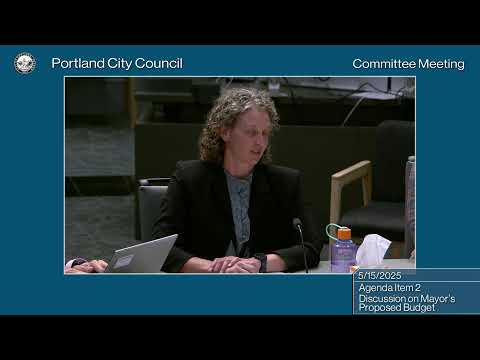
A proposed amendment from Councilor Zimmerman to reduce the Portland urban forestry Permitting and Regulation program from 37 staff to five was discussed at length at the Climate Resilience and Land Use Committee on May 15. Bureau staff said such a cut would remove functions that support tree permitting, code compliance, capital project review and a public hotline.
Why it matters: Urban Forestry staff manage tree permitting, inspections tied to private development and city capital projects, heritage‑tree oversight, programmatic permits for utilities and agencies, and a single‑point customer service function. Staff said the program currently issues roughly 10,000 permits or decisions a year and performs multiple inspections per permit in many cases.
Staff account and councilor questions: Casey Jogerst, Urban Forestry Permitting and Regulation Manager, told the committee: "we have approximately 10,000 permits that get issued a year, but that doesn't equate to different number of inspections it may take to get to permit issuance." Jogerst and her team described five program areas covered by the 37 positions: program administration; non‑development permitting and inspection; capital projects review; code compliance and private‑property tree support; and customer service/tree hotline.
Parks staff said the program's funding is a mix of levy, inter‑agency work, limited service charges and a small general‑fund share; staff estimated general‑fund exposure at roughly $400,000 of the program's budget and noted some levy or grant funds are not readily transferrable to other purposes. Councillors pressed staff for per‑inspector workload numbers and for a clear accounting of revenue the program collects; staff said more detailed, itemized data would be provided after the meeting.
Council reaction and next steps: Several councilors said they needed detailed written answers about how many work items each team processes annually, the split of funding sources, and the operational consequences of moving remaining positions into Portland Permitting and Development. Urban Forestry managers said most revenue from the program has been reduced by recent fee changes and that the program's capacity has grown over the last decade from roughly seven staff to the present level to keep permit turnaround and customer response at acceptable levels.
Outcome: The Zimmerman amendment was discussed but not adopted in committee; staff will provide written breakdowns of permit and inspection volumes, funding sources, and which positions are funded by levies, fees or general fund.