Get Full Government Meeting Transcripts, Videos, & Alerts Forever!
Get email alerts on the Workforce And Staffing topic
No spam. Unsubscribe anytime.
San Benito County holds first AB 2561 vacancy hearing as unions press staffing concerns
Summary
County staff presented vacancy rates under Assembly Bill 2561 and described recruitment steps; SEIU Local 521 urged protections for frontline services and proposed revenue and retention ideas.
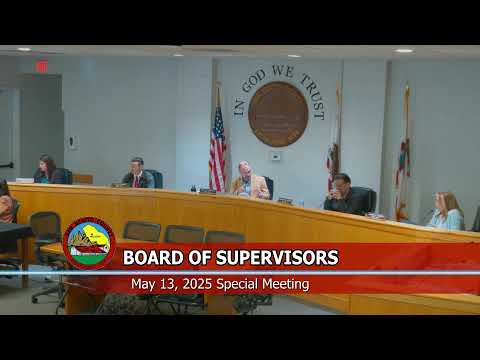
San Benito County supervisors held a public hearing May 12 under Assembly Bill 2561 to present vacancy and recruitment data and hear union input on staffing shortages.
The county’s senior human resources analyst, Elvia Barocio, told the board that AB 2561—signed Sept. 22, 2024 and effective Jan. 1, 2025—adds Government Code section 3502.3 to the Meyers-Milias-Brown Act and requires at least one public hearing per fiscal year, before adoption of the final budget, to present job vacancy status and recruitment efforts. Barocio said the law also requires additional reporting and information for bargaining units with vacancy rates of 20% or more.
The new state rule “means that the county must hold at least 1 public hearing per fiscal year to present the status of job vacancies and recruitment efforts,” Barocio said. She reported that several bargaining groups have measured vacancy rates across the county: the general unit (SCIU) at about 18.19%, management (MEG) at 10.23%, the Deputy Sheriff’s Association (DSA) at 70.84%, Institutions Association (IA) at 22.73%, law enforcement management (LEM) at 0% and an unrepresented group at 16.33%. Barocio said IA’s vacancies are concentrated in correctional officer and juvenile institution positions and that average time-to-hire for those jobs is roughly 60 to 90 days because of extensive testing and background checks.
SEIU Local 521 President Christina Cardenas, joined by steward Denise Quintana, told the board SEIU represents about 398.5 positions of which 72.5 have been chronically vacant. “These positions have the highest needs in this county, such as mental health conditions in behavioral health, social workers in health and human services, and those in the public health department,” Cardenas said, adding the union is seeking collaborative approaches to retention, including creative benefits during upcoming MOU negotiations.
Board members asked detailed questions about the correctional hiring pipeline after Barocio said 210 applicants produced eight people in background checks and four hires. Supervisors and staff discussed valid reasons for candidate elimination—failed tests, incomplete applications, inability to demonstrate right-to-work documentation or medical/psychological disqualifications. Barocio said the county has increased testing frequency, changed test days to weekends, completed upward reclassification for the correctional officer series and applied multiple salary adjustments in 2024 (a 7% COLA in January, 6% in October, and an additional targeted 10% adjustment for the correctional series in August 2024).
Several supervisors urged ongoing collaboration with community colleges, high schools and probation programs to develop pipelines and fitness/mentorship programs for public-safety positions. Board members also asked staff to provide a county-wide total vacancy percentage: Lianne Govines, assistant auditor-controller, said 3.5 vacancies out of 638.5 authorized positions equals a 16.2% countywide vacancy rate in the set of data presented, and staff agreed to supply an updated, dated total.
The presentation and discussion concluded with supervisors asking for more frequent monitoring of vacancy data during the year; one supervisor suggested a midyear report in addition to the statutorily required annual hearing and reinstating quarterly budget reviews so supervisors can track staffing changes and budget impacts promptly.
Barocio and staff said they will continue partnering with unions and community organizations to reduce barriers to applicants and to refine recruitment and retention strategies.