Get Full Government Meeting Transcripts, Videos, & Alerts Forever!
Get email alerts on the Public Safety Police Use Of Force topic
No spam. Unsubscribe anytime.
Poulsbo shows bodycam footage; families, tribal leaders demand answers as state investigates
Summary
The Poulsbo City Council showed body-worn camera footage related to a May 7 officer-involved shooting while the Washington State Office of Independent Investigation conducts a formal inquiry. Family members and tribal leaders called for accountability and more de‑escalation training during an extended public comment period.
The Poulsbo City Council on May 14 showed video footage of an officer-involved shooting that occurred on May 7 and reiterated that the Washington State Office of Independent Investigation (OII) is leading a separate, independent inquiry.
Councilmembers said the city sought and received OII permission to show the footage. Councilmember Taber read a city statement saying, “Every loss of life is a tragedy,” and that the council is “fully committed to transparency and accountability.” Taber added that the city would allow the state investigation to proceed.
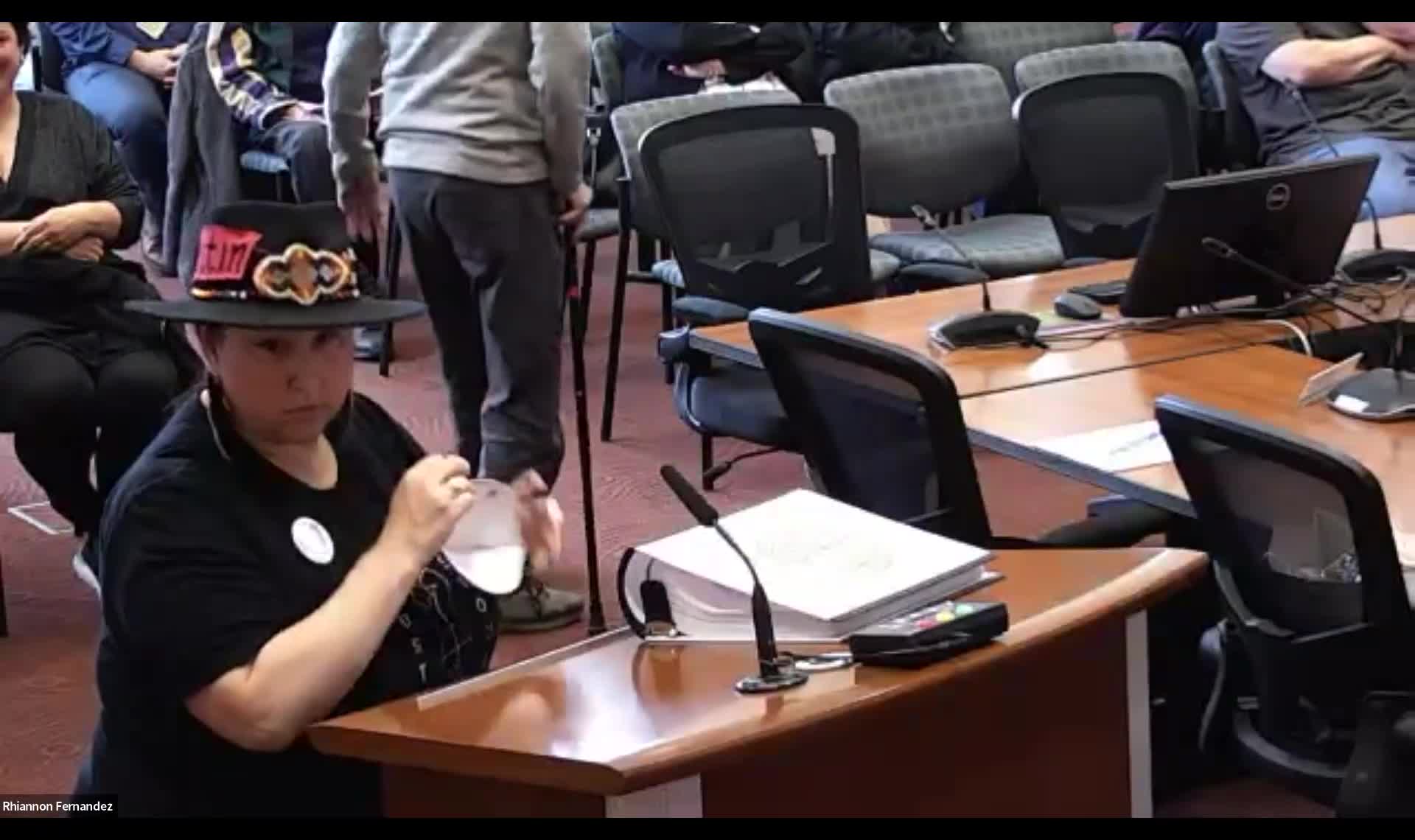
The video viewing preceded a half-hour public comment session in which more than a dozen speakers addressed the council. Several speakers identified themselves as family members of the deceased, and multiple tribal leaders and community advocates called for changes to police practices.
Megan Zizek, who gave her name for the record and identified herself as a relative of the man killed, described the family’s account of the stop and its aftermath: “He was pulled over at Glenveg Avenue and Viking Way for having windows that were too tinted dark. He did not stop. … They put strips down, but those got wrapped up in his vehicle. He eventually was pushed off the road by Poulsbo Police Officers doing a pit maneuver. They ran into his car and pushed him off the road, and he was going between 2 and 10 miles per hour.”
Carl Mogling, who identified himself as the deceased man’s father, said his son had bipolar disorder and raised questions about the use of force after the family had reviewed the footage and met with OII. “My existential question to the OII … was why didn't they rush him then and put the handcuffs on him when he was incapacitated,” Mogling said.
Trishonda Picker, who identified herself as a Suquamish tribal member and as a commissioner appointed by Gov. Jay Inslee to the Criminal Justice Training Commission, urged more de‑escalation training and described the commission’s materials, saying, “When you go to the first page on it, the number 1 is preservation of life, number 1, in this book. Number 2 is reducing the use of force.” She added she was speaking as a family member of a previous police shooting, not on behalf of the agencies where she serves.
Other public commenters blamed broader policing practices and requested accountability, independent investigation and alternatives to armed response for people in mental health crisis. Several speakers raised the deaths of other Indigenous community members as part of their appeals.
Councilmembers expressed condolences to the family and said they were balancing transparency with the need to preserve the integrity of the state investigation. Councilmember McVeigh said he had encouraged showing the bodycam footage “in the spirit of transparency and accountability” and noted the city obtained permission from OII to share it. McVeigh said the city was “navigating as best we can” between competing public expectations.
No formal council action on policing policy or discipline took place at the meeting; council members repeatedly said they would await the OII report. City staff and council said they would continue to monitor the OII inquiry and provide public updates as allowed.
The council limited public comment to 30 minutes because of the number of people in the chamber and requested that members of the public submit additional concerns to staff for follow-up.