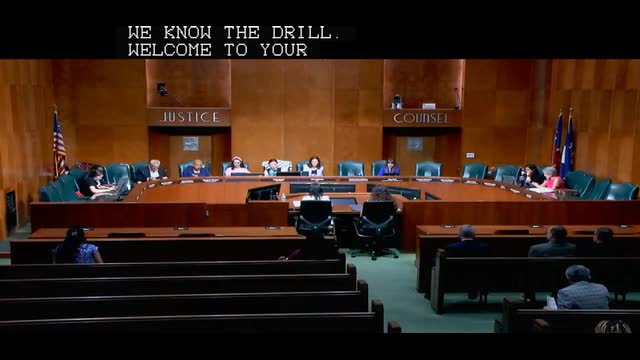
Houston planning director outlines leaner FY26 budget after restructuring, vows faster permit reviews
Loading...
Summary
Planning and Development Director Von Tran told a City Council budget workshop the department expects lower FY26 expenditures after restructuring, improved permit review times and continued investment in GIS; savings come from eliminated positions, voluntary retirements and reduced contract use.
Von Tran, director of the Planning and Development Department, told a City Council budget workshop that his department’s proposed fiscal year 2026 budget is smaller after a departmentwide restructuring aimed at speeding permit reviews and reducing costs.
Tran said the department is proposing $16.9 million in expenditures for FY26, a decrease of roughly $452,000 (about 3%) across all funds. He told council members the department eliminated five long-vacant positions as part of an initiative that reduced about $439,000 in budgeted personnel costs and that five of nine eligible employees accepted a voluntary municipal retirement payout that produced about $715,000 in “value reduction” reflected in the proposed budget. Tran also said the department discontinued use of contract employees at the Houston Permitting Center, saving more than $30,000 per month.
Why it matters: The planning department handles permits, plat and site-plan reviews, historic-preservation permits and GIS services that feed emergency response and other city operations. Changes to staffing, performance measures and technology affect development timelines, neighborhood protections and how the city targets infrastructure and safety investments.
Tran described a measurable improvement in plan-review performance since he became director last July. He said commercial plan reviews that met a 13-day target rose from 29% in July to 99% by October, and residential plan reviews meeting a 10-day target improved from 12% to 80%. “Currently, we are meeting our goals and working on shortening the review days even further down to 7 days,” Tran said.
The presentation broke the department’s budget into three broad priorities that align with mayoral initiatives: government that works (about $3 million, 17% of the department budget), quality of life (about $2.5 million, 15%) and infrastructure (about $11.5 million, 68%). Fund-specific details in the presentation included a proposed 1% increase in general-fund spending (about $41,000), a 2% decrease in special-revenue fund spending (about $249,000) and a 14% decline in the central-services revolving fund (about $244,000) largely tied to the savings measures described by Tran. The department expects about $11 million in revenue next fiscal year, primarily from development fees, and overall projects a $166,000 (2%) revenue increase across all funds.
Tran said the department began reorganizing immediately after his appointment, shifting roles, reducing management layers from five to four and raising the average managerial span of control from three to six. He also said the department will add a technical, non-managerial career track for planners and GIS analysts so staff can advance without taking managerial roles.
Council members asked about performance metrics, projection methods and public-facing reporting. Council Member Mary Anne Huffman pressed whether certain performance targets (including neighborhood-oriented ordinance reviews) were being folded into other measures; Tran said those items are often initiated by neighborhoods and therefore harder to predict but that the department will continue refining KPIs. Several council members, including Huffman and others, urged that new performance metrics be clear enough for the public to track first-review times, total processing time and outcomes.
Tran said the GIS division manages the city’s official address database used by emergency responders and that the department will continue to invest in accurate GIS data. He emphasized the department’s role in preparing mapping and demographic data used across city departments.
The presentation concluded with a short question-and-answer period about program-level performance measures, anticipated workload and coordination with Public Works and regional partners on transportation priorities. No formal votes or ordinance actions were taken during the session.
Ending: Tran said he expects continued efficiency gains and the possibility of further savings, and he invited council members to follow up with specific metric requests; the department will present updated KPIs to the finance director and council during the quarterly budget meetings.