Get Full Government Meeting Transcripts, Videos, & Alerts Forever!
Get email alerts on the Substance Use Program Funding topic
No spam. Unsubscribe anytime.
GWP Recovery Ministries requests $90,000 for two case managers; committee approves delay pending documents
Summary
GWP Recovery Ministries told the Maury County Opioid Abatement/Recovery Committee it needs $90,000 to hire two case managers to expand a trades program and operate sober-living beds; committee members questioned sustainability, documentation and charitable-registration status and voted to postpone a smaller $45,000 allocation until required paperwork is provided.
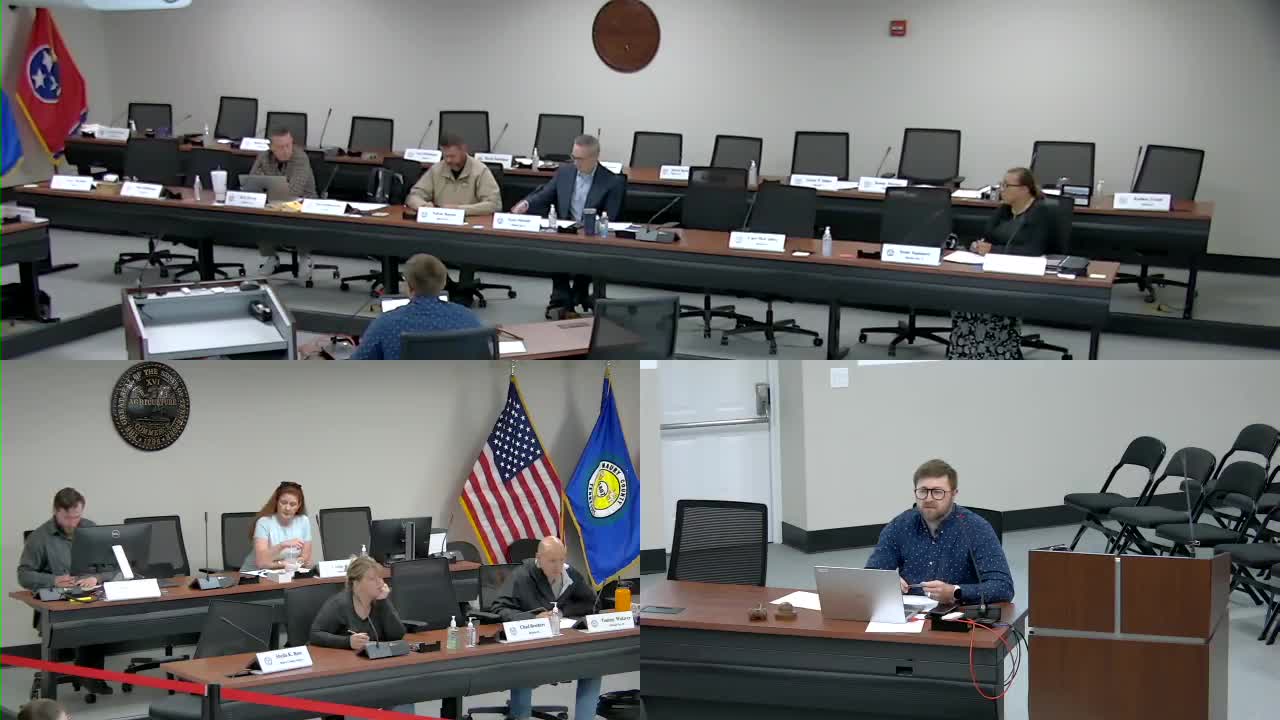
GWP Recovery Ministries told the Maury County Opioid Abatement/Recovery Committee on an agenda item that it needs $90,000 to hire two case managers to expand its trades program and operate sober-living beds across several counties.
The request, presented during the committee’s funding discussion, included a pitch that hiring two case managers would allow the nonprofit to double a trades program that places clients in short-term paid work while supervising them on the job, and to increase use of 71 available beds the organization said it manages across five towns and three counties. The presenter said GWP currently has about 30–35 clients in its program and 35 beds in Maury County alone.
Committee chair remarks and other members pressed presenters for documentation, including bank statements, invoices for rent and utilities, maintenance records, worker’s compensation policies and proof of charitable solicitation/IRS determination as required under Tennessee law. Committee leadership also reminded applicants that the agenda included links to the Tennessee Code Annotated provision attached to the packet that sets a $50,000 reporting/filing threshold for certain charitable solicitations. The chair said the committee will be holding subrecipients to hard deadlines for quarterly reports going forward.
During the presentation, GWP described its trades program in detail: the ministry partners with churches and local businesses to place clients in construction- and trades-related work, provides workers’ compensation coverage through the organization, supplies transportation to and from jobs and meetings, and pays clients modest weekly stipends while they train. GWP said the work-and-live model includes an “AA boot camp” and ongoing supervision at the jobsite to teach workplace habits. The presenters said the program had a high success rate among participants who completed the course.
Committee members repeatedly asked for financial detail. Questions included how GWP accounts for rent payments where GWP rents houses from private owners, how much of the state grant funds cover recovery-court services, why some line items (for example supplies) exceeded budgeted amounts, whether worker’s compensation costs were included in the budget and whether the trades-program income line reflected payments from employers or from participants. Presenters said some line items were carried by GWP and by partner agencies, that employer payments are made to GWP and GWP pays clients, and that GWP’s own founders had received minimal pay while running operations.
Several members raised concerns about grant-writing capacity: the presenter said GWP had applied to state opioid-abatement grants previously and had been denied; the presenter added the organization does not have a grant writer in-house. Committee members asked whether GWP had applied for other district funds and whether the program’s bed-occupancy assumptions were realistic given the nonprofit’s disclosure that in practice fewer than half the beds are paying rent.
Formal motions and votes followed. A motion to fund the full $90,000 carried onto the floor but failed for lack of a second and did not advance. A subsequent motion to fund $45,000 targeted specifically to a case manager for the women’s program was then offered and seconded; committee members proceeded to a roll-call vote but the tally included abstentions and left no clear majority, and the sponsor subsequently withdrew that request. Finally, a committee amendment to postpone consideration of a $45,000 allocation for two months until GWP provided the requested documentation (charitable solicitation/IRS determination and supporting financial records) passed by voice vote. The committee clerk recorded that the request would be revisited at a future meeting after the applicant submitted paperwork.
The committee’s discussion included repeated process reminders: applicants whose requests would exceed the statutory threshold must file for charitable solicitation or show an applicable religious exemption, and the county staff will expect clear quarterly reporting going forward. Several members said they supported the program’s mission but could not recommend allocation without the paperwork and clearer budget detail.
The application will be brought back to the committee after GWP supplies the requested documents and the county verifies charitable-registration status and financial attachments. In the meantime, the committee recorded the presentation and the postponement in the minutes.