Get Full Government Meeting Transcripts, Videos, & Alerts Forever!
Get email alerts on the Assisted Living Arbitration topic
No spam. Unsubscribe anytime.
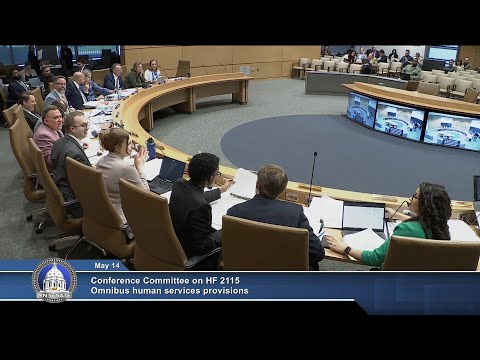
Conference committee adopts ban on requiring binding arbitration in assisted living admissions
Summary
The conference committee approved a provision banning assisted living facilities from making signing a binding arbitration agreement a condition of admission or continued care.
The conference committee on the health and human services budget approved language barring assisted living facilities from requiring residents or their representatives to sign binding arbitration agreements as a condition of admission or to continue to receive care.
Supporters, including Senator McQuaid, said the three-line provision (Article 2, section 25 as carried in the Senate language) preserves a resident’s right to a day in court and does not prevent voluntary arbitration. “We shouldn’t have to sign away our right to have our day in court to receive care,” McQuaid said during the committee debate.
Opponents, led in committee remarks by Representative Schumacher and by Senator Abler’s request for a no vote, said the change had not been fully vetted in the House and that arbitration language had been part of a negotiated assisted-living licensing compromise adopted in 2019. Industry representatives said they were concerned about unintended operational impacts and asked for more time to review the language. Aaron Kiepert of the Long Term Care Imperative and other industry witnesses said statutes and licensing rules already set conditions for contract termination and nonpayment.
Regina (Office of the Ombudsman for Long-Term Care) and consumer advocates said binding arbitration can impede residents’ ability to pursue justice and that eliminating mandatory arbitration as a precondition protects residents from coercive situations. A consumer advocate on the record said the scenario of a facility pressuring an existing resident to sign arbitration to remain in place could occur and would place the resident in a “very difficult position.”
Committee members repeatedly asked whether federal rules — including Centers for Medicare & Medicaid Services (CMS) protections against pre-dispute arbitration in some long-term care settings — apply; witnesses said CMS rules limit pre-dispute arbitration in certain federally regulated facilities but that the interplay with assisted living and private-pay contracts needed careful review.
After debate and public- and industry-facing testimony, Senator Fata moved to adopt the Senate language (Article 2, section 25). The motion was approved by voice vote in committee.
The provision as adopted prohibits facilities from requiring a resident or the resident’s representative to sign an agreement for binding arbitration as a condition of admission or to receive care; it does not prevent a resident from voluntarily agreeing to arbitration.
Committee discussion made clear the language had not been the subject of a full House hearing during this session; several members asked for further Department of Human Services and House review if the provision proceeds beyond the conference committee.
Votes at a glance: Motion to adopt Senate language, Article 2, section 25 — moved by Senator Fata; outcome: adopted (voice vote; “aye” recorded).