Get Full Government Meeting Transcripts, Videos, & Alerts Forever!
Get email alerts on the Film And Entertainment topic
No spam. Unsubscribe anytime.
SAG‑AFTRA and filmmakers warn of runaway production; press Congress and state to use tax incentives and parity reforms
Summary
SAG‑AFTRA leaders and documentary filmmakers told a California legislative hearing that federal policy uncertainty and international incentives are driving production and film‑industry jobs out of the state, and urged federal and state tax credits, a federal production labor tax credit and reforms to the tax code for performers.
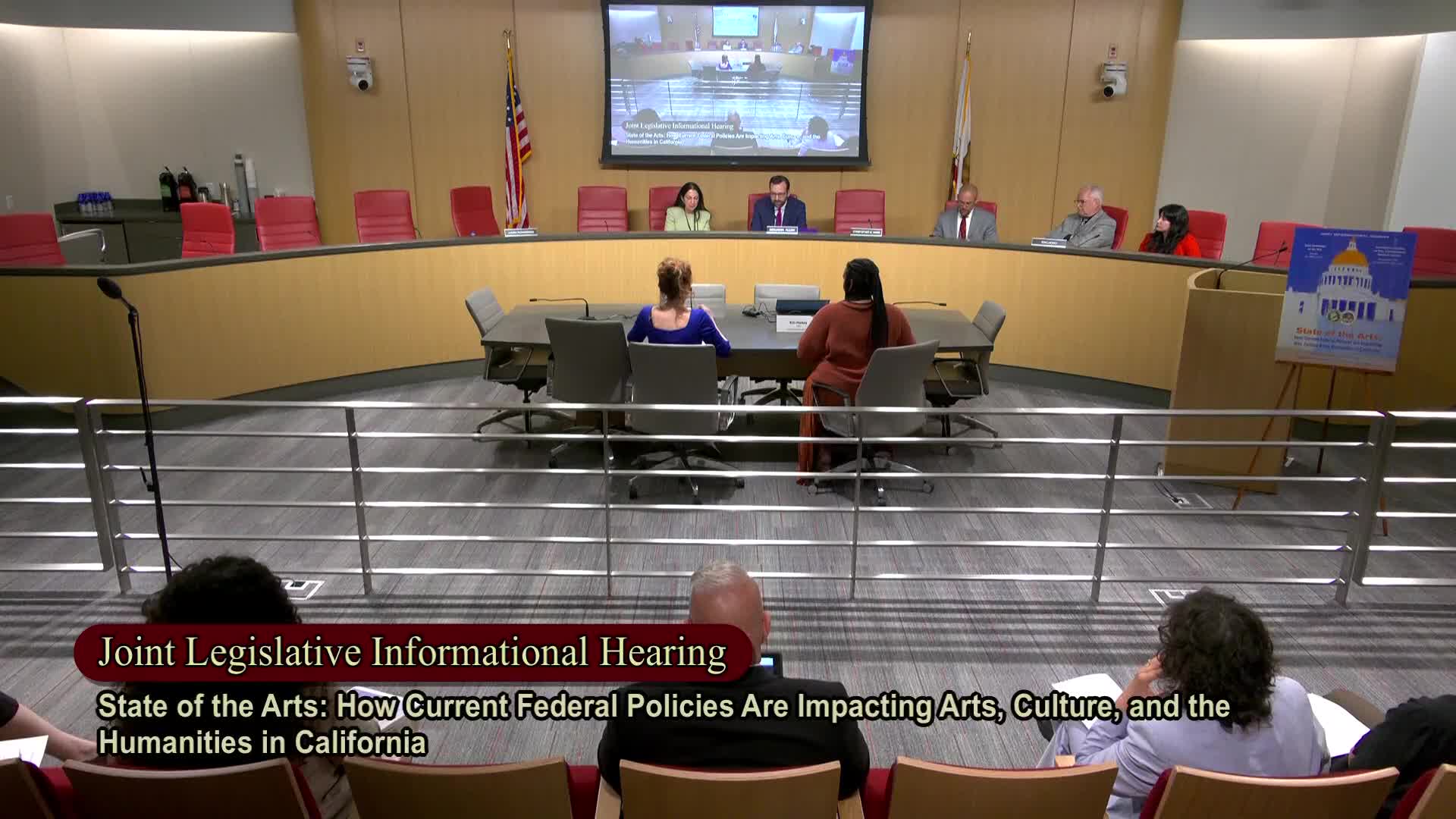
SACRAMENTO — Union leaders and filmmakers told a joint California legislative panel that decades of production and jobs in film and television are at risk if federal policy and tax treatment do not change, and they urged state and federal lawmakers to adopt incentives and labor‑friendly reforms.
Julie Fisher, national secretary‑treasurer of SAG‑AFTRA, told the joint committee that entire support businesses tied to production — camera crews, scoring musicians, dry cleaners, restaurants and drivers — have been hollowed out in some California neighborhoods as work moves to states and countries offering stronger incentives. “When we don't have production in California, we have to move out,” Fisher said. She and other witnesses urged legislative support for paired state and federal measures to keep production and related jobs in California.
Why it matters: The entertainment production cluster has deep multiplier effects in California. Witnesses said losing projects means lost wages for rank‑and‑file performers and technicians and fewer teachers, musicians and arts educators who rely on film work for income.
Testimony and proposals
- Julie Fisher (SAG‑AFTRA) urged federal action to complement state incentives, including a federal production labor tax credit to reward productions that hire U.S. workers. She highlighted the performing artists tax parity act (federal) that would update the qualified performing artist deduction and other bills pending in Congress; she and union colleagues also supported the “take it down” and “no fakes” acts addressing online harms and intellectual property.
- Fisher and other panelists discussed state options: expanding California’s production tax incentives, aligning them with federal incentives when possible, and pursuing payroll‑support programs for small nonprofit performing arts groups.
- Documentary filmmaker Jacob Kornbluth described immediate impacts on his work after California Humanities funding was rescinded. He said post‑production for his film was paused and that promised jobs for editors, composers and technicians vanished when grant support disappeared, illustrating how independent production relies on a patchwork of public and private funds.
Economic context
Witnesses said the creative sector remains a large part of California’s economy but noted specific vulnerabilities: other countries and states have created incentives that “lure” production away; outdated tax treatment for performers can make independent work unsustainable; and sudden federal grant terminations can interrupt projects midstream, jeopardizing the broader ecosystem of suppliers and cultural workers.
Legislative reaction and next steps
Assemblymember Chris Ward and other committee members indicated interest in pairing advocacy to federal officials with state policy adjustments. Witnesses asked the Legislature to consider (1) augmenting and targeting state production incentives to retain jobs and vendors, (2) exploring payroll support or grant relief for small performing arts organizations affected by AB 5 and other cost pressures, and (3) coordinating with California’s congressional delegation to press for federal tax and production incentives.
Ending
Union and industry witnesses said they will continue national advocacy while seeking state measures to shore up production and keep creative workers in California. No formal votes occurred at the hearing.