Get Full Government Meeting Transcripts, Videos, & Alerts Forever!
Get email alerts on the Goshen Soar Incentives topic
No spam. Unsubscribe anytime.
House subcommittee questions SOAR incentives, national security and local opposition in Goshen battery project
Summary
The House Oversight Subcommittee on Corporate Subsidies and State Investments heard follow-up testimony on SOAR incentives for the Goshen EV battery project, including a project timeline, state funding allocations, local recalls and litigation, and national-security concerns tied to the company’s China links.
The House Oversight Subcommittee on Corporate Subsidies and State Investments heard testimony Tuesday on state incentives provided for the Goshen EV battery project and on related community and national-security concerns.
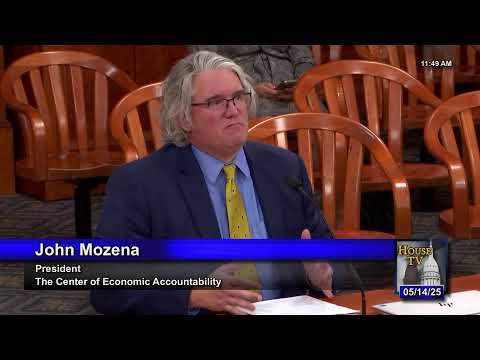
The hearing focused on three intertwined strands: a timeline and explanation of how the project developed in Mecosta County, which speaker Randy Thelen, president and CEO of The Right Place, described; the amounts and status of state SOAR (Strategic Opportunities for Automotive and Related) program commitments; and national-security warnings about Chinese-linked firms presented by Joseph Sella, a former U.S. ambassador to Fiji and co-founder of the Michigan China Economic and Security Review Group. John Mazzina, president of the Center for Economic Accountability, also testified and criticized subsidy assumptions and projected returns.
Why it matters: The committee sought clarity on what Michigan taxpayers have committed, what has actually been disbursed and whether federal national-security review or litigation could change the project’s prospects. Witnesses described local political upheaval, litigation between the company and a township, and differing views on whether due diligence and federal reviews were sufficient.
The Right Place’s timeline and state funding. Randy Thelen, president and CEO of The Right Place, told the panel he and the local economic development organizations began assisting Big Rapids Township and Mecosta County in mid-2021 after initial interest from Goshen to locate production near Big Rapids. Thelen said The Right Place agreed to support the community’s efforts “free of charge.” He outlined the project’s evolution from an initial search for an existing building to a later, larger land-assembly plan across the road in Green Charter Township.
Thelen told the committee that the SOAR incentives include three principal elements: a $125 million allocation under the program’s critical industry component (he said no funds from that bucket had been transferred because the company had not yet met milestone requirements); a $50 million Strategic Site Readiness allocation intended to pay for land assembly and infrastructure, of which he said about $23.7 million has been allocated to date; and a Renaissance Zone property-tax exemption that has not produced tax relief because construction and investment had not yet begun.
Local politics, litigation and permitting. Thelen said the project drew little public participation during its earliest public hearings but that turnout and focus shifted in March 2023 when concerns about China and other issues intensified. He said township boards and the county initially voted in favor of incentives in September 2022 and the Michigan Strategic Fund later approved support, but a later recall election altered township boards’ composition, a development Thelen said led the township to attempt to void the development agreement and prompted the company to sue.
National-security and federal review concerns. Joseph Sella told the committee he was “gravely concerned with the aggressive pursuit” of China-linked companies to locate in Michigan. Sella, who identified himself as a co-founder and director of the Michigan China Economic and Security Review Group, raised national-security risks tied to Chinese firms’ statutory obligations under China’s National Intelligence Law and recounted past cases of alleged trade-secret theft and espionage cited to illustrate the threat. He said a CFIUS (Committee on Foreign Investment in the United States) review was not treated, in his view, with sufficient scrutiny in the Goshen case and noted that a Biden administration rule adding Camp Grayling and other military sites to CFIUS review lists could change how such transactions are handled going forward.
Economic-development and ROI critique. John Mazzina of the Center for Economic Accountability criticized the subsidy math and the assumptions behind the project’s cost-per-job calculations, repeating that commonly used economic-impact models often fail to account for substitution effects and the “seen and unseen” losses when tax dollars are redirected toward subsidies. Mazzina said the MEDC’s own accounting — which he summarized as roughly $125 million in direct grants, an estimated $540 million in Renaissance-zone value, and $50 million in site-prep funds — amounted to roughly $715 million of public support and, by the MEDC’s job estimate, more than $300,000 per promised job.
Committee action and next steps. The hearing included limited formal business: Representative Green moved to approve the minutes of the May 7 meeting; the motion was approved “hearing no objection,” and the committee continued with the Goshen-focused testimonies. Committee members asked witnesses about CFIUS reviews, permitting status, how many SOAR dollars have been disbursed, the role of local outreach during public hearings, and whether companies with Chinese ties should be barred categorically or handled on a case-by-case, derisking basis.
The witnesses and committee members gave different emphasis to trade-offs between economic development and security. Thelen said actual disbursement of large SOAR funds was contingent on milestone reviews; Sella urged stricter and earlier scrutiny for transactions involving Chinese-linked entities; and Mazzina urged caution about assuming large, positive ROI from state subsidies.
The subcommittee did not take additional votes at the hearing. Several witnesses said litigation and ongoing federal processes remain unresolved; Thelen said permitting and the outcome of court actions will determine further project steps.